






Definition and Meaning of the UCC Security Agreement Template
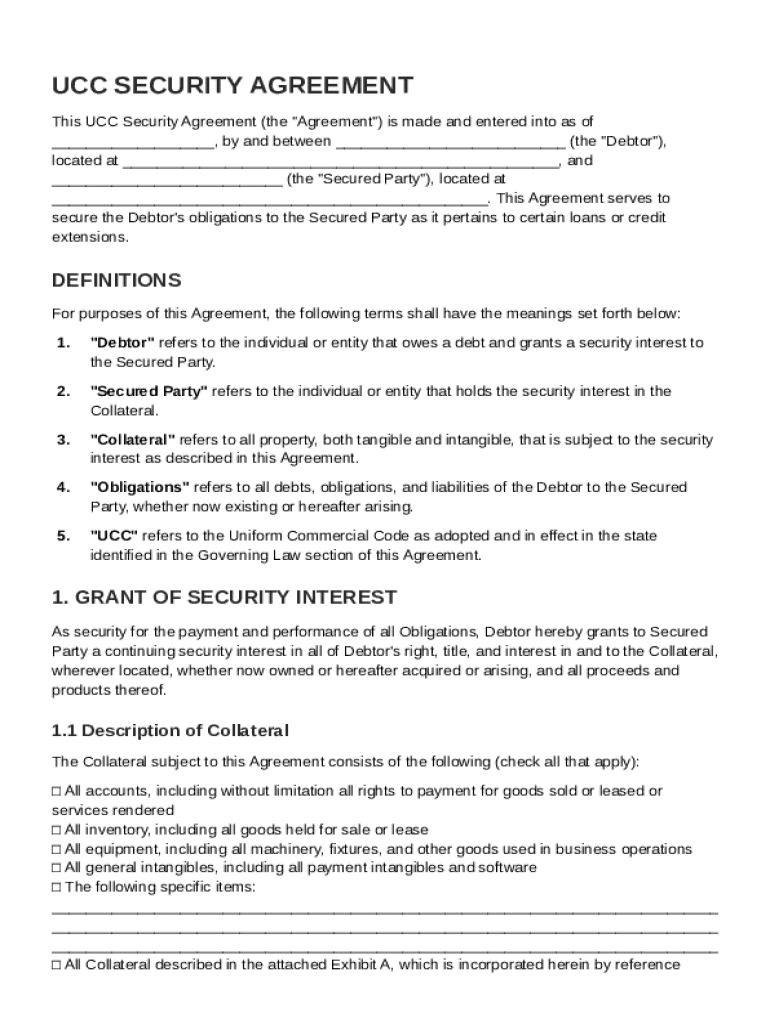
The UCC Security Agreement Template is a legal document used to establish the terms under which a debtor grants a security interest in specified collateral to a secured party. This agreement plays a critical role in securing the debtor's obligations and is typically governed by the Uniform Commercial Code (UCC), which standardizes transactions across different states. Within the template, key terms are defined, including "debtor," "secured party," and "collateral," ensuring both parties have a common understanding. It details the rights and obligations of the debtor and the secured party, such as maintenance of the collateral and insurance requirements.
Key Elements of the UCC Security Agreement Template
Understanding the key elements of a UCC Security Agreement Template is vital for its effective use. These core components include:
- Identification of Parties: Clearly names and describes the debtor and the secured party.
- Description of Collateral: Specifies the assets or property offered as collateral and outlines the conditions for its use and maintenance.
- Security Interest: Details the secured party’s interest in the collateral and the obligations of the debtor.
- Default and Remedies: Describes what constitutes default and the remedies available to the secured party.
- Governing Law: Indicates the applicable state laws that govern the agreement.
These elements ensure clarity and provide a framework for the enforcement of the agreement.
Important Terms Related to the UCC Security Agreement Template
Several terms are crucial to understanding the UCC Security Agreement Template. Familiarity with these terms can aid users in interpreting the agreement accurately:
- Debtor: The party who owes obligations under the agreement.
- Secured Party: The lender or creditor who holds the security interest.
- Collateral: The property or assets pledged by the debtor.
- Security Interest: A legal claim or lien on collateral that secures the performance of an obligation.
- Perfection: The legal process by which a secured party protects its interest in the collateral against claims from third parties.
Understanding these terms will facilitate the effective use of the agreement in standard transactions.
Steps to Complete the UCC Security Agreement Template
Completing the UCC Security Agreement Template involves several methodical steps. Ensuring accuracy at this stage is paramount for legal enforceability:
- Fill in the Parties' Information: Provide names and addresses for both debtor and secured party.
- Describe the Collateral: Clearly outline the collateral, providing detailed descriptions.
- Define Terms and Obligations: Specify the obligations and the expected performance standards.
- Detail Default Conditions: Clearly state what constitutes a default and any subsequent repercussions.
- Review and Finalize: Ensure all information is accurate and comprehensive before signing.
- Signatures: Obtain signatures from all involved parties to formalize the agreement.
Each of these steps ensures that the agreement is legally sound and ready for execution.
Legal Use of the UCC Security Agreement Template
Utilizing the UCC Security Agreement Template legally within the confines of the governing jurisdiction is crucial. This template is compliant with the UCC Article 9, making it workable across different states, though one must be aware of state-specific nuances. Once the agreement is executed, it can be filed with the appropriate state agency to perfect the security interest, thus ensuring legal recognition. In case of debtor default, it provides a clear pathway for the secured party to enforce their rights as laid out in the template.
Who Typically Uses the UCC Security Agreement Template
The UCC Security Agreement Template is commonly used by various parties across multiple sectors:
- Lenders and Financial Institutions: To secure loans with collateral from borrowers.
- Businesses: When acquiring financing, using business assets as collateral.
- Legal Professionals: Crafting customized agreements for clients seeking secured transactions.
- Entrepreneurs: Ensuring their business dealings are secured by formal agreements.
This template serves as an essential tool to maintain financial security and clarity in commercial transactions.


Examples of Using the UCC Security Agreement Template
To illustrate the practical usage of the UCC Security Agreement Template, consider these scenarios:
- Small Business Loan: A small business owner secures a loan by pledging equipment as collateral.
- Personal Lending: An individual lends money to a friend, securing the debt with a personal vehicle as collateral.
- Corporate Financing: A corporation uses its accounts receivable as collateral to secure a line of credit with a bank.
These examples highlight the template's versatility and importance in ensuring secured lending arrangements.
State-Specific Rules for the UCC Security Agreement Template
While the UCC Security Agreement Template is governed by uniform laws, state-specific rules can affect its implementation:
- Filing Procedures: Each state may have unique requirements for filing the agreement to perfect a security interest.
- Document Requirements: Specific documentation and information may be required that varies by state.
- Statutory Limitations: Different states may have varying statutes of limitations affecting enforcement actions.
Understanding these state-specific variables is essential for maintaining the integrity and efficacy of the security agreement.