Definition & Purpose of a Film Deferred Payment Contract
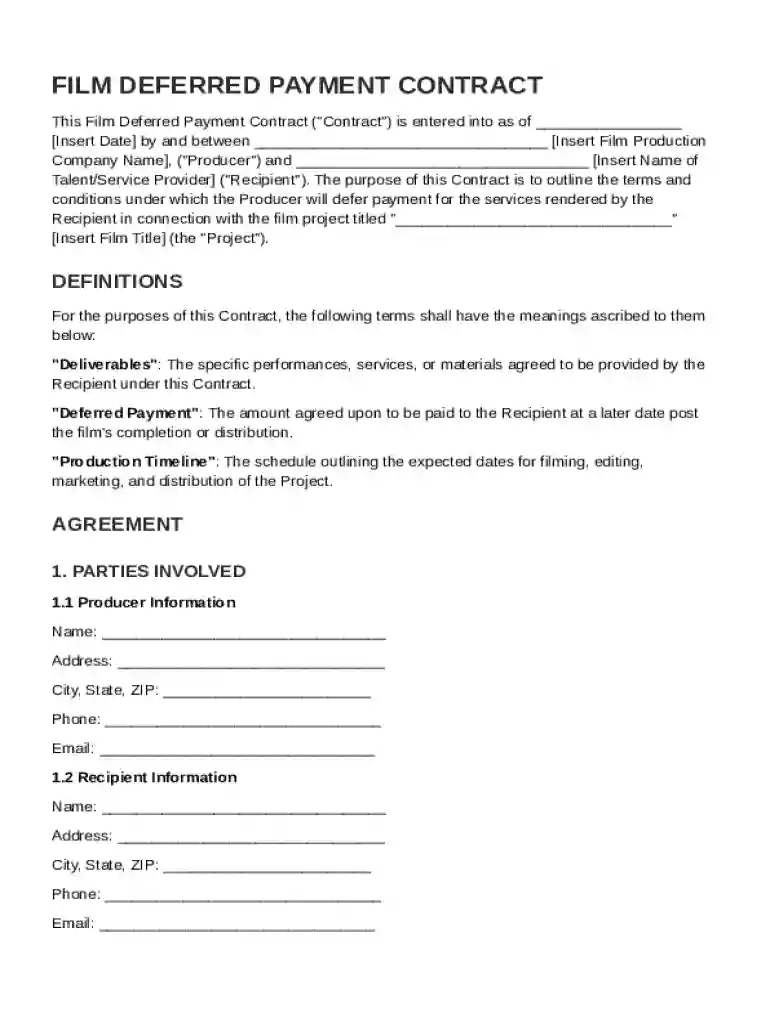
The Film Deferred Payment Contract is a legal document between a film production company (Producer) and a talent or service provider (Recipient) outlining the conditions under which payment for services is deferred to a later date. This type of contract details the terms of service, payment scheduling, and ownership rights, ensuring both parties are legally protected. It helps mitigate immediate cash flow challenges for producers while securing future payment for recipients. Such contracts are crucial in the film industry where budgets can be tightly controlled.
Key Elements of a Film Deferred Payment Contract
A comprehensive Film Deferred Payment Contract should include essential elements to ensure clarity and enforceability. These elements encompass:
- Definitions and Parties Involved: Clearly define all terms used within the contract and identify the parties involved, i.e., the Producer and the Recipient.
- Scope of Work: Detail the specific services or deliverables the Recipient will provide.
- Payment Terms: Specify when and how the deferred payments will be made, including any conditions or milestones that need to be met.
- Rights and Ownership: Establish the ownership of any intellectual property or deliverables developed during the project.
- Confidentiality Obligations: Define what constitutes confidential information and the obligations of each party to maintain secrecy.
Steps to Complete the Film Deferred Payment Contract Template
Completing a Film Deferred Payment Contract involves several critical steps to ensure that all necessary components are addressed and legally binding:
- Gather Information: Collect all requisite details about both the Producer and the Recipient, including contact information and roles.
- Define the Scope: Clearly outline the tasks and responsibilities expected of the Recipient.
- Establish Payment Conditions: Determine the deferred payment timeline and conditions.
- Detail Rights and Ownership: Specify the ownership rights of any creative works produced.
- Include Legal Provisions: Add clauses for confidentiality, dispute resolution, and indemnification.
- Review and Revise: Have legal counsel review the draft for accuracy and comprehensiveness.
- Signing and Diligence: Ensure all parties sign the document and keep copies for records.
Legal Use of the Film Deferred Payment Contract Template
The legal usage of the Film Deferred Payment Contract ensures that the agreement is binding and enforceable under United States law. It is vital for the contract to adhere to:
- State and Federal Legal Standards: The contract must comply with both state-specific laws and federal regulations, including those related to contracts and payments.
- E-Signature Legality: If executed electronically, the document and signatures should comply with the U.S. ESIGN Act, which governs electronic signatures.
- Governing Law Clause: Include a specific clause detailing which state’s legal standards will apply in case of a dispute.
Important Terms Related to the Film Deferred Payment Contract Template
Understanding the terminology used in a Film Deferred Payment Contract helps in navigating its complexities:
- Deferred Payment: A financial arrangement where payment is scheduled for a future date.
- Deliverables: Any tangible or intangible outputs created by the Recipient as part of the contract.
- Indemnification: A contractual obligation for compensating a party for losses or damages.
- Intellectual Property Rights: Legal rights to inventions and creative works generated by the Recipient.
Why Use a Film Deferred Payment Contract Template
Utilizing a Film Deferred Payment Contract template provides several benefits:
- Time Efficiency: Speeds up contract drafting by providing a pre-structured format.
- Legal Assurance: Incorporates essential legal clauses, thereby reducing risk.
- Customization: Allows flexibility to tailor specific clauses to fit precise needs and project requirements.
- Professionalism: Demonstrates structured management and foresight within industry negotiations.
Who Typically Uses the Film Deferred Payment Contract Template
This type of contract template is predominantly used by entities in the film and entertainment industry:

- Film Producers: Seek to manage cash flow and budget constraints during production.
- Talent: Actors, writers, and directors who agree to deferred compensation for a role or service.
- Service Providers: Includes post-production and special effects companies working under deferred payment arrangements.
Examples of Using the Film Deferred Payment Contract Template
Practical examples highlighting the application of this contractual form include:
- Independent Films: Where budgets are limited and deferring payments allows for more extensive casting or production services.
- Future Revenue Projects: A project anticipating future revenue streams, allowing the deferred payment of involved creatives.
- Collaborative Projects: Multi-stakeholder projects requiring clear agreements to protect the interests of all parties involved.
These scenarios illustrate how the Film Deferred Payment Contract can be vital in managing complex financial arrangements in the creative industries. By aligning expectations with binding legal terms, both producers and recipients can work confidently towards a successful outcome.