






Definition & Meaning
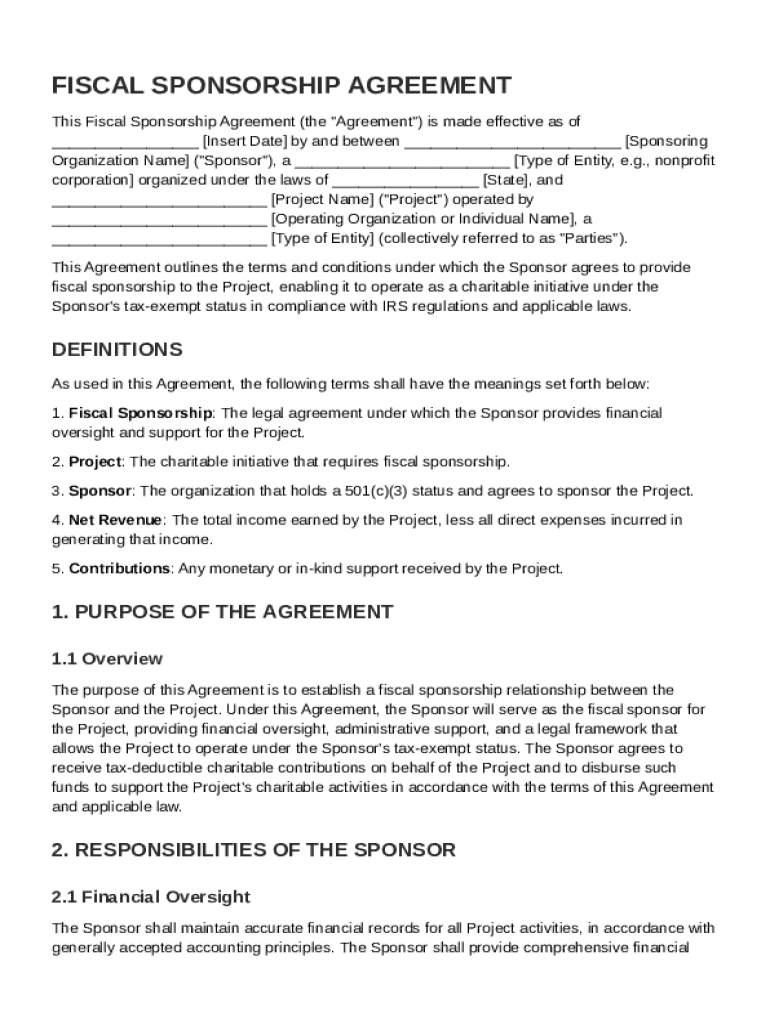
The Fiscal Sponsorship Agreement Template is a legal document that establishes a formal relationship between a sponsoring organization and a project. This arrangement allows the project to utilize the sponsor's tax-exempt status to operate its activities, enabling the project to receive grants and charitable donations that require such status. The agreement delineates the responsibilities and expectations of both parties, ensuring that the project aligns with the sponsor's mission and complies with relevant laws and regulations.
Key Terms and Concepts
- Sponsoring Organization: A nonprofit entity holding tax-exempt status under IRS regulations, responsible for oversight and fiscal management of the sponsored project.
- Sponsored Project: An initiative or program that benefits from operating under the sponsor's tax-exempt status, often to secure funding or donations.
- Tax-Exempt Status: A designation by the IRS that exempts certain organizations from federal income tax, often required for receiving certain grants and donations.
Key Elements of the Fiscal Sponsorship Agreement Template
The Fiscal Sponsorship Agreement Template is structured around several critical components. These elements outline the operational dynamics between the sponsor and the project, ensuring both parties are aware of their roles and responsibilities.
Comprehensive Coverage
- Financial Oversight: The sponsor is typically responsible for managing the project's finances, ensuring funds are used according to donor intentions and legal requirements.
- Administrative Fees: An agreed-upon fee that the project pays to the sponsor for its services, often calculated as a percentage of the raised funds.
- Reporting Requirements: Regular financial and activity reports that the project needs to provide to the sponsor, facilitating transparency and accountability.
How to Use the Fiscal Sponsorship Agreement Template
Using the Fiscal Sponsorship Agreement Template involves careful consideration and customization to meet the specific needs of both the sponsoring organization and the sponsored project.
Customization Steps
- Identify Parties Involved: Clearly specify the names and roles of the sponsoring organization and the project.
- Define Responsibilities: Outline the specific duties and expectations for both the sponsor and the project, including financial management, reporting, and compliance.
- Set Financial Terms: Detail any administrative fees, fund management protocols, and distribution processes.
Practical Tips
- Consider consulting with a legal professional to ensure the agreement is comprehensive and compliant with applicable laws.
- Regularly review and update the agreement to reflect any changes in project scope or organizational dynamics.
Legal Use of the Fiscal Sponsorship Agreement Template
Ensuring legal compliance is paramount when utilizing a Fiscal Sponsorship Agreement Template. The agreement should reflect both state and federal laws, particularly those related to nonprofit governance and tax-exempt status.
Compliance Considerations
- IRS Regulations: Ensure the agreement adheres to IRS requirements for maintaining tax-exempt status, including stipulations around unrelated business income.
- State Laws: Review state-specific regulations that may impact the agreement, particularly concerning charitable activities and nonprofit management.
Who Typically Uses the Fiscal Sponsorship Agreement Template
Various entities and individuals leverage fiscal sponsorship agreements to achieve distinct objectives.


Common Users
- Nonprofit Organizations: Those seeking to broaden their programmatic activities without establishing a separate legal entity.
- Charitable Projects: Initiatives that aim to receive grants and donations but lack the resources to obtain their tax-exempt status.
- Social Entrepreneurs: Individuals or teams working on community projects that align with a sponsor's mission and require fiscal oversight.

Steps to Complete the Fiscal Sponsorship Agreement Template
Completing the Fiscal Sponsorship Agreement Template involves a series of methodical steps to ensure all necessary provisions are addressed.
Detailed Procedure
- Gather Relevant Information: Collect details about both the sponsoring organization and the project, including financial projections and operational plans.
- Draft Initial Agreement: Use the template to draft an agreement with the necessary terms and conditions tailored to the project's goals.
- Review and Revise: Both parties should carefully review the draft agreement, proposing revisions where necessary to accurately reflect their intentions and commitments.
IRS Guidelines
The IRS has specific guidelines that have a significant impact on how fiscal sponsorship agreements should be structured and maintained.
Key IRS Considerations
- Tax Compliance: Ensure all financial transactions comply with IRS tax-exempt regulations.
- Documentation: Maintain thorough documentation of all financial dealings and organizational decisions related to the sponsored project.
State-Specific Rules
Fiscal sponsorship agreements must also take into account state-specific regulations that affect nonprofit management and fiscal sponsorships.
Examples of Variations
- Registration Requirements: Some states mandate registration for nonprofit activities, including those conducted by a sponsored project.
- Financial Reporting: States may have specific financial disclosure requirements for sponsors overseeing charitable projects.
By addressing these elements in a Fiscal Sponsorship Agreement Template, organizations and projects can ensure a clear legal framework for their collaborative efforts, facilitating charitable initiatives while maintaining compliance with IRS and state regulations.