
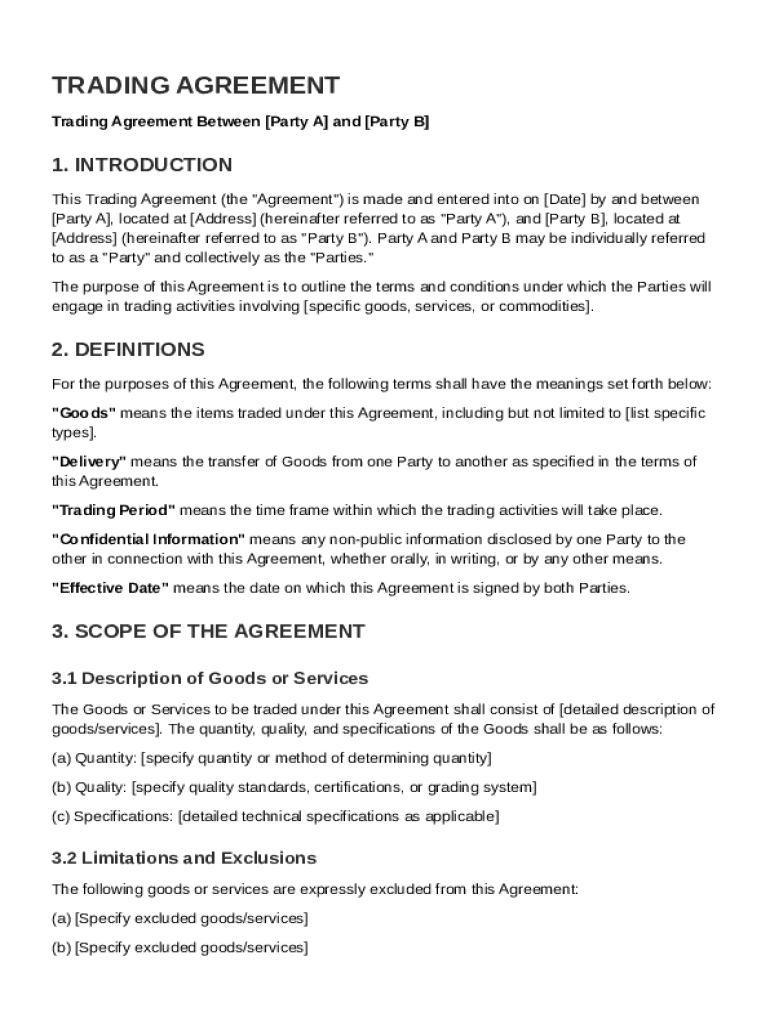







Definition and Purpose of a Trading Agreement Template
A trading agreement template serves as a foundational document that outlines the terms and conditions governing trading activities between two or more parties. Typically, these agreements cover important aspects such as pricing and payment terms, delivery obligations, and dispute resolution procedures. By using a standardized template, parties can ensure that critical elements are consistently included and reviewed, reducing the likelihood of errors and omissions. The template can provide a clear framework that aligns with legal requirements, helping to formalize the trading relationship and ensure compliance with applicable laws.
- Key Components: Typical components of a trading agreement template include definitions of terms, scope of goods or services, confidentiality clauses, and termination conditions.
- Legal Compliance: It helps parties stay compliant with relevant trade regulations and laws, which is essential in formalizing agreements and minimizing legal risks.
How to Use the Trading Agreement Template
Utilizing a trading agreement template involves a structured approach to ensure all necessary details are clearly outlined and agreed upon by all parties involved. The process typically starts by selecting an appropriate template that fits the specific nature of the trade deal.
- Select a Suitable Template: Choose a template that matches the nature and specifics of the trade agreement you wish to formalize.
- Customize the Document: Modify the template to include specific details about the parties involved, the type of goods or services, and any bespoke terms that have been mutually agreed upon.
- Review and Finalize: Have all parties review the document to ensure accuracy before proceeding to signatures.
- Execute the Agreement: Finalize the agreement through signatures, leveraging electronic signature solutions where possible.
Practical Example
Suppose Company A wants to enter into a trading agreement with Company B for the supply of industrial components. Both parties can start with a template, adjust the sections regarding price, delivery terms, and specific responsibilities, and then get mutual clearance through signatures.
Important Terms Related to Trading Agreement Template
Understanding key terminology within a trading agreement is essential for the clear understanding and smooth execution of the contract. Some critical terms often included are:
- Parties Involved: Clearly delineates who the signatories are and their respective roles in the agreement.
- Scope of Work: Defines what goods and/or services are involved and the extent to which they will be provided.
- Payment Terms: Outlines how and when payments are to be made, including specific methods and any applicable interest on late payments.
- Confidentiality: Establishes protocols for confidentiality to safeguard sensitive information exchanged between parties.
Specific Scenario
Consider an agreement involving a tech firm and a hardware supplier. Terms would include confidentiality clauses to protect proprietary technology discussions from being disclosed inadvertently.
Key Elements of the Trading Agreement Template
A well-designed trading agreement template contains several essential elements to ensure thorough documentation of the trading relationship.
- Introduction: Establishes the context of the agreement, including the date and general nature of the trade.
- Definitions: Provides precise definitions of critical terms used throughout the document.
- General Terms and Conditions: Covers broad terms that apply across multiple facets of the agreement.
- Specific Obligations: Details the obligations of each party in executing the trade.
- Termination Conditions: Outlines how and under which circumstances the agreement can be terminated by either party.
Example of Termination Clause
For example, a clause might specify that either party can terminate the agreement by providing a 30-day written notice if specific conditions aren’t met, such as delayed deliveries.
Legal Use of the Trading Agreement Template
Compliance with relevant laws is crucial when drafting and finalizing a trading agreement. The template should serve as a guide to legally binding terms that uphold both parties' rights and obligations.
- Jurisdiction Clauses: These specify which jurisdiction's laws will apply in case of a dispute.
- Legal Framework Compliance: Ensures the agreement meets all regulatory requirements specific to the industry.
- Dispute Resolution Mechanisms: Includes arbitration or mediation clauses to handle conflicts outside the court system.
Scenario: International Trade
When engaging in international transactions, the agreement template may need to include international law considerations that are recognized by each party's respective countries.
State-Specific Rules for the Trading Agreement Template
Certain aspects of a trading agreement can vary significantly across state lines due to differing regulations and legal standards.
- State Laws: Agreements might need adjustments based on state-specific commercial and contract law requirements.
- Taxation and Duties: Rules regarding what taxes or duties are applicable in trading situations might differ and must be accounted for in the agreement.
- Licensing Requirements: Specific states may require particular licenses for the trading of certain goods.
Example
An agreement between businesses in California and Texas may necessitate revisions to account for state tax discrepancies and commercial code differences.
Who Typically Uses the Trading Agreement Template
Trading agreement templates are utilized by a diverse range of entities engaged in the exchange of goods and services. They help streamline the creation of formal agreements by providing a standardized framework.
- Small to Medium Enterprises (SMEs): These businesses frequently use templates for expediently establishing trade agreements without incurring excessive legal costs.
- Large Corporations: Large entities leverage templates for consistency in their widespread trade contracts.
- Legal Departments: In-house legal teams use them to ensure compliance and mitigate legal risk.
Use Case
An SME engaging in trade with a national retailer may use a trading agreement template tailored to detailed product and distribution specifications beneficial to both parties.


Steps to Complete the Trading Agreement Template
Completing a trading agreement template requires careful attention to detail, ensuring that all necessary information has been accurately included and agreed upon.
- Gather Necessary Information: Collect all relevant details about the parties involved, the goods or services, and agreed terms.
- Insert Specific Details: Fill in the specific information required by the template, such as payment terms and delivery schedules.
- Review Each Section: Ensure each section accurately reflects the agreement as understood by all parties.
- Seek Legal Review: Consider having a legal professional verify the document to ensure compliance with applicable laws.
- Execute with Signatures: Obtain signatures from all involved parties to finalize the agreement.
Practical Instruction
Consider a scenario where amendments are required. Double-check all revisions against the agreement's objectives and revalidate the document to avoid discrepancies.
Examples of Using the Trading Agreement Template
There are numerous scenarios where a trading agreement might be implemented, each showcasing the versatility and necessity of a well-structured template.
- International Export Agreements: Used when a domestic supplier engages an international distributor, detailing specific export arrangements including compliance with international trade laws.
- Subcontracting Services: When entering into a subcontractor relationship, firms use trading agreements to define delivery schedules and service responsibilities.
- Digital Goods Distribution: Leveraged by tech companies to facilitate software licensing and distribution agreements, ensuring clear intellectual property rights and subscription terms.
Case Study
Consider a case where a mobile device manufacturer uses a trading agreement to navigate complex logistics agreements with a raw materials supplier to streamline the supply chain and avoid disruptions.
Each example demonstrates the critical role that a trading agreement template plays in formalizing business arrangements and adhering to legal obligations efficiently.




