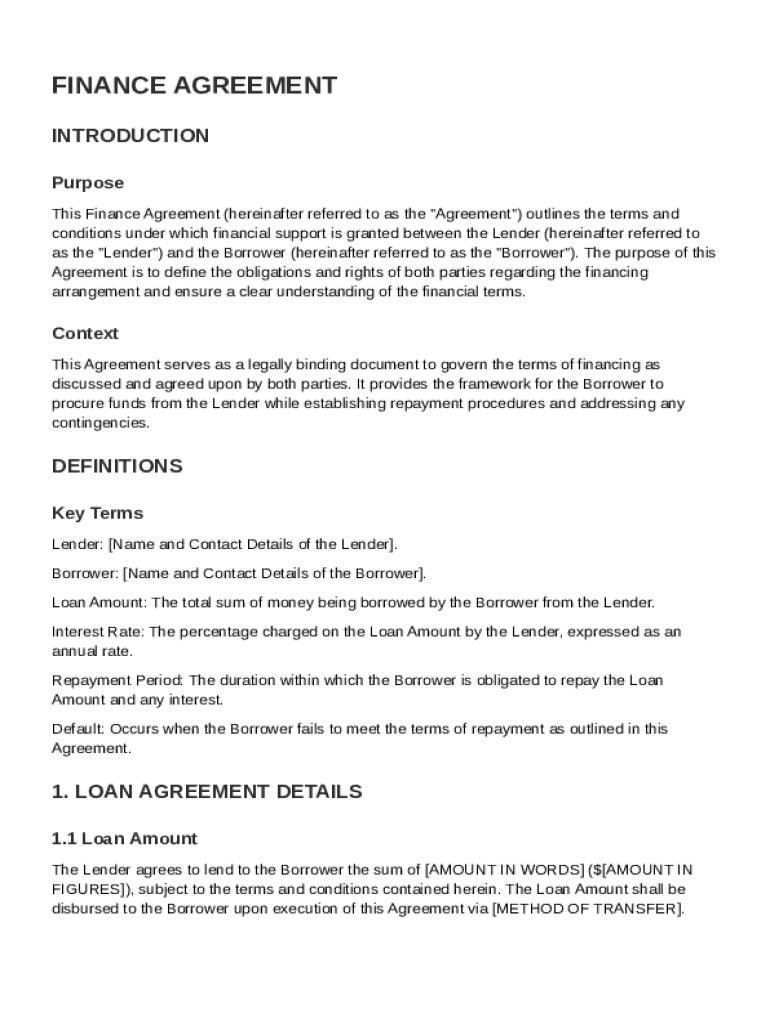







Definition and Meaning of the Finance Agreement Template
A finance agreement template is a structured document that outlines the terms and conditions of a financial agreement between a lender and a borrower. It details critical elements such as the loan amount, interest rate, repayment schedule, and any additional fees or penalties. This template acts as a legally binding contract, providing clarity and certainty for both parties involved in the transaction. It ensures that all parties understand their obligations, such as repayment terms and consequences of default, thus minimizing the risk of misunderstandings or disputes.
In the context of business, finance agreements are vital for facilitating transparency and ensuring that both lenders and borrowers can easily track the terms of a financial arrangement. This document not only protects the interests of both parties but also serves as a reference tool that can be consulted if questions arise regarding the agreed-upon terms.
How to Use the Finance Agreement Template
Using a finance agreement template involves several clear steps to ensure that all necessary details are accurately captured and agreed upon. Initially, both parties must review the template to ensure it covers all essential aspects of the financial arrangement.
- Review the Template: Begin by studying the template to understand the sections and stipulations included.
- Customize the Document: Input specific details such as the names of the lender and borrower, loan amount, and bespoke terms.
- Detail Repayment Terms: Clearly state the repayment schedule, including any grace periods or penalties for late payments.
- Specify Interest Rates and Fees: Outline the interest rate applicable to the loan and any additional fees associated with the agreement.
- Include Default Provisions: Define the actions that will be taken in case the borrower defaults on the loan.
- Legal Review: It's advisable to have the document reviewed by a legal professional to ensure compliance with applicable laws.
- Finalize the Agreement: Once both parties are satisfied, sign the document to solidify the agreement.
Using a structured template can save time and help avoid potential legal pitfalls by ensuring that the agreement adheres to relevant legal standards and regulations.
Key Elements of the Finance Agreement Template
A comprehensive finance agreement template typically includes the following key elements:
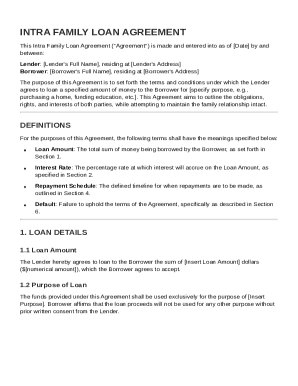
- Loan Amount: The total sum of money being borrowed.
- Interest Rate: The percentage charged on the borrowed amount over a specified period.
- Repayment Schedule: The timeline and conditions under which the borrower will repay the loan.
- Additional Fees: Any extra charges that may apply, such as processing or late fees.
- Obligations of Both Parties: Detailed responsibilities and duties for the lender and borrower.
- Default Provisions: Conditions under which the loan may be considered in default, along with the consequences.
- Governing Law: The legal jurisdiction under which the agreement is governed.
Including all these elements ensures that both parties have a clear understanding of their rights and responsibilities, and it helps to avoid disputes.
Important Terms Related to the Finance Agreement Template
Several important terms are often used within a finance agreement template to clarify the specifics of the financial arrangement:
- Principal Amount: The original sum of money borrowed.
- APR (Annual Percentage Rate): A broader measure of the cost of borrowing that includes interest and other fees.
- Maturity Date: When the final repayment is due, marking the end of the loan period.
- Collateral: Assets pledged by the borrower to secure a loan.
- Default: Failure to meet the legal obligations outlined in the agreement.
Understanding these terms is crucial for both lenders and borrowers to fully grasp the financial commitments and conditions set out in the agreement.
Legal Use of the Finance Agreement Template
To ensure that a finance agreement template is legally enforceable, it's important to adhere to the relevant legal standards and requirements. This includes ensuring that both parties are of legal age and have the capacity to enter into a contract, and that the terms of the agreement do not contravene any existing laws or regulations.
Typically, the agreement should be signed by both parties, witnessed, and dated to provide a clear record of the contractual obligations. Moreover, it should stipulate the governing law, indicating the legal jurisdiction that will preside over any disputes arising from the agreement.
Examples of Using the Finance Agreement Template
Finance agreement templates can be used in a variety of scenarios. Here are some common examples:
- Personal Loans: Individuals borrowing money from a private lender for personal expenses.
- Business Loans: Companies seeking funding for expansion or operational expenses.
- Auto Financing: Agreements related to the purchase of a vehicle through financing.
- Real Estate Transactions: Financing terms for purchasing property.
In each of these cases, the template serves as the foundation for establishing clear, legal guidelines for the financial transaction.
Steps to Complete the Finance Agreement Template
Completing the finance agreement template requires careful attention to detail and collaboration between the involved parties:
- Gather Information: Collect all necessary information including full legal names, addresses, and the financial details pertinent to the loan.
- Fill Template Sections: Enter details into the template, ensuring each section is accurately filled out.
- Review Terms: Carefully double-check all terms and conditions to ensure accuracy and completeness.
- Negotiate Terms: Both parties should discuss and negotiate any necessary changes to ensure mutual agreement.
- Sign and Date: Finalize the agreement with signatures from both parties and set the effective date.
Efficient completion of the template ensures both parties have a clear, legally binding agreement that outlines their financial transaction.
State-Specific Rules for the Finance Agreement Template
Finance agreement templates may need to be adjusted to meet state-specific regulations within the United States. Different states may have varying laws regarding interest rates, loan limits, and contract enforcement. For instance:
- Interest Rate Caps: Some states enforce maximum interest rates that can be charged on loans.
- Usury Laws: Protect borrowers from excessively high-interest rates.
- Contractual Terms: Specific wording or clauses may be required to ensure enforceability in a given state.
Understanding and incorporating these state-specific requirements is crucial to ensure that the agreement remains legally valid and enforceable. Legal counsel can be beneficial in interpreting these variations to ensure full compliance.