






Definition and Purpose of the Equal Ownership of a House Contract
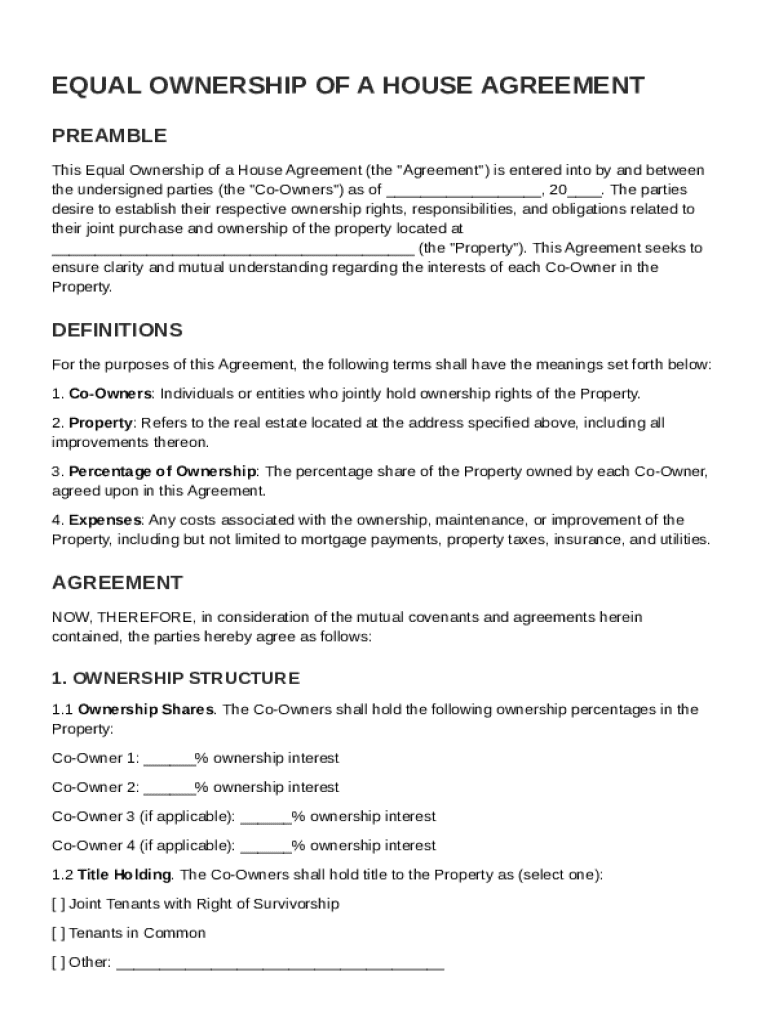
The Equal Ownership of a House Contract, also known as a joint ownership agreement, is a legal document that outlines the rights and responsibilities of co-owners who hold equal stakes in a property. This contract is essential for ensuring mutual understanding among owners regarding their shares, financial obligations, property use, and maintenance. By clearly defining these terms, the agreement helps prevent potential disputes and provides a framework for dispute resolution if conflicts arise.
Key Elements of the Contract
- Ownership Shares: The contract specifies the percentage of ownership each party holds, ensuring clarity in the distribution of property rights.
- Financial Responsibilities: It details how costs, such as mortgage payments, taxes, and maintenance fees, will be divided among co-owners.
- Property Use and Maintenance: Rules regarding property usage and upkeep are established to maintain harmony and ensure proper care.
- Sale or Disposition Procedures: The agreement outlines procedures for selling the property or altering ownership shares, including rights of first refusal.
- Dispute Resolution Methods: Mechanisms for resolving disagreements, such as mediation or arbitration, are included to handle disputes efficiently.
Steps to Complete the Equal Ownership of a House Contract Template
- Collect Personal Information: Ensure all owners complete their personal data, including names, addresses, and contact details.
- Define Ownership Shares and Responsibilities: Agree on and document the percentage ownership each person holds and how costs will be shared.
- Outline Property Use Rules: Establish guidelines for day-to-day property use and required maintenance duties.
- Detail Procedures for Property Sale: Set out terms for selling the property or changes to ownership, ensuring consensus on essential decisions.
- Add Dispute Resolution Clauses: Insert mechanisms for resolving potential disputes, like mediation or arbitration.
- Review Legal Compliance: Verify the agreement adheres to local laws and regulations to remain enforceable.
How to Use the Equal Ownership of a House Contract Template
To effectively use the Equal Ownership of a House Contract Template, follow these guidelines:
- Customizing the Template: Tailor the template to fit the specific details and needs of your ownership arrangement.
- Consultation with Legal Professionals: Engage a qualified attorney to review the customized contract to ensure all legal requirements are met and the document is legally sound.
- Formal Agreement Approval: Once customized and reviewed, all parties should read the agreement thoroughly to confirm understanding and agreement. Afterward, sign and date the document to establish it as a binding contract.
Who Typically Uses the Equal Ownership of a House Contract
The Equal Ownership of a House Contract is commonly used by:
- Family Members: Siblings or relatives who inherit property jointly and need to clarify ownership and responsibilities.
- Friends or Business Partners: Individuals choosing to purchase property together as an investment or shared living space.
- Married or Unmarried Couples: Partners wishing to define property ownership and responsibilities clearly, regardless of marital status.


Legal Use of the Equal Ownership of a House Contract
The legal enforceability of the Equal Ownership of a House Contract relies on its proper drafting following applicable state laws. Legal consultation is recommended to ensure the contract is valid and enforceable. It serves as a crucial evidence document in legal disputes, establishing the clear intentions and agreements of involved parties regarding property ownership and management.
Important Terms and Clauses
- Right of First Refusal: A provision allowing co-owners to purchase the interest of any selling party before external buyers are considered.
- Co-ownership Requirements: Essential expectations and responsibilities each owner must adhere to maintain a positive co-ownership experience.
- Conflict Resolution: Specific clauses detailing preferred methods for resolving conflicts to prevent litigation.
State-Specific Rules and Variations
Ownership and property laws can vary significantly by state, affecting how the contract should be drafted to comply with local regulations. State-specific laws may influence aspects like property transfer procedures and tax implications. Therefore, owners need to consult legal professionals familiar with state-specific regulations to ensure compliance.
Examples and Scenarios
Scenario 1: A group of friends buys a vacation home together. The contract would delineate who can use the property at specific times and how expenses are shared.
Scenario 2: A couple buys a house but plans to sell it if they relocate. The agreement includes clauses on how any proceeds will be split and the conditions under which the sale can occur.
These examples illustrate the contract's flexibility and its role in providing a structured approach to shared property ownership, minimizing the risk of conflicts and misunderstandings.