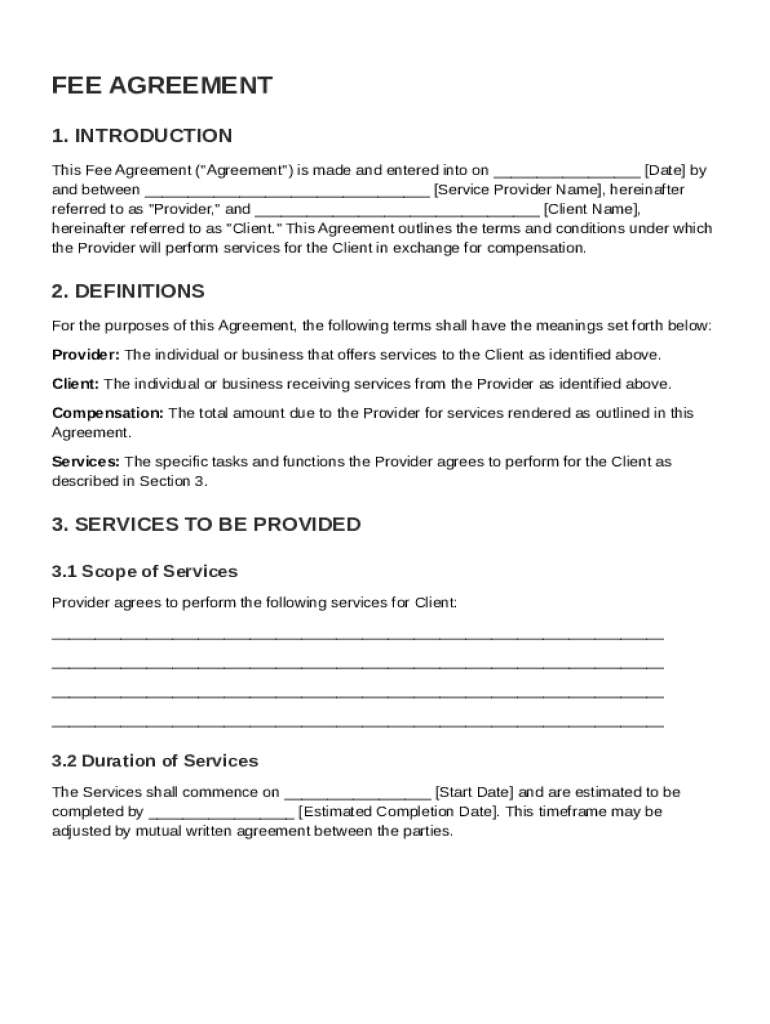







Definition and Purpose of the Fee Agreement Template
The Fee Agreement Template serves as a formal contract that outlines the agreed-upon terms and conditions between a service provider and a client. It establishes the groundwork for providing services in exchange for compensation. This legal document ensures clarity and protects both parties' interests by explicitly defining the scope of services, payment structures, timelines, and responsibilities. Its comprehensive nature deters potential disputes by pre-emptively addressing key areas like confidentiality, termination conditions, and dispute resolution.
Fee agreements are crucial for setting expectations and providing a transparent record of the obligations each party has. By documenting these terms, the agreement acts as a reference point throughout the duration of the service relationship, ensuring that both parties adhere to the initial commitments laid out.
Key Elements of the Fee Agreement Template
The Fee Agreement Template includes several important components necessary for a complete and clear contractual relationship. Essential elements typically covered are:
- Definitions: Ensures all parties understand specific terms used in the agreement.
- Scope and Duration of Services: Clearly outlines what services will be provided and the period over which they will be delivered.
- Fee Structure and Payment Schedule: Specifies how much will be charged for the services and the timeline for payments.
- Reimbursable Expenses: Details any additional costs that may be billed to the client.
- Termination Clauses: Provides guidelines on terminating the agreement under specific conditions.
- Confidentiality Obligations: Protects sensitive information from being disclosed to unauthorized parties.
- Dispute Resolution: Outlines procedures for resolving disagreements that may arise during the contract's execution.
- Signatures: Both parties must sign the document, making it legally binding.
Understanding these elements ensures that the Fee Agreement Template offers comprehensive coverage, safeguarding the interests of both the service provider and the client.
How to Use the Fee Agreement Template
Utilizing the Fee Agreement Template involves several straightforward steps to ensure it meets both parties' needs:
- Download and Review: Obtain the template from a reputable source and carefully read through it to ensure it fits the specific business arrangement.
- Tailor the Document: Modify the template to suit the particular details of your business relationship, including customizing terms and inserting relevant data such as fees, scope, and duration.
- Consult Legal Advice: Although templates are designed to cover general aspects, consulting with a legal professional can help tailor the agreement further to comply with state laws and personal circumstances.
- Negotiate Terms: Discuss any potential changes with the other party to reach a mutual agreement before finalizing the document.
- Sign and Distribute: Once both parties agree, ensure each party signs the document and retains a copy for their records.
Following these steps ensures that the Fee Agreement Template effectively memorializes the contractual relationship and protects both parties involved.
Practical Examples of Using the Fee Agreement Template
Here are some scenarios where a Fee Agreement Template might be effectively utilized:
- Consulting Services: When a consultant offers strategic advice to a business, a fee agreement outlines the project's scope, fee structure, and any additional costs.
- Freelance Projects: A freelance graphic designer may use a fee agreement to delineate task specifics, expected deliverables, and deadlines.
- Professional Services: Lawyers or accountants often use these templates to set client relations terms concerning legal or financial advice.
The specificity of the Fee Agreement Template is essential in these cases to avoid misunderstandings and ensure clarity from project initiation to completion.
Important Terms Related to Fee Agreements
Understanding the terminology within the Fee Agreement is critical for effective usage:
- Retainer: An upfront fee paid in advance for services that are billed against as the work proceeds.
- Scope Creep: Refers to adding features and services that are not initially scoped within the agreement, necessitating renegotiation of terms or additional charges.
- Net Terms: The payment period granted to a client to pay the corresponding invoice, often 30, 45, or 60 days after receipt of service.
Grasping these terms helps in navigating the agreement process and ensures that users can effectively draft and interpret fee agreements.
Legal Use of the Fee Agreement Template
The legal use of a Fee Agreement Template involves ensuring compliance with applicable laws and regulations. When drafting this document, the parties should:
- Ensure Compliance: Adhere to state-specific laws regarding contract creation and enforcement. Certain states may have specific mandates about service contracts, like mandatory disclosures or stipulations for specific language.
- Meet ESIGN Act Requirements: If utilizing electronic signatures, like those through DocHub's platform, ensure compliance with the Electronic Signatures in Global and National Commerce (ESIGN) Act so that the signatures are legally binding.
- Verify Terms: Clauses around termination, dispute resolution, and confidential information should be adjusted to meet specific legal standards and contractual obligations.
Legal compliance not only strengthens the agreement's enforceability but also provides peace of mind for both parties involved.
Variants and Alternatives to Fee Agreement Templates
While the Fee Agreement Template suits many service-related transactions, other agreements might better suit specific situations:
- Retainer Agreements: Suitable when ongoing services are offered, and retaining services in advance is necessary.
- Project-Based Contracts: Ideal for engagements with a specific deliverable and timeframe, such as construction projects.
- Hourly Work Agreements: Best for freelance arrangements where compensation is based on hours worked rather than a flat fee or project basis.
Understanding these variants allows for selecting or customizing the right contract for specific business needs.
Who Typically Uses the Fee Agreement Template
The Fee Agreement Template is extensively used across various industries and professions. Proactive professionals who often employ these agreements include:
- Consultants: Specialists providing expert guidance in marketing, IT, or management.
- Freelancers: Independent workers in fields such as graphic design, content writing, or software development.
- Legal Professionals: Attorneys setting terms for legal representation or advice.
- Creative Agencies: Agencies providing design, advertising, or public relations services.
The flexibility of the Fee Agreement Template ensures it meets the diverse needs of various professionals and businesses, promoting efficient and secure business operations.