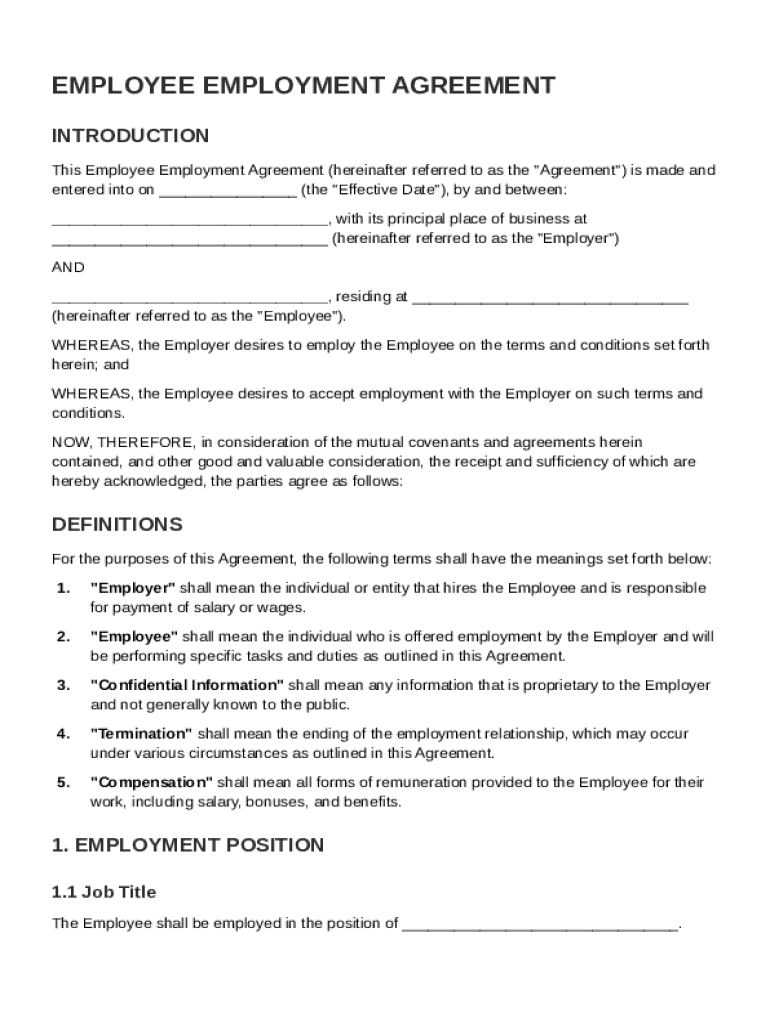







Definition and Meaning of the Employee Employer Contract Template
An Employee Employer Contract Template is a standardized form used to formalize the professional relationship between an employer and an employee. This legal document outlines the terms and conditions of employment, ensuring clarity and mutual understanding. The template covers essential aspects such as job responsibilities, compensation, benefits, and the obligations of both parties. By utilizing this template, both employers and employees can reduce potential ambiguities and disputes, thereby maintaining a harmonious working relationship.
In practice, the template serves as a guiding framework to customize specific agreements based on the unique needs of the employer and the role of the employee. Employers can detail additional clauses tailored to their industry or enterprise-specific policies, while employees gain insight into their role and expectations within the company.
Key Elements of the Employee Employer Contract Template
The Employee Employer Contract Template includes several pivotal components that delineate the nature and scope of the employment arrangement. These elements ensure that both the employer and employee are aligned on the terms agreed upon.
- Job Position and Responsibilities: A clear description of the position offered, including the duties and responsibilities associated with the role.
- Compensation and Benefits: Detailed information on salary, wages, bonuses, and any additional benefits such as health insurance or retirement plans.
- Employment Duration: The period for which the contract is valid, whether it is a fixed-term or indefinite agreement.
- Work Schedule: Details about working hours, days of the week, and any flexibility or remote working options.
- Obligations of Parties: Specific obligations and commitments required from both the employer and employee.
- Termination Conditions: Policies regarding the termination of employment, including notice periods and grounds for dismissal.
- Miscellaneous Provisions: Additional clauses such as confidentiality, non-compete agreements, and dispute resolution procedures.
How to Use the Employee Employer Contract Template
Utilizing the Employee Employer Contract Template requires a thoughtful approach to ensure it meets the legal and operational needs of both parties. Here’s a guide to navigating and tailoring the template:
- Review and Understand the Template: Carefully read each section of the template to understand standard provisions and identify areas needing customization.
- Customize the Template: Tailor the contract to fit the specific needs of the role and organization, adding or editing clauses relevant to the job position and local laws.
- Consult Legal Assistance: If necessary, seek legal advice to ensure the contract complies with applicable federal and state employment laws and regulations.
- Discuss with the Employee: Present the customized contract to the prospective employee, explaining each section to ensure clarity and mutual understanding.
- Execute the Agreement: Both parties should sign the finalized contract, which solidifies the agreement and serves as a point of reference for future disputes.
Who Typically Uses the Employee Employer Contract Template
The Employee Employer Contract Template is a versatile tool furthering the interests of various stakeholders in the employment process. Its usage spans across different scenarios and entities:
- HR Departments: Human Resources professionals often use these templates to streamline the hiring process and ensure consistency in employment agreements across an organization.
- Business Owners: Employers, particularly in small and medium enterprises, leverage templates to draft contracts efficiently without requiring extensive legal resources.
- Recruitment Agencies: These agencies employ the templates to expedite the matching of candidates with aligning job roles, ensuring both parties are clear on terms from the onset.
- Legal Advisors: Attorneys or legal consultants might use these templates as foundational documents before making standard legal adjustments suitable for specific roles or industries.


Steps to Complete the Employee Employer Contract Template
Completing the Employee Employer Contract Template involves several methodical steps to ensure all necessary details are captured accurately. The process can be broken down as follows:
- Input Basic Information: Start by filling in basic details such as names and addresses of both the employer and employee.
- Detail Job Position: Clearly describe the job role, including key responsibilities and expectations.
- Define Compensation Package: Specify salary details and any related benefits to outline the total compensation package.
- Set Employment Duration: Include the time frame of employment—whether it’s temporary, contract-based, or permanent.
- Outline Work Schedule: Provide details on required working hours, scheduled shifts, or any flexible work arrangements.
- Articulate Obligations: Define the specific duties and obligations required from both employee and employer for an effective working relationship.
- Clarify Termination Terms: Clearly delineate terms and conditions under which the employment can be terminated by either party.
- Review and Sign: Ensure a thorough review by all parties involved before signing and finalizing the contract.
Legal Use of the Employee Employer Contract Template
The use of an Employee Employer Contract Template is governed by the legal principles ensuring it supports a fair and legally enforceable employment contract. Considerations for legal use include:
- Compliance with Employment Laws: The template should adhere to the Fair Labor Standards Act (FLSA) and other relevant federal and state regulations to prevent legal disputes.
- Inclusion of Mandatory Clauses: Legal templates should include all necessary provisions such as non-discrimination policies, work conditions, and compensation details that align with legal requirements.
- Secure Consent: Both parties must provide informed consent to the terms outlined by signing the contract, which indicates mutual agreement.
Important Terms Related to the Employee Employer Contract Template
A robust understanding of the common terms associated with the Employee Employer Contract Template enhances its effectiveness and reduces potential misinterpretations:
- Probationary Period: Initial period of employment used to evaluate the suitability of the employee.
- Non-Compete Clause: Agreement restricting the employee from working with competitors post-employment.
- Confidentiality Agreement: Provisions to protect sensitive and proprietary information of the employer.
- At-Will Employment: Arrangement where either party can terminate the employment under certain conditions without cause.
- Benefits Package: Includes health insurance, retirement plans, and other non-wage compensations offered by the employer.
State-Specific Rules for the Employee Employer Contract Template
Employment laws can vary significantly between states, affecting how the Employee Employer Contract Template should be used and customized:
- California: Known for stringent regulations on worker rights and disclosure requirements, demanding precise language in contracts.
- New York: Employers must adhere to the Wage Theft Prevention Act, requiring detailed wage notices in employment contracts.
- Texas: While employment-at-will is standard, public sector employees enjoy specific protection against retaliatory termination.
- Illinois: Adherence to Biometric Information Privacy Act (BIPA) in cases where employment involves biometric data processing.
Employers should adapt the template to consider these state-specific rules, ensuring compliance and upholding the rights of both parties involved.