




Definition and Meaning
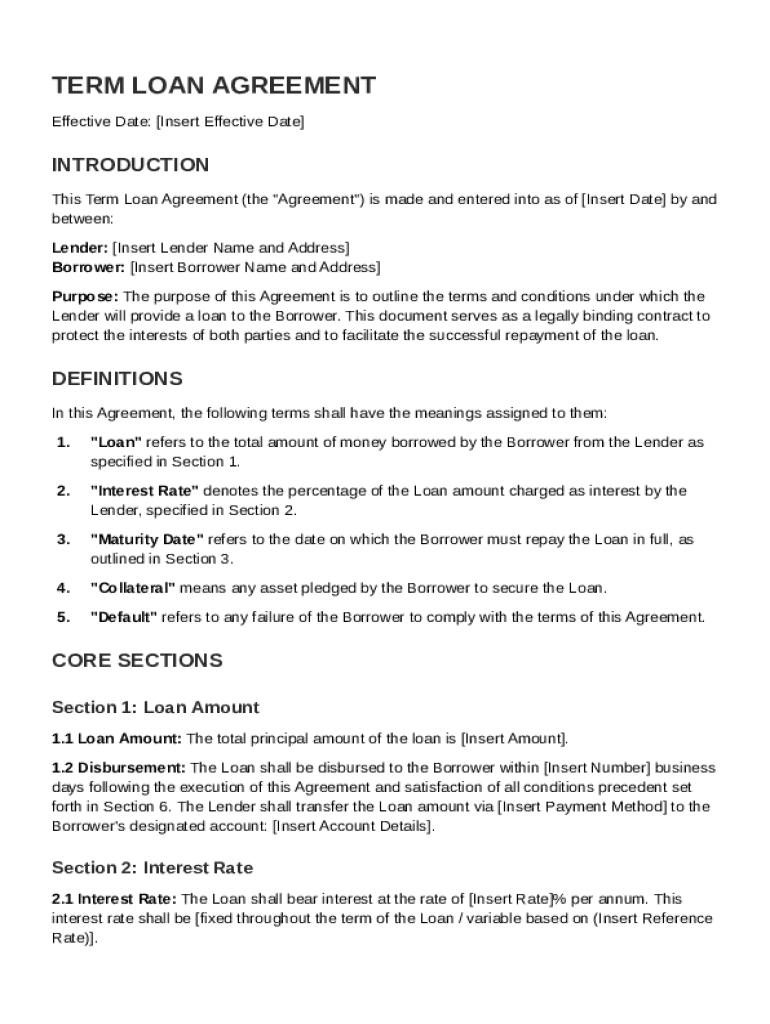
A Term Loan Agreement Template is a legally binding document that outlines the terms under which a lender provides a term loan to a borrower. This agreement serves as a contract detailing the obligations and rights of both parties. It includes critical elements like the loan amount, interest rate, repayment schedule, collateral requirements, and conditions for loan disbursement. In addition, the template provides clear definitions of key terms to prevent misunderstandings and ensure all parties are aligned on the agreement's stipulations. For businesses or individuals seeking structured financing, understanding this document is foundational to safeguarding their interests.
The Term Loan Agreement not only specifies the loan specifics but also addresses the representations and warranties each party must uphold. This ensures that the borrower meets certain conditions before funds are disbursed. Moreover, it includes covenants, which are promises or conditions that the borrower must maintain throughout the loan term to remain compliant. Additionally, the agreement delineates events of default, which are scenarios where the borrower fails to meet the contract's requirements, leading to potential legal actions or penalties.
Key Elements of the Term Loan Agreement Template
The Term Loan Agreement Template contains several essential elements designed to protect both the lender and the borrower. Each section of the template serves a specific purpose, ensuring clarity and accountability. Key components include:
- Loan Amount and Interest Rate: Clearly states the principal amount and how interest will be calculated—either fixed or variable.
- Repayment Schedule: Details the frequency and amount of payments, including specific due dates.
- Collateral Requirements: Lists any assets required as security for the loan, protecting the lender in case of default.
- Representations and Warranties: Includes declarations both parties make to uphold the terms of the agreement.
- Covenants: Specifies ongoing obligations the borrower must comply with during the loan period.
- Events of Default: Outlines circumstances that qualify as a breach of the agreement, triggering potential penalties.
Understanding these core components is crucial for any entity entering into a term loan agreement to ensure comprehensive protection and compliance.
Steps to Complete the Term Loan Agreement Template
Filling out the Term Loan Agreement Template involves a series of methodical steps to ensure all necessary details are accurately represented. Here’s a step-by-step guide:
- Gather Required Information: Collect all necessary information from both the lender and borrower, including identification details and financial statements.
- Define Loan Terms: Specify the principal amount, interest rate, and repayment schedule tailored to the borrower’s financial situation.
- Establish Collateral: Detail the assets offered as collateral, including their appraised value and any liens or encumbrances.
- Draft Covenants and Conditions: Outline the specific covenants and conditions the borrower must follow, ensuring they agree to maintain financial health indicators.
- Review Representations and Warranties: Both parties need to verify their ability to meet the obligations stated, including legality and authorization to enter the agreement.
- Identify Events of Default: Clearly state what actions or failures to act will trigger a default, along with the remedies or penalties.
- Finalize and Sign: Once all sections are completed, both parties must carefully review the document and sign to affirm their understanding and agreement.
Completing the Term Loan Agreement Template accurately is pivotal to ensuring all legal and financial obligations can be met without ambiguity.
Who Typically Uses the Term Loan Agreement Template
The Term Loan Agreement Template is primarily used by businesses and financial institutions seeking to formalize a loan arrangement. Common users include:
- Small to Medium Enterprises (SMEs): Often rely on term loans to expand operations, purchase equipment, or manage cash flow.
- Corporations: Utilize term loans for significant capital investments or acquisitions requiring structured repayment plans.
- Banks and Lending Institutions: Draft these agreements when issuing loans to maintain a standardized procedure across transactions.
- Legal and Financial Advisers: Frequently assist clients with the drafting and negotiation of these agreements to protect their financial interests.
Understanding who uses this template can provide valuable insight into its practical applications in various industries and scenarios.


Important Terms Related to the Term Loan Agreement Template
Several key terms are crucial for understanding the Term Loan Agreement Template. Familiarity with these terms can aid in comprehending the intricacies of the document:
- Principal: The original sum of money borrowed that the borrower agrees to repay.
- Interest Rate: The percentage charged on the principal, representing the cost of borrowing the funds.
- Maturity Date: The specific date by which the loan must be fully repaid.
- Amortization: The process of spreading out loan payments over time, which includes both principal and interest.
- Lien: A legal right or interest that a lender has in the borrower's collateral, ensuring repayment priority.
- Grace Period: A defined period after the due date during which the borrower can make a payment without incurring penalties.
These terms form the foundation of a term loan agreement, contributing to its comprehensive and legally binding nature.
Legal Use of the Term Loan Agreement Template
The legal utility of the Term Loan Agreement Template lies in its ability to serve as a binding contract that upholds the interests of both lenders and borrowers. When drafted and executed correctly, it provides enforceable terms under U.S. contract law. The document delineates legal obligations and offers a framework for resolving disputes that might arise during the loan's tenure.
In situations where disagreements occur, the agreement’s clauses concerning dispute resolution and governing law become particularly relevant. Typically, these agreements will specify whether litigation or arbitration is preferred and identify which state’s laws will govern the contract’s interpretation. This ensures that disputes are managed in an orderly manner, mitigating risks and uncertainties for involved parties.
State-Specific Rules for the Term Loan Agreement Template
While the Term Loan Agreement Template provides a general framework applicable across the U.S., certain states may have additional regulations or variations. Understanding local laws is important for ensuring compliance and protection under state-specific statutory requirements.
For example, states such as California and New York may have distinct usury laws that cap the maximum allowable interest rate on loans. Additionally, the requirement for documentation or notification to specific state agencies may vary, affecting how agreements are executed and enforced.
Awareness of these state-specific rules enables parties to tailor the template appropriately, ensuring adherence to local statutes and enhancing legal robustness.
Examples of Using the Term Loan Agreement Template
To illustrate the practical application of the Term Loan Agreement Template, consider the following examples:
- Example 1: SME Expansion: A small manufacturing company in Illinois seeks a term loan to acquire new machinery. The agreement specifies a $500,000 principal with a 5% fixed interest rate over seven years. This tailored financial plan aligns with the company's expected revenue growth.
- Example 2: Real Estate Acquisition: A real estate firm in Texas uses the template to secure financing for a new property investment. Collateral includes the property being acquired, with detailed terms restricting the firm's ability to take on additional debt.
- Example 3: Start-Up Growth: A tech start-up in California negotiates a term loan to fund research and development. The agreement incorporates convertible features, allowing for potential equity conversion upon certain performance milestones.
Each example demonstrates how the Term Loan Agreement Template can be effectively utilized to meet diverse financial needs while ensuring terms are binding and equitable for all parties.