
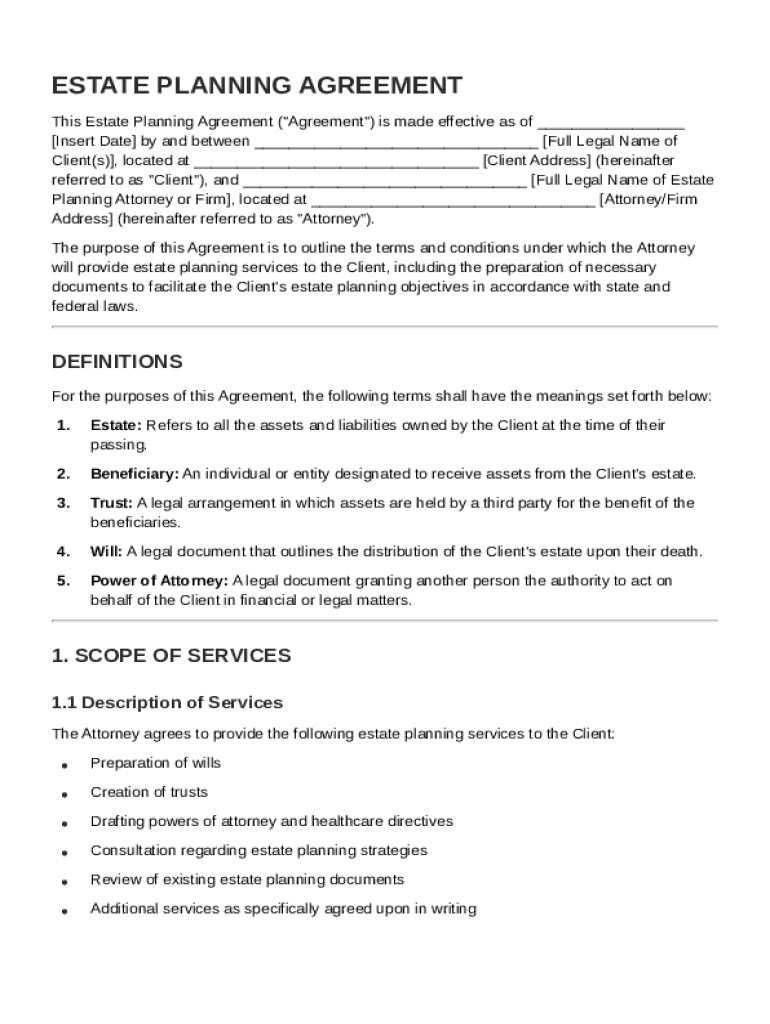







Definition & Importance of the Estate Planning Agreement Template
The Estate Planning Agreement Template serves as a foundational document that outlines the terms and expectations between an attorney and a client for estate planning services. This template includes provisions for creating wills, trusts, and powers of attorney. It is essential in clearly defining responsibilities, fees, confidentiality obligations, and termination conditions. This clarity ensures both parties have a mutual understanding, minimizing potential disputes and fostering a transparent attorney-client relationship. For individuals, having a well-structured agreement aids in planning their legacy, ensuring that their wishes are accurately captured and legally recognized.
How to Use the Estate Planning Agreement Template
To effectively use the Estate Planning Agreement Template, begin by reviewing its sections, ensuring that they align with the specific needs of the estate planning process. Customize sections such as the scope of services, fee structure, and confidentiality clauses to reflect the agreement between the client and the attorney accurately. Involve both parties in reviewing the document to confirm that all terms are understood and agreed upon. It may also be beneficial to consult with a legal professional to ensure that the agreement complies with relevant state laws and adequately protects the interests of all involved parties.
Steps to Complete the Estate Planning Agreement Template
- Initial Review: Carefully read through the entire template to understand every section.
- Customize Details: Modify entries like client information, the scope of services, and fees to tailor the template to the specific agreement.
- Review Legal Terms: Ensure all legal terms are appropriate for the agreement, possibly consulting a legal expert for accuracy.
- Confirm Accuracy: Double-check information like dates, names, and amounts for correctness.
- Signatures and Execution: Once completed and reviewed, both parties should sign the agreement, officially putting it into effect.
Key Elements of the Estate Planning Agreement Template
- Scope of Services: Clearly states what estate planning services the attorney will provide, such as creating wills or establishing trusts.
- Fee Structures: Details on how the services will be billed, including any retainer fees and payment schedules.
- Confidentiality Clauses: Assurances that all shared information will be kept confidential, protecting the client’s privacy.
- Responsibilities: Outlines the responsibilities of both parties, such as the client’s duty to provide accurate information and the attorney’s obligation to perform tasks professionally.
Important Terms Related to Estate Planning Agreements
Understanding key terms like "executor," which refers to the person managing the estate according to the will, and "beneficiary," the individual or entity receiving benefits, is crucial. Terms like "power of attorney" designate another person to make decisions on someone’s behalf. Grasp the difference between a "revocable trust," which can be altered, and an "irrevocable trust," which cannot be changed after its establishment.
Legal Use of the Estate Planning Agreement Template
The template must comply with legal standards, including adhering to relevant confidentiality and professional conduct laws. It typically includes a governing law clause stating which state’s laws will apply, crucial for resolving any disputes. The agreement must be signed by both parties to be enforceable, and electronic signatures are often legally binding if they comply with the ESIGN Act.
State-Specific Rules for the Estate Planning Agreement Template
Estate planning laws can vary significantly from state to state. For instance, community property states may have different requirements for how assets are treated compared to non-community property states. State-specific provisions may also affect estate taxes or how wills and trusts are structured. It is vital to consult local legal resources to ensure compliance with all applicable regulations.
Examples of Using the Estate Planning Agreement Template
Consider a middle-aged client looking to establish a trust for their children while also planning for potential incapacitation. The agreement specifies the creation of a living will and a durable power of attorney. It ensures all parties are aware of their roles and the legal structures in place, providing peace of mind and legal clarity. Another example involves a newly retired couple who wish to update their estate plans to reflect changes in family dynamics and financial circumstances, using the agreement to outline new terms and services.







