Definition & Meaning
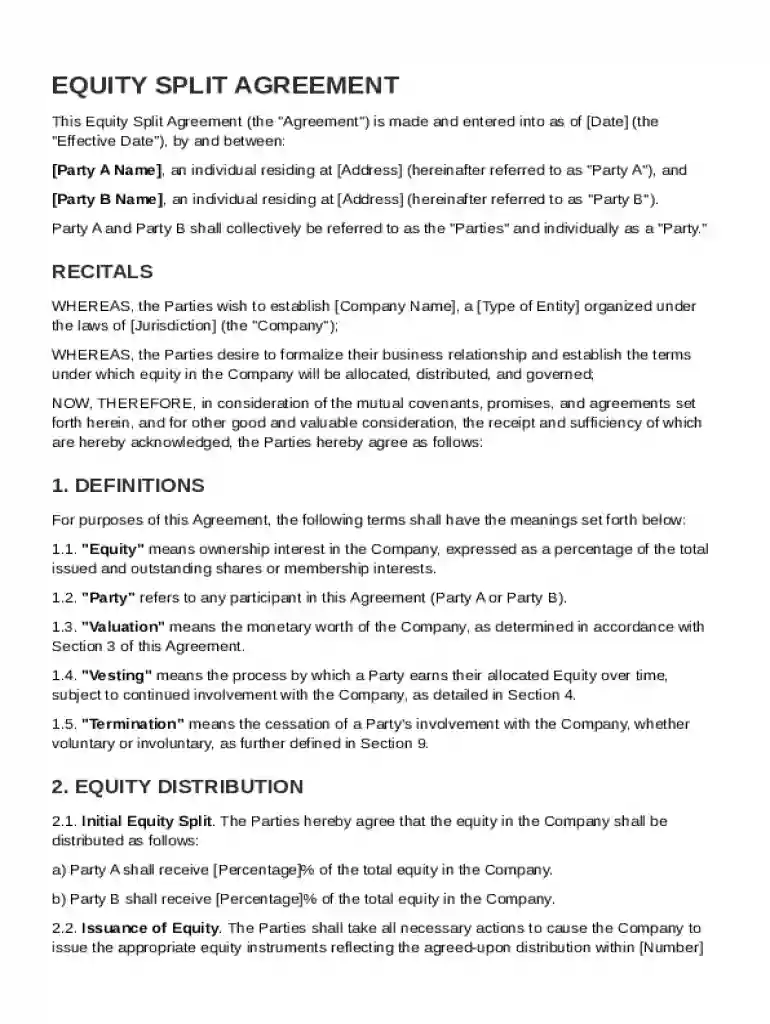
The Equity Split Agreement Template serves as a foundational document outlining the terms between two or more parties regarding the allocation, distribution, and governance of equity within a new or existing company. It is essential for delineating how ownership and control of the business will be shared among founders, investors, or stakeholders. The agreement includes definitions of critical terms such as equity, valuation, vesting, and more, ensuring all parties have a mutual understanding of their responsibilities and benefits. By clarifying these terms, the template helps mitigate potential disputes and aligns expectations from the outset.
Key Elements of the Equity Split Agreement Template
An Equity Split Agreement Template typically comprises several critical components, each playing a pivotal role in defining the details of the equity distribution. These elements include:
- Initial Equity Distribution: Specifies the percentage of ownership assigned to each party at the beginning.
- Vesting Schedule: Outlines the timeline and conditions under which equity is granted, ensuring continued contribution from stakeholders.
- Valuation Methodology: Details how the company's valuation will be determined and updated, crucial for future equity transactions.
- Termination Provisions: Establishes the conditions under which the agreement can be terminated, protecting the interests of all parties involved.
- Confidentiality Clauses: Ensures that sensitive business information remains protected throughout and beyond the duration of the agreement.
Important Terms Related to Equity Split Agreement Template
Understanding the specific terminology used in the Equity Split Agreement Template is critical for clarity and compliance. Terms often included are:
- Equity: Represents ownership interest and is often tied to stock or shares in the company.
- Vesting: Refers to the process by which an employee earns non-forfeitable rights over employer contributions made to the employee's qualified retirement plan account or stock options.
- Liquidation: The process of bringing a business to an end and distributing its assets to claimants.
- Dilution: Occurs when a company issues new equity, reducing existing shareholders' percentage of ownership.
- Exit Strategy: A planned approach to ending a venture or dissolving a partnership, often involving sale or liquidation.
Legal Use of the Equity Split Agreement Template
The legal enforceability of the Equity Split Agreement Template is fundamental to its use. It adheres to relevant contractual laws, ensuring it acts as a binding agreement upon all signing parties. Common legal considerations include:
- State-Specific Laws: Variations in requirements based on jurisdiction, affecting the execution and enforceability of agreements.
- Dispute Resolution: Procedures for addressing and resolving conflicts that arise under the agreement without resorting to litigation.
- Amendments: Protocols for modifying the agreement, ensuring any changes are documented and agreed upon by all parties involved.
Step-by-Step Process to Complete the Equity Split Agreement Template
Completing the Equity Split Agreement Template involves several steps to ensure accuracy and completeness:
- Identify Parties: Clearly list all individuals or entities involved in the agreement.
- Define Terms: Articulate any specific language or clauses unique to the business context.
- Detail Equity Split: Clearly outline the initial equity distribution percentages and vesting schedule.
- Review Legal Obligations: Ensure compliance with applicable state laws and business regulations.
- Draft Agreement: Compose the document using the template, including all agreed-upon terms.
- Seek Legal Review: Have a legal professional review the document for accuracy and adherence to legal standards.
- Execute Agreement: All parties sign the final document, confirming understanding and acceptance.
Who Typically Uses the Equity Split Agreement Template
Various business entities, startups, and partnerships use the Equity Split Agreement Template to formalize their equity distribution arrangements. The typical users include:

- Founders: Startup founders often use this template to allocate shares amongst themselves and early investors.
- Investors: Venture capitalists and angel investors use it to secure an understanding of their stake in a company.
- Business Partners: Individuals entering partnerships where equity sharing is integral to business operations.
- Legal Advisors: Lawyers who need to draft initial agreements for their clients in business formation stages.
Software Compatibility
Users of the Equity Split Agreement Template often need to ensure compatibility with various document editing platforms. Popular choices include:
- DocHub: Provides tools for editing, signing, and sharing the agreement, seamlessly integrated with Google Workspace.
- Microsoft Word: Frequently used for creating and editing detailed textual agreements.
- PDF Readers: Essential for viewing and interacting with finalized documents in a standard format.
DocHub supports various file formats, including DOC and PDF, making it versatile for those needing to import or export this template from different software.
State-Specific Rules for the Equity Split Agreement Template
Equity split agreements may be subject to differing legal requirements depending on the state in which the business operates. Considerations include:
- Registration Requirements: Some states require the registration of equity agreements with state bodies for them to be enforceable.
- Tax Implications: Differences in state taxation on equity transactions, which may affect the structure of the agreement.
- Compliance: Ensuring the agreement adheres to specific legal obligations and business norms in the relevant jurisdiction.
Business Entity Types That Benefit Most
Parties utilizing an Equity Split Agreement Template span various business entity types, each benefiting in unique ways:
- LLCs: Limited Liability Companies that want defined member equity arrangements.
- Corporations: For distributing stock options to investors and employees.
- Partnerships: Where equity distribution is vital to the partnership's structure and operation.
Understanding the business entity type helps tailor the Equity Split Agreement Template to specific organizational needs.