





Definition and Meaning of Stockholders Agreement
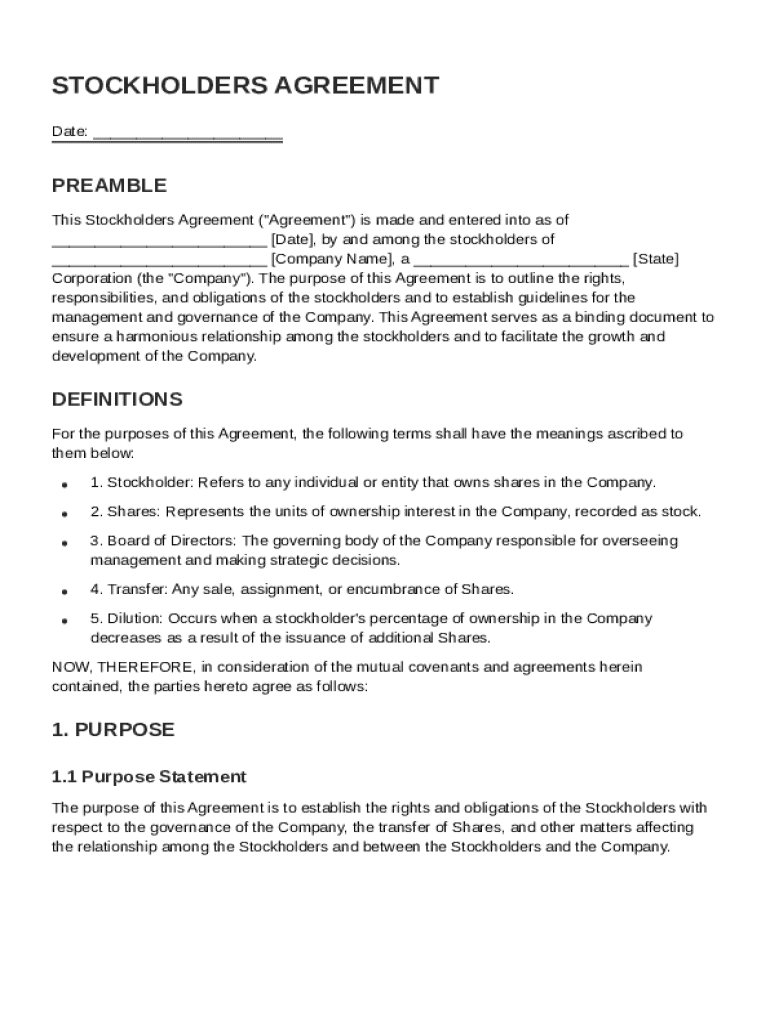
A Stockholders Agreement is a vital document that outlines the rights, responsibilities, and obligations of stockholders within a corporation. This agreement serves as a governance tool, providing a framework for management practices, voting procedures, and the overall operational strategy of the company. It plays a crucial role in ensuring a harmonious relationship among stockholders, promoting transparency, and preventing conflicts. Typical elements found in such an agreement include dividend distribution guidelines, share transfer procedures, anti-dilution provisions, and confidentiality requirements.
Importance in Corporate Governance
- Voting and Decision-Making: Establishing clear voting rights and procedures to ensure all stockholders have a voice in significant corporate decisions.
- Conflict Resolution: Providing mechanisms for resolving disputes among stockholders to maintain a stable business environment.
Practical Scenarios
Many corporations use Stockholders Agreements to safeguard the interests of minority stockholders while outlining the control mechanisms for majority stakeholders. For example, a growing tech startup may include non-voting shares in its agreement to attract investors seeking equity without management responsibilities.
How to Use the Stockholders Agreement Template
Using a Stockholders Agreement Template can streamline the process of drafting a custom agreement tailored to the specific needs of the corporation. This template offers a structured format that covers essential components of a standard stockholder agreement, simplifying the customization process for unique business requirements.
Steps to Customize the Template
- Review Standard Sections: Familiarize yourself with the template's sections and ensure each reflects relevant aspects of your business model.
- Modify as Needed: Adjust clauses related to stockholder rights, voting, and management roles according to company-specific practices.
- Include Additional Provisions: Add clauses for any unique business arrangements or shareholder commitments not covered in the template.
Real-World Example
A fast-growing retail business might adjust the share transfer provisions within the template to prioritize internal transfers among current stockholders before seeking external buyers.
Key Elements of the Stockholders Agreement Template
The Stockholders Agreement Template typically includes several key elements that cover various aspects of corporate governance and shareholder interactions. Understanding these sections helps ensure that the agreement addresses all pertinent issues.
Core Components
- Rights and Obligations: Specifies the rights of stockholders concerning voting, access to information, and dividend entitlement.
- Governance Structure: Details the roles and responsibilities of board members to facilitate effective management.
- Share Transfer Conditions: Outlines the procedures and restrictions involved in transferring shares within the corporation.
Examples of Specific Clauses
- Anti-Dilution Provisions: Protects existing stockholders from dilution of their shares through new stock issues.
- Confidentiality Agreements: Ensures that stockholders maintain discretion regarding sensitive corporate information.
Legal Use of the Stockholders Agreement Template
The Stockholders Agreement Template serves not just as a guide for drafting agreements but also as a legal instrument that governs shareholder relations and corporate affairs. Ensuring that the agreement is legally binding and compliant with relevant laws is crucial.
Legal Compliance Considerations
- Adherence to State Laws: Tailor the agreement to comply with specific state regulations governing corporate shareholder agreements.
- Legally Binding Signatures: All parties should sign the agreement with witnesses to ensure it is enforceable.
Practical Legal Scenarios
A financial services firm, for example, may include specific confidentiality and non-compete clauses to protect proprietary trading strategies and client lists.
Steps to Complete the Stockholders Agreement Template
Completing a Stockholders Agreement Template involves several organized steps to ensure the document serves its intended legal and governance purposes.
Detailed Procedure
- Gather Required Information: Collect the names, shares held, and roles of all stockholders involved.
- Fill in Template Sections: Input the relevant data into predefined sections, adjusting language to reflect corporate policies and practices.
- Review and Revise: Engage legal counsel to review the document for accuracy, completeness, and legal compliance.
- Circulate for Approval: Distribute the draft among stockholders for feedback and final approval.
Completion Checklist
- Ensure all sections of the template are completed and personal information is correct.
- Verify that all attachments and appendices are included where referenced in the agreement.
- Confirm the final version is signed by all parties.
Important Terms Related to Stockholders Agreement Template
A well-structured Stockholders Agreement contains numerous terms and clauses critical to its effective implementation and understanding.
Key Terminology
- Drag-Along Rights: Rights that compel minority stockholders to sell their shares if a majority agree to a sale.
- Tag-Along Rights: Rights that allow minority stockholders to join in a sale if a majority stockholder sells their shares.
- Pre-emptive Rights: Rights allowing existing stockholders to purchase additional shares before the company offers them to new investors.
Business Entity Types and the Stockholders Agreement
Different business entity types may require variations in stockholder agreements to address their distinct legal and operational frameworks.
Adaptation for Entity Type
- Corporations: Often have more complex agreements covering extensive shareholder rights and management structures.
- Limited Liability Companies (LLCs): May include fewer formal mechanisms, focusing on membership interest transfers.
Real-World Case Study
For a software corporation, detailed voting provisions and anti-dilution clauses might be critical, whereas an LLC's agreement might focus more on member withdrawal scenarios and profit distribution.
State-Specific Rules for Stockholders Agreements
Stockholders agreements must often be adapted to reflect state-specific laws and regulations, which can impact how corporations operate and govern shareholder relations.
Variations Across States
- California: Has specific requirements related to confidentiality and non-compete clauses.
- Delaware: Offers flexible corporation laws, often preferring less restrictive shareholder agreements.
Case Illustration
A Delaware-based biotech firm may focus on shareholder rights and resolving disputes under the state's business-friendly legal framework, unlike a Massachusetts-based company that needs to account for more stringent anti-takeover provisions.