






Definition and Purpose of a Stock Subscription Agreement Template
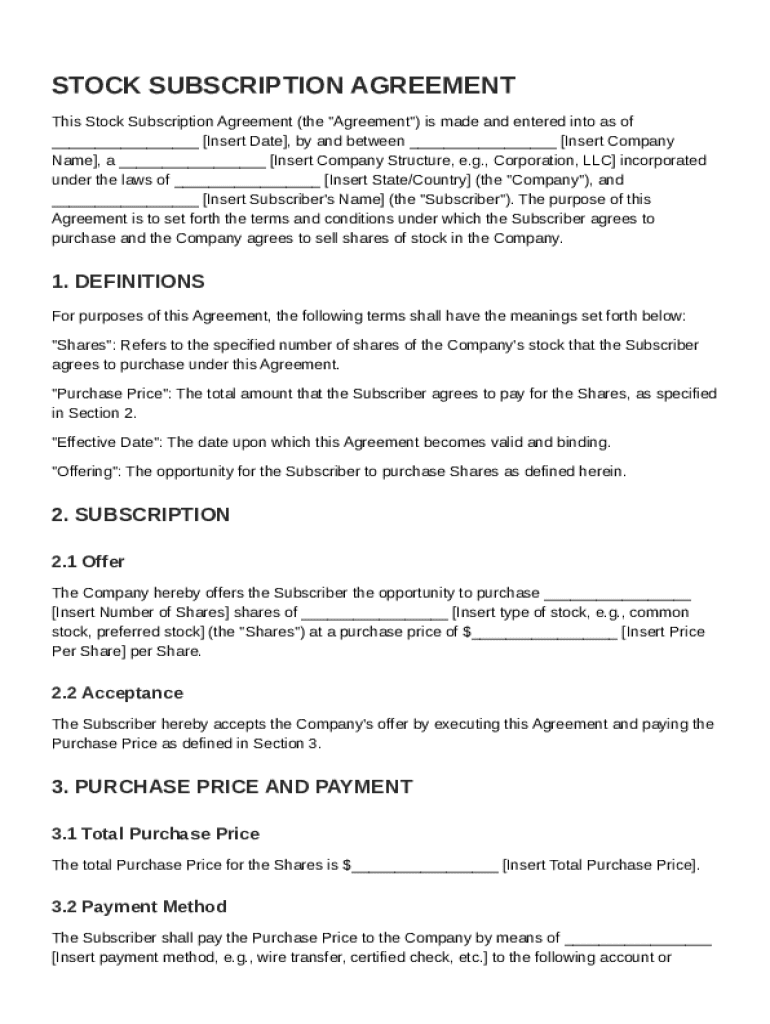
A Stock Subscription Agreement Template is a pre-formatted legal document used as a binding contract between a subscriber and a company for the purchase of shares of stock. It outlines the terms, conditions, and obligations of both parties involved in the stock transaction. Key components typically include definitions, subscription details, payment methods, representations, warranties, conditions for closing, issuance of shares, governing law, and miscellaneous provisions. This template guides companies and investors in establishing clear and enforceable stock purchase agreements.
Key Elements Within the Template
The Stock Subscription Agreement Template encompasses several essential elements critical for legally binding arrangements:
- Definitions and Interpretations: Clarifies technical terms and specific interpretations to ensure mutual understanding.
- Subscription Details: Specifies the number of shares, price per share, and total amount involved in the transaction.
- Payment Terms: Details the payment method(s) and schedule, whether in cash or through other agreed financial instruments.
- Representations and Warranties: Statements from both parties affirming the accuracy of their declarations and the legitimacy of their ability to engage in the stock transaction.
- Conditions Precedent: Outlines requirements that must be fulfilled before the closing of the stock issuance.
- Issuance and Delivery of Shares: Describes the process for delivering duly authorized and issued shares to the subscriber.
- Governing Law: Establishes the jurisdiction and legal framework applicable to the agreement.
- Miscellaneous Provisions: Addresses additional clauses such as confidentiality, amendment procedures, and severability.
Steps to Complete the Stock Subscription Agreement Template
To effectively complete a Stock Subscription Agreement Template, follow these steps:
-
Gather Necessary Information: Compile all essential details including the subscriber's full name, address, and contact information, along with details of the stock being purchased.
-
Fill Out Subscription Details: Insert the number of shares and the agreed price per share in the designated sections of the template.
-
Outline Payment Terms: Clearly state the payment method and schedule, ensuring compliance with any stipulated deadlines.
-
Insert Representations and Warranties: Customize the template to include both parties' representations, ensuring these accurately reflect their legal standing and obligations.
-
Establish Conditions Precedent: Detail any conditions that must be met prior to the completion of the stock transaction.
-
Review and Finalize Issuance Procedures: Ensure all processes for the issuance and delivery of shares are clearly outlined and agreed upon by both parties.
-
Seek Legal Review and Approval: Consult with a legal professional to verify the agreement's completeness and compliance with applicable laws.
-
Execute the Agreement: Both parties should sign and date the finalized document, affirming their commitment to the stipulated terms.
Important Terms Related to Stock Subscription Agreement Template
Familiarity with the following terms is crucial when dealing with a Stock Subscription Agreement Template:
-
Subscriber: The individual or entity purchasing the shares.
-
Company: The corporate entity issuing the stock.
-
Authorized Shares: The maximum number of shares a company is authorized to issue according to its corporate charter.
-
Subscription Price: The price per share that the subscriber agrees to pay.
-
Closing: The finalization of the subscription agreement when payment is made, and shares are issued.
-
Dilution: The reduction in existing shareholders' ownership percentages due to the issuance of new shares.
Legality and Enforceability of the Template
The Stock Subscription Agreement Template serves as a legally binding contract when properly executed. Its enforceability relies on:
-
Compliance with Securities Laws: Ensuring all transactions align with pertinent federal and state securities regulations.
-
Accurate Representation and Warranties: Both parties must make truthful declarations about their legal capacity and intentions.
-
Signature and Execution: Proper signatures from authorized individuals, affirming commitment to the agreement.
-
Adherence to Governing Law: The agreement must designate a specific legal jurisdiction governing any disputes arising from the contract.
Common Use Cases and Scenarios
The Stock Subscription Agreement Template is typically utilized in various scenarios, including:
-
Startups Securing Initial Funding: Early-stage companies issuing stock to raise capital from angel investors or venture capitalists.
-
Expansion Financing for Established Businesses: Established companies selling additional shares to fund expansion projects or acquisitions.
-
Employee Stock Purchase Plans: Firms offering stock to employees as part of compensation packages.
-
Private Placements: Businesses issuing stock privately rather than through a public offering.
Who Typically Uses the Stock Subscription Agreement Template?
Users of the Stock Subscription Agreement Template generally include:
-
Company Founders and Executives: Engaging investors to raise capital for business operations or expansions.
-
Individual and Institutional Investors: Acquiring equity in companies for investment purposes.
-
Legal Advisors and Corporate Lawyers: Managing the preparation and execution of stock subscription agreements.
-
Financial Consultants and Advisors: Guiding clients through investment processes and ensuring adherence to compliance standards.


Digital vs. Paper Agreement Variants
The Stock Subscription Agreement Template is available in both digital and paper formats:
-
Digital Format: Offers flexibility with easy editing, signing, and distribution via platforms like DocHub. It enhances efficiency by allowing real-time collaboration, e-signatures, and secure document storage.
-
Paper Format: Traditional hard copies that may be preferred for archival purposes or when digital accessibility is limited. However, they're less convenient for modifications and require physical storage.
Both formats require careful handling to maintain the integrity and confidentiality of sensitive information contained within the agreement.