
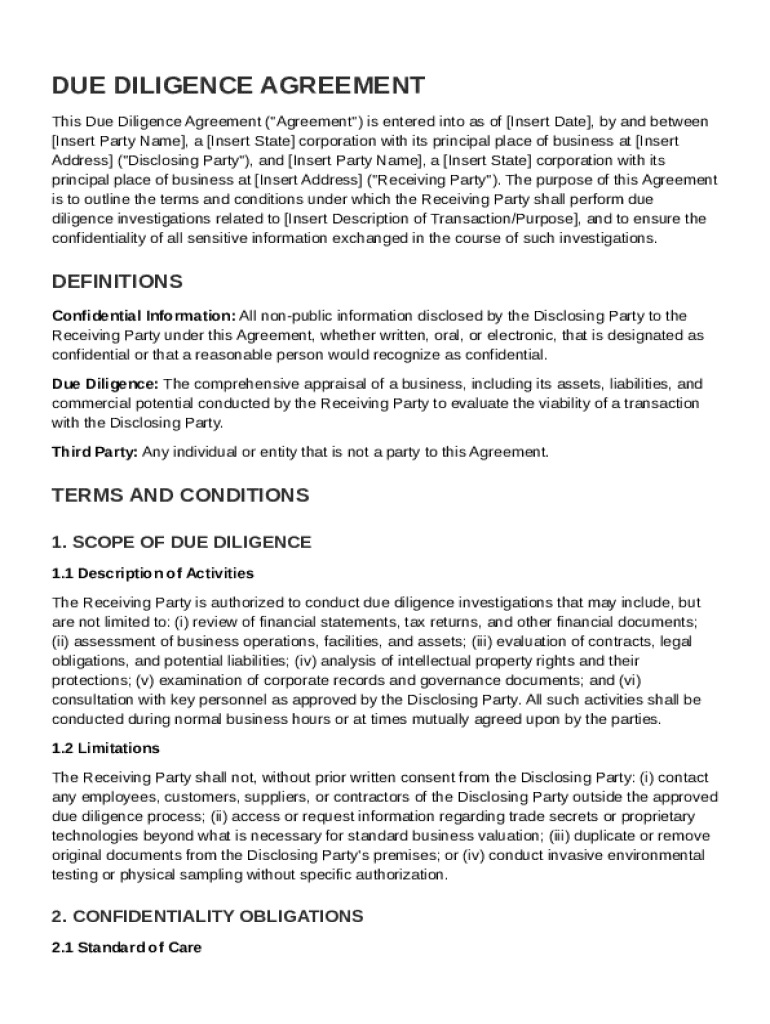







Definition & Meaning
A Due Diligence Agreement Template is a legal document used to outline the conditions under which a Receiving Party is allowed to conduct a due diligence investigation concerning a certain transaction with a Disclosing Party. It is crucial for maintaining confidentiality and ensures sensitive information exchanged during the process is protected. The agreement defines important terms, such as "Receiving Party" and "Disclosing Party," and sets boundaries on the use of confidential information. This template is essential for any transaction where one party wishes to evaluate another, such as mergers, acquisitions, or investment opportunities.
Key Elements of the Due Diligence Agreement Template
The Due Diligence Agreement Template includes several critical elements that are necessary for covering all aspects of the due diligence process. Some of these elements are:
- Confidentiality Obligations: This section specifies how sensitive information should be handled by the Receiving Party and any limitations on disclosure.
- Scope and Limitations: Clear guidelines are provided on what the due diligence process will entail and any constraints on the Receiving Party.
- Duration of Agreement: Defines the length of time the agreement remains in effect, which could extend beyond the due diligence phase.
- Governing Law: This part identifies which state's laws will govern the interpretation and enforcement of the agreement.
- Amendment and Assignment: Details on how the agreement may be amended or assigned to another party ensure flexibility and clarity.
How to Use the Due Diligence Agreement Template
Utilizing the Due Diligence Agreement Template effectively involves several steps to customize it to the specific needs of the transaction.
- Identify Parties Involved: Clearly identify both the Disclosing Party and the Receiving Party, ensuring all parties are legally recognized entities if applicable.
- Customize Confidentiality Terms: Adjust the confidentiality section to meet specific requirements, considering the nature of the information shared.
- Define Duration and Scope: Establish clear time frames for the due diligence process and any boundaries related to what can be investigated.
- Review Governing Law: Ensure the designated governing law aligns with the jurisdictions of the involved parties.
Once tailored, both parties should review the agreement details before signing.
Steps to Complete the Due Diligence Agreement Template
Completing the Due Diligence Agreement Template requires attention to detail at each stage.
- Initial Draft: Start by inserting general information for both parties and the transaction specifics.
- Legal Consultation: Consult with legal advisors to ensure all legal terms meet jurisdictional requirements and address any unique transaction needs.
- Review: Both parties should review the agreement to confirm the accuracy and completeness of the information.
- Finalize and Sign: Upon reaching mutual agreement, proceed with finalizing the document and collecting signatures.
Throughout, maintain clear communication between parties to address any alterations needed.
Who Typically Uses the Due Diligence Agreement Template
The Due Diligence Agreement Template is commonly used by a variety of parties involved in financial transactions, including:
- Corporate Entities: Companies engaging in mergers, acquisitions, or partnerships.
- Investment Firms: Entities looking to evaluate investment opportunities or venture capital investments.
- Legal and Financial Advisors: Professionals assisting clients with transaction-related services.
- Real Estate Developers: Individuals or companies conducting property transactions that require in-depth analysis.
Each of these users benefits from the template's clear framework for protecting sensitive information and ensuring smooth due diligence processes.

Important Terms Related to Due Diligence Agreement Template
Understanding important terms within the Due Diligence Agreement Template is essential for its effective use:
- Receiving Party: The entity or individual conducting the due diligence.
- Disclosing Party: The entity providing access to sensitive or confidential information.
- Confidential Information: Any data, documentation, or material regarded as sensitive and subject to confidentiality obligations.
- Governing Law: The legal jurisdiction that governs the agreement terms.
- Non-Disclosure Clause: Provisions that restrict the Receiving Party from sharing disclosed information with unauthorized third parties.
These terms help clarify roles, responsibilities, and expectations for each party involved.
Legal Use of the Due Diligence Agreement Template
Compliance with legal standards is critical when using the Due Diligence Agreement Template.
- ESIGN Act Compliance: Ensure all electronic signatures used within the agreement are legally binding.
- Jurisdictional Laws: The document should comply with state-specific laws where the transaction is taking place.
- Data Protection Regulations: Adhere to federal and state data protection laws to maintain confidentiality and avoid potential legal issues.
Consulting legal experts can provide additional assurances that the template is legally sound and fully compliant.
Examples of Using the Due Diligence Agreement Template
Real-world scenarios illustrate the usefulness of the Due Diligence Agreement Template:
- Merger Assessment: A company intending to acquire another verifies the target company’s financials, operations, and compliance.
- Investment Evaluation: Venture capitalists utilize the template to explore potential startups and their intellectual property.
- Property Purchase: Real estate developers perform due diligence on a commercial property, assessing titles, zoning rules, and environmental plans.
Each example shows how a Due Diligence Agreement Template can facilitate transactions by establishing clear legal guidelines and protecting essential information.




