







Definition & Meaning
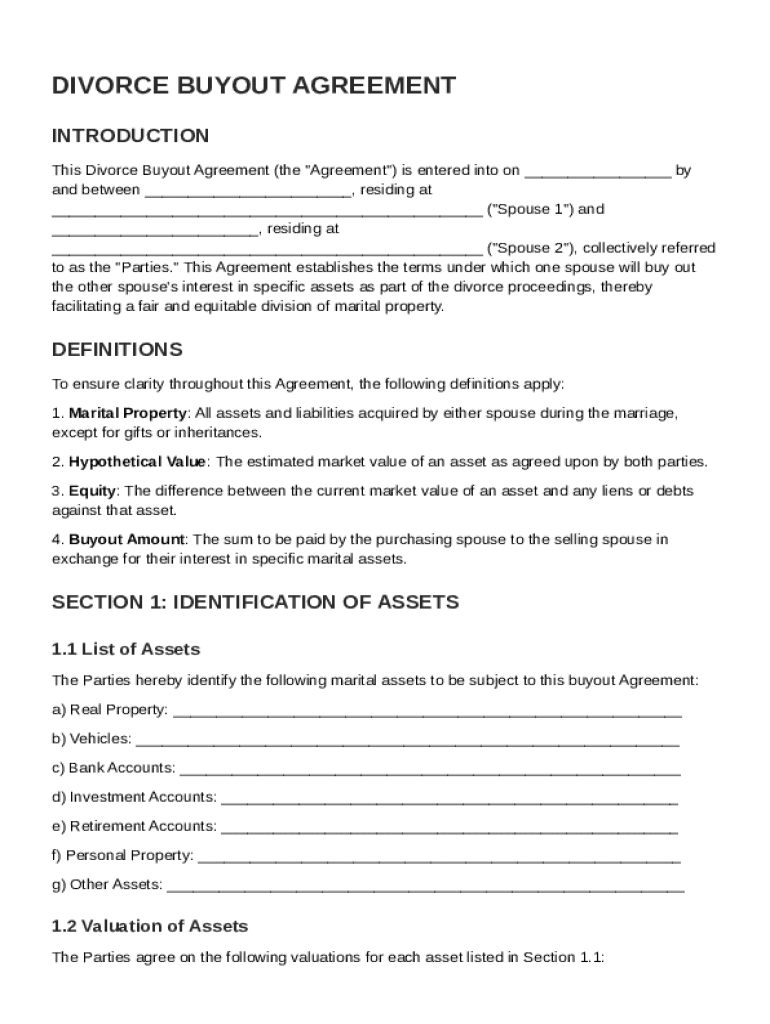
The Divorce Buyout Agreement Template is a legal document that facilitates the process where one spouse buys out the other's interest in marital assets during divorce proceedings. This agreement is designed to outline the terms of the buyout, providing a structured approach to determining asset value and distribution. It incorporates legal provisions to ensure that the division of property is fair and that both parties’ rights are protected. The document typically includes definitions of key terms, ensuring clarity and mutual understanding between the involved parties.
Key Components
- Asset Identification and Valuation: Defines which assets are subject to the buyout and establishes their fair market value.
- Payment Structure: Details how the buyout amount will be paid, including financially viable terms for both parties.
- Ownership Transfer Processes: Outlines the procedures for transferring ownership of the assets once the buyout is completed.
Key Elements of the Divorce Buyout Agreement Template
This template consists of several crucial elements that collectively ensure a comprehensive agreement. The agreement includes:
- Definitions and Terminology: Clarity on key legal terms to prevent misunderstandings.
- Mutual Releases: Clauses that release parties from specific legal claims pertaining to the agreement.
- Confidentiality Provisions: Ensures privacy on the details of the buyout terms.
- Legal Clauses: Miscellaneous provisions outlining the legal framework within which the agreement operates.
Examples:
- A confidentiality clause might restrict both parties from disclosing any financial details of the agreement to third parties not involved in the divorce process.
- Mutual releases could protect each spouse against future claims related to the marital assets being divided.
Steps to Complete the Divorce Buyout Agreement Template
Completing the Divorce Buyout Agreement Template involves a systematic approach to ensure each section is appropriately addressed:
- Asset Listing and Evaluation: Catalog and assign fair market values to all marital assets.
- Determine Buyout Amount: Calculate the buyout amount based on agreed asset values.
- Draft Payment Terms: Specify terms such as lump-sum payments or installment plans.
- Outline Ownership Transfer: Determine the legal process for transferring asset titles.
- Include Confidentiality Clauses: Ensure a mutual confidentiality agreement is in place.
- Review Legal Clauses: Verify all legal protections and releases are accurately documented.
Practical Example:
During a divorce, a couple might own a house valued at $500,000. If one spouse wishes to retain the house, they might negotiate to pay the other half of its value, arranging payments over an agreed-upon period.
Legal Use of the Divorce Buyout Agreement Template
Using this template correctly is essential in adhering to legal standards:
- Complies with Family Law: It aligns with the legal expectations of family law courts, ensuring the buyout is legally binding.
- Incorporates Protective Measures: Establishes protective clauses that secure each party’s rights post-agreement.
- Facilitates Court Approval: With proper usage, the agreement is more likely to receive court approval as part of the final divorce decree.
Application in Legal Proceedings
- The agreement can be presented during divorce proceedings to expedite court approval processes and demonstrate cooperative asset division.
Important Terms Related to Divorce Buyout Agreement Template
Understanding the terminology within the Divorce Buyout Agreement Template is critical for all parties involved:
- Fair Market Value: The agreed value at which an asset would sell under normal market conditions.
- Buyout Amount: The specific sum agreed upon for purchasing the other party's interest in the marital asset.
- Mutual Release: Legal agreement where both parties waive future claims against each other concerning the specified assets.
Definitions Enhance Understanding:
These terms need thorough understanding to avoid potential conflicts or misinterpretations during and post-divorce proceedings.
Who Typically Uses the Divorce Buyout Agreement Template
This template is primarily utilized by individuals going through a divorce where there is an intent to divide marital assets:
- Divorcing Couples: To ensure a fair settlement that respects both parties’ interests and legal rights.
- Family Lawyers: Assist clients in drafting an equitable buyout agreement.
- Mediators: Facilitate negotiations to reach a consensual agreement between spouses.


Real-World Scenario:
A couple mutually decides that one partner will remain in the family home, requiring a buyout of the other's equity, utilizing this template to ensure an equitable and binding agreement.
State-Specific Rules for the Divorce Buyout Agreement Template
Regulations can vary significantly from state to state:
- Equitable vs. Community Property States: In equitable division states, assets are divided based on fairness, while community property states typically split assets evenly.
- State-Specific Clauses: Each state may have unique legal requirements for asset valuation and division.
Examples of Variability:
- In California, a community property state, all marital assets are subject to equal division, influencing the structuring of the buyout agreement.
- In contrast, New York, an equitable distribution state, allows discretion to divide assets based on several factors, impacting the negotiation terms of the buyout.
Examples of Using the Divorce Buyout Agreement Template
The template can be employed in various scenarios to facilitate fair asset transfer during a divorce:
- Real Estate Buyout: One spouse chooses to buy the other’s interest in the family home.
- Business Interests: Negotiating the buyout of a spouse's share in a jointly-owned business.
- Asset Liquidation: Agreeing on the sale and proceeds distribution of valuable assets, like art collections.
Scenario Explanation:
A spouse might negotiate to keep a shared vacation property, offering a buyout sum to the ex-spouse, with payment terms that might include cash compensation or transfer of other assets.




