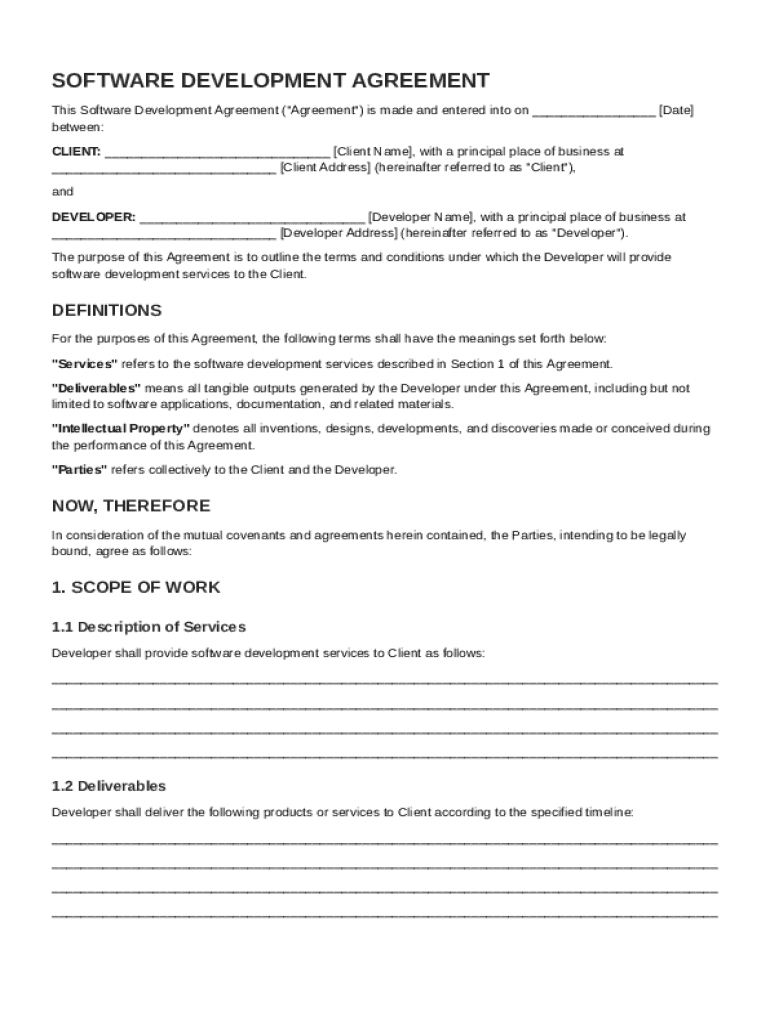







Definition & Meaning
A Software Development Contract Template is a standardized document that outlines the agreement between a client and a developer for software development services. This template includes critical elements such as definitions, scope of work, and compensation details, ensuring a clear understanding between the parties. It also serves as a legal framework to protect the interests of both parties involved, setting out obligations and rights.
Key Components:
- Definitions: Establishes clear meanings for terminologies used throughout the contract.
- Scope of Work: Details the specific tasks and responsibilities of the developer.
- Compensation: Specifies payment terms, including rates, schedules, and any other financial agreements.
- Confidentiality Obligations: Sets out rules for handling sensitive information.
- Intellectual Property Rights: Defines ownership of developed software and related intellectual properties.
How to Use the Software Development Contract Template
Using the Software Development Contract Template effectively involves several strategic steps to ensure both developer and client have a complete agreement that is legally sound.
Steps:
- Customization: Adjust the template to reflect specific project details, including deadlines, milestones, and deliverables.
- Review: Both parties should thoroughly review each section to ensure it aligns with their expectations and capabilities.
- Consultation with Legal Experts: Engage legal professionals, if necessary, to verify that the contract complies with relevant laws and standards.
- Agreement: Both parties should agree upon every term and condition before signing the document.
- Execution: Once all details are agreed upon, proceed to sign and date the document.
Key Elements of the Software Development Contract Template
The contract's foundation includes various essential elements that ensure comprehensive coverage of the development process.
Core Elements:
- Project Timeline: Defines specific durations for completion of tasks and overall project delivery.
- Warranties: Outlines assurances related to the quality and functionality of the delivered software.
- Liability Limitations: Specifies the extent to which each party is liable for problems or damages arising from the project.
- Termination Clauses: Highlights conditions under which the agreement can be terminated before completion.
- Dispute Resolution Procedures: Provides mechanisms for resolving conflicts that may arise throughout the project term.
Important Terms Related to Software Development Contract Template
Understanding the terminologies used in a Software Development Contract is crucial for both parties to ensure clarity and prevent misunderstandings.
Terms to Know:
- Governing Law: The legal jurisdiction that will govern the contract.
- Deliverables: Specific outcomes, products, or outputs that the developer must provide.
- Change Order: A formal request for amendment or modification to the agreed-upon terms.
- Force Majeure: Conditions under which one or both parties are excused from contractual obligations due to unforeseen events.
Steps to Complete the Software Development Contract Template
Completing a Software Development Contract Template requires careful consideration and a systematic approach to detail all necessary aspects.
Step-by-Step Guide:
- Fill in Parties' Details: Include names, addresses, and contact information of both client and developer.
- Define Scope and Purpose: Precisely state the project's intent and the scope of the agreement.
- Include Timelines and Milestones: Clearly outline when tasks need to be completed.
- Determine Payment Terms: Specify how and when the payments will be made.
- Highlight Specific Obligations: Detail responsibilities such as code documentation, testing, and ongoing maintenance.
- Secure Signatures: Both parties must sign the document to signify agreement.
Who Typically Uses the Software Development Contract Template
This template is predominantly used by software development companies, freelance developers, and businesses seeking custom software solutions.


Potential Users:
- Startups: Often require unique software solutions tailored to their innovative business models.
- Established Enterprises: Need contracts for continuous software updates and new project developments.
- Freelancers: Use this template to formalize engagements with clients for bespoke software projects.
- Non-Profit Organizations: Occasionally require specialized software for operational efficiency and impact measurement.
Legal Use of the Software Development Contract Template
The Software Development Contract Template is designed to be legally compliant, ensuring that both parties are protected under the applicable legal standards.
Legal Considerations:
- Adherence to the ESIGN Act: Ensures that electronic signatures used within the contract are legally binding.
- State Law Considerations: Must comply with state-specific regulations that govern software contracts.
- Intellectual Property Laws: Align clauses to ensure the rightful ownership of software and protection of proprietary information.
Business Types that Benefit Most from the Software Development Contract Template
Various types of business entities leverage the Software Development Contract Template to manage their software development projects effectively.
Benefiting Business Types:
- LLCs (Limited Liability Companies): Protects personal assets while engaging in complex software projects.
- Corporations: Use detailed contracts to minimize risks associated with large-scale software development initiatives.
- Partnerships: Ensure clear understanding and responsibilities among multiple business partners.
- Sole Proprietorships: Even individual entity types can utilize the contract for improved project clarity and legal compliance.