







Definition & Meaning
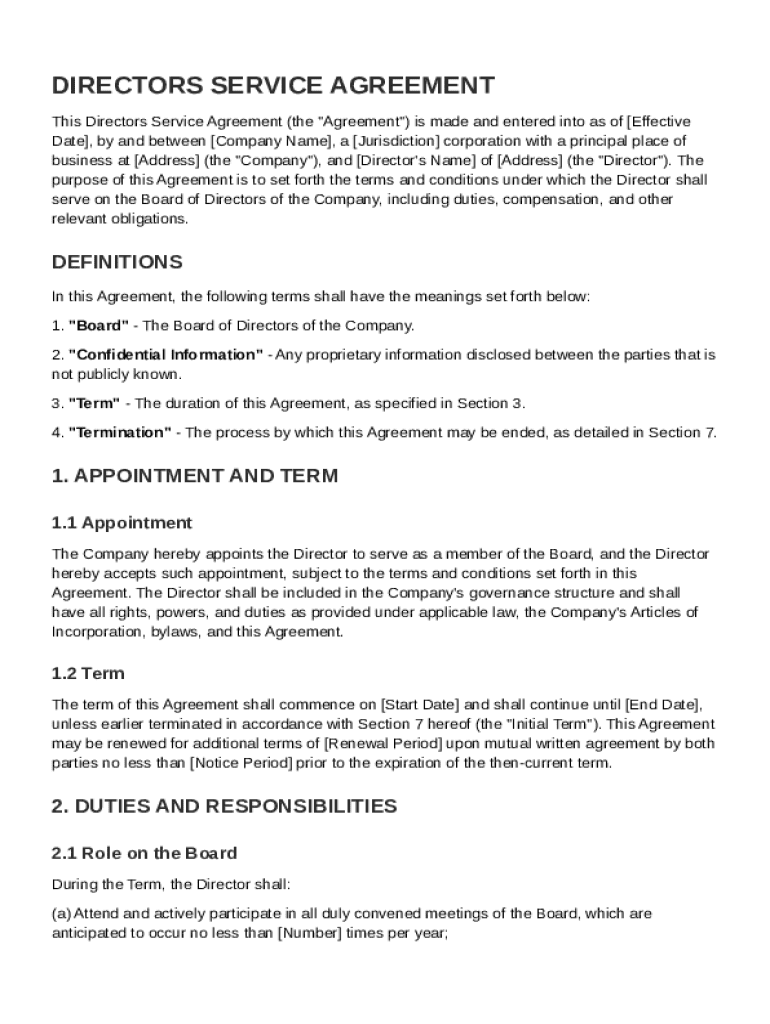
The Directors Service Agreement Template is a comprehensive document outlining the roles and responsibilities of a director serving on the board of a company. It includes key terms such as the appointment process, expected duties, and compensation details. The agreement ensures a mutual understanding between the company and the director, covering aspects like confidentiality, conflict of interest, and indemnification. This legal document is essential for clarifying expectations and ensuring that both parties adhere to corporate governance and applicable legal standards.
Key Elements of the Directors Service Agreement Template
Appointment and Term
- Appointment Clause: Details the process of appointing a director, including qualifications and board approval requirements.
- Term Length: Specifies the duration of the director's service, along with conditions for renewal or extension.
Duties and Responsibilities
- Board Meetings: Obligates the director to attend regular and special board meetings.
- Fiduciary Duties: Outlines the director's responsibility to act in the best interest of the company and its shareholders.
Compensation and Benefits
- Remuneration Structure: Defines salary, bonuses, stock options, and other financial incentives.
- Reimbursement Policies: Covers eligible expenses incurred while fulfilling director duties, such as travel or accommodation.
Important Terms Related to Directors Service Agreement Template
Confidentiality
Directors must agree to maintain the confidentiality of sensitive information. This section outlines the scope of confidentiality, including permissible disclosures and legal obligations.
Conflict of Interest
Defines situations that constitute a conflict of interest and the responsibilities of directors to declare any personal interest that might impede their objectivity.
Indemnification
Provides protection to directors in the event of legal actions related to their role, detailing the scenarios under which the company will provide legal defense.
Steps to Complete the Directors Service Agreement Template
- Review the Template: Carefully go through each section to ensure all terms align with company policies.
- Customize Details: Modify sections to reflect specific agreements, such as personalized compensation structures or unique responsibilities.
- Consult Legal Experts: Engage with legal advisors to ensure compliance with corporate laws and regulations.
- Finalize and Sign: After mutual agreement on terms, both parties sign the document to formalize the director's appointment.
Who Typically Uses the Directors Service Agreement Template


Corporations and Larger Enterprises
Corporations often utilize this template to standardize director roles across multiple branches, ensuring consistency in governance.
Non-profit Organizations
Non-profits require directors to guide their mission-driven approach, necessitating clear agreements to delineate responsibilities and expectations.
Start-ups and Emerging Businesses
Early-stage companies benefit from establishing clear governance frameworks to attract seasoned directors who can offer strategic insights and networks.
Legal Use of the Directors Service Agreement Template
The legally binding nature of the Directors Service Agreement ensures directors' adherence to their roles and responsibilities. The agreement should comply with federal and state laws governing corporate governance and director conduct. It also acts as a legal safeguard, protecting both directors and the company during disputes.
State-Specific Rules for the Directors Service Agreement Template
Each state may impose unique regulations on director roles and corporate governance. It's crucial for companies to tailor their director agreements to align with local laws. For example, California requires specific disclosures for conflict of interest, while Delaware may have unique indemnification statutes. Understanding these variations is crucial for maintaining compliance and avoiding legal penalties.
Digital vs. Paper Version
Digital
- Advantages: Enables easy updates and modifications, secure digital signatures, and efficient storage and retrieval.
- Security: Offers advanced encryption and access controls to protect sensitive information.
Paper
- Traditional Method: Preferred by some organizations for legal formalities, though less flexible for updates.
- Storage: Requires physical storage, posing challenges for document security and accessibility.
Utilizing a digital version via platforms like DocHub streamlines the creation, editing, and signing process, maximizing efficiency and accuracy.




