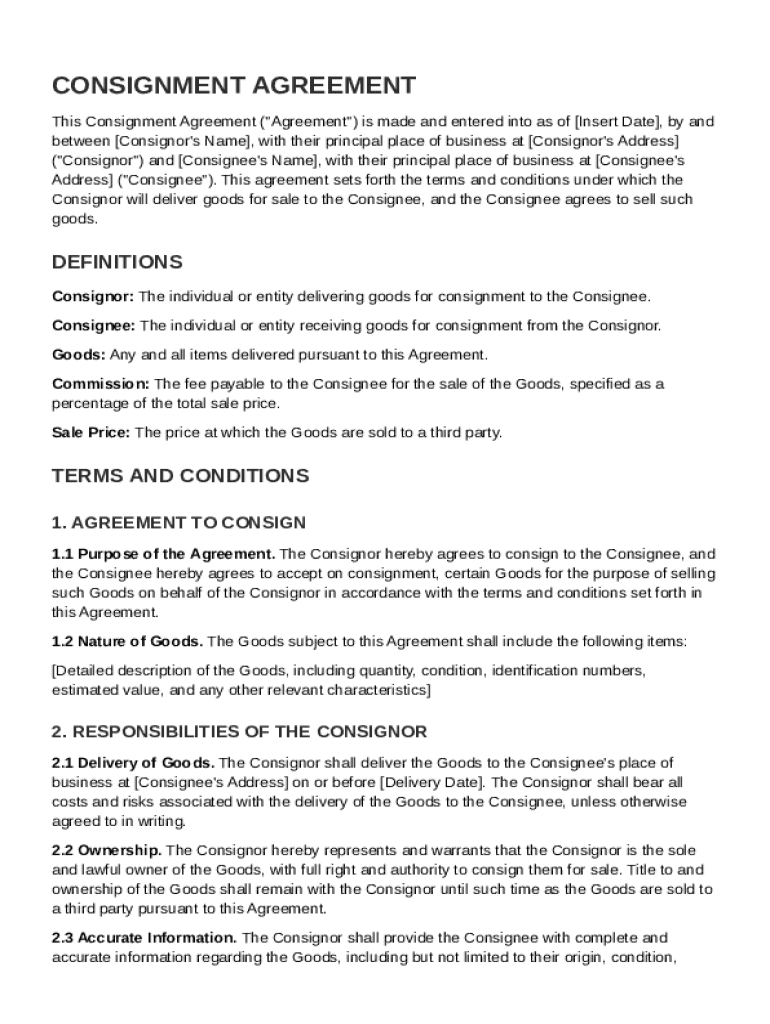







Definition and Meaning
The Consignment Contract Template is a formal document that outlines the terms and conditions between a consignor and a consignee concerning the sale of goods. This template serves as a legally binding framework that defines key aspects of the consignment relationship. It includes specific details about the roles, responsibilities, and rights of both parties, outlining how goods will be handled, sold, and how profits and payments will be distributed. This contract ensures clarity and mutual understanding, minimizing potential disputes.
Key Components
- Parties Involved: The agreement identifies the consignor, who owns the goods, and the consignee, who is responsible for selling the goods on behalf of the consignor.
- Commission Structure: It clearly states how the consignee will be compensated, often detailing the percentage of sales or profit they are entitled to.
- Payment Terms: Specifies when and how payments will be made, including any advance payments or deposits required.
How to Use the Consignment Contract Template
Utilizing the Consignment Contract Template involves a series of clear steps to ensure all aspects of the agreement are mutually understood and agreed upon. First, both parties should review the template in detail to confirm it meets their needs. Any necessary adjustments should be made in consultation with legal professionals. Signatures from both the consignor and consignee finalize the document, reflecting agreement to the stipulated terms.
Steps to Utilize
- Review Content: Ensure all sections of the template align with your specific business arrangement.
- Personalize Terms: Customize fields such as names, payment details, and commission rates.
- Final Approval: Seek legal advice if needed before signing to ensure compliance with all relevant laws.
Key Elements of the Consignment Contract Template
Central to the Consignment Contract Template are several core elements that must be meticulously detailed to provide clarity and prevent misunderstandings. These elements establish a comprehensive understanding between the consignor and consignee.
Essential Components
- Ownership and Title: Clarifies that ownership of goods remains with the consignor until they are sold.
- Delivery Terms: Outlines conditions for the delivery of goods, including responsibilities and costs.
- Indemnification Clauses: Protects parties from certain legal responsibilities, ensuring accountability for specified actions.
Important Terms Related to the Consignment Contract Template
Understanding specific terminology within the Consignment Contract Template is crucial for proper implementation. These terms form the backbone of the contract, defining roles, obligations, and legal guidelines.
Glossary of Terms
- Consignor: The owner of goods who supplies items to the consignee.
- Consignee: The agent responsible for handling sales transactions of the consigned goods.
- Net Proceeds: The total revenue from sales after deducting the consignee’s commission and associated expenses.
Legal Use of the Consignment Contract Template
Ensuring the legal enforceability of the Consignment Contract Template is essential for both parties. The contract must adhere to state and federal laws which govern consignment transactions, including sales tax regulations and consumer protection laws.
Compliance Considerations
- Legal Jurisdiction: Specifies which state’s laws will govern the agreement.
- Regulatory Requirements: Confirms adherence to sales and business transaction laws to prevent legal disputes.
- Dispute Resolution: Details how conflicts will be resolved, often recommending arbitration or mediation.
Steps to Complete the Consignment Contract Template
Completing the Consignment Contract Template involves careful attention to detail across every section of the document. It is crucial to follow a structured approach to ensure all necessary information is included and accurate.
Completion Process
- Fill in Parties’ Information: Enter names and contact details of the consignor and consignee.
- Define Goods Specifications: Clearly describe the goods involved, including quantities and qualities.
- Finalize Financial Terms: Detail commission percentages, payment intervals, and any advance requirements.
- Sign and Date: Both parties must sign and date the document to formalize the agreement.
State-Specific Rules for the Consignment Contract Template
State-specific regulations can affect consignment contracts, impacting the enforceability and obligations defined in the template. It is important to tailor the agreement to reflect local laws and market practices.
Variations in State Laws
- Sales Tax Applications: Different states may have specific tax requirements for consigned goods.
- Regulatory Compliance: Some states may impose additional regulations regarding consumer protection and business operations.
- Contractual Obligations: State laws may dictate specific contract terms or require additional disclosures.
Who Typically Uses the Consignment Contract Template
The Consignment Contract Template is typically used by businesses in the retail, gallery, and distribution industries. It provides a structured approach to selling goods without transferring total ownership to the seller.


Typical Users
- Retailers: Store owners who wish to sell merchandise on consignment.
- Artists and Galleries: Facilitate artwork sales while artists retain ownership until sale.
- Wholesale Distributors: Manage inventory and sales without upfront purchasing costs.
Examples of Using the Consignment Contract Template
Real-world examples illustrate how different businesses can apply the Consignment Contract Template to streamline their consignment processes.
Practical Scenarios
- Art Galleries: An artist consigns a collection to a gallery, which sells the works and remits sales proceeds, minus a commission, back to the artist.
- Jewelry Retailers: A jeweler provides pieces to a boutique on consignment, allowing the boutique to sell the items to customers before paying the jeweler.
- Clothing Stores: A designer consigns a seasonal line to a retail store, receiving payment upon sale while retaining rights to unsold items.