






Definition & Meaning
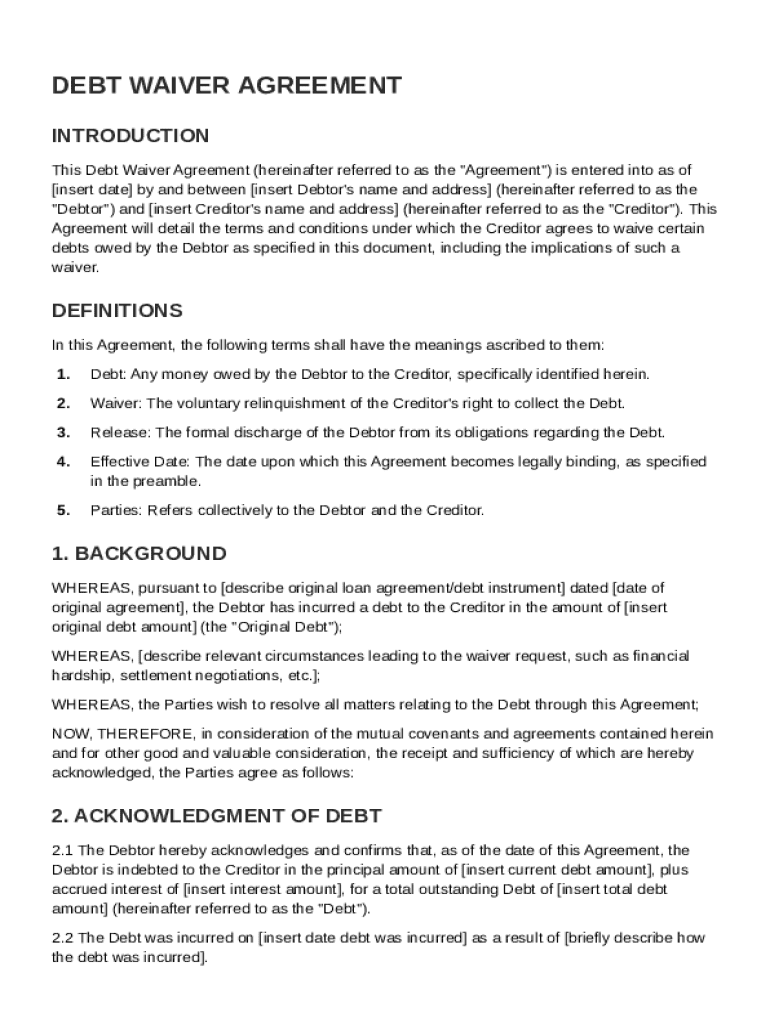
A Debt Waiver Agreement is a legal document where a creditor agrees to relinquish a part or all of the debt owed by a debtor. This form establishes the understanding between both parties involved, detailing the terms and conditions under which the debt is waived. Typically, this agreement includes key definitions to ensure clarity.
- Creditor: The individual or institution owed the debt.
- Debtor: The individual or entity that owes the debt.
- Waiver: The intentional relinquishment of the right to collect the debt.
This agreement often aims to amicably resolve debt claims, which can sometimes include a release from liability, ensuring no further claims for the waived amount.
Key Elements of the Debt Waiver Agreement Template
Certain elements are crucial to a Debt Waiver Agreement, each serving to protect the interests of both creditor and debtor:
- Acknowledgment of Debt: Confirms the debtor's admission of the debt.
- Conditions for Waiver: Specifies any prerequisites the debtor must meet before the debt waiver becomes valid.
- Release of Liability: Ensures that the debtor is no longer legally responsible for the waived amount.
- Governing Law: Indicates which jurisdiction’s laws will apply to interpret the agreement.
These components collectively ensure both parties have a mutual understanding and clear legal standing.
How to Use the Debt Waiver Agreement Template
Using the Debt Waiver Agreement Template effectively requires understanding its structured layout and the context for its use:
- Identify Parties: Clearly define the creditor and debtor, including full legal names and contact information.
- Specify Debt Details: Mention the original amount, outstanding balance, and the portion being waived.
- Outline Terms: Detail any conditions or requirements that must be fulfilled for the waiver to take effect.
- Finalize and Sign: After ensuring all relevant details are included, both parties should review and execute the document with signatures.
It’s recommended to consult a legal professional to customize the agreement to specific needs and circumstances.
Steps to Complete the Debt Waiver Agreement Template
Completing the Debt Waiver Agreement Template involves several detailed steps to ensure accuracy and comprehensiveness:
- Gather Required Information: Collect all pertinent details about the debt, including current statements and contact information for all parties.
- Fill in Agreement Sections: Use precise and complete information for each section, ensuring no crucial details are omitted.
- Review for Completeness: Double-check every part of the template to confirm all entries are made correctly.
- Obtain Signatures: Both the creditor and debtor must sign the document to make it legally binding.
These steps, if followed systematically, ensure a valid and enforceable agreement.
Legal Use of the Debt Waiver Agreement Template
A Debt Waiver Agreement Template is used within the legal framework that ensures enforceability:
- Compliance with Laws: Adhere to federal and state laws regarding debt forgiveness to avoid any legal repercussions.
- Validation Requirements: Ensure that both parties legally consent through clear, uncoerced signatures.
- Retention of Agreement: Keep copies of the signed agreement for future reference, usually for a period of time specified by relevant statutes.
Failure to comply with these legal requirements may lead to disputes or nullification of the agreement.
Who Typically Uses the Debt Waiver Agreement Template
The Debt Waiver Agreement Template is particularly useful to several groups:
- Financial Institutions: Banks and lenders often use these agreements to write off non-recoverable debts.
- Individuals: Personal creditors and family members forgiving loans can formalize the process.
- Businesses: Companies resolving outstanding obligations with suppliers or partners may utilize such a template to clear liabilities.
By defining clear terms through this template, these users manage outstanding debts effectively while maintaining relationships.


State-specific Rules for the Debt Waiver Agreement Template
In the United States, different states may have varying rules regarding debt waiver agreements:
- Governing Jurisdiction: Recognize state laws that affect the creation and execution of the agreement.
- Tax Implications: Be aware that forgiven debts might have state-specific tax consequences for the debtor.
- Consumer Protection: Ensure compliance with state consumer protection laws to avoid potential legal disputes.
It is important for parties involved to be fully aware of these state-specific rules to ensure the agreement’s enforceability.
Examples of Using the Debt Waiver Agreement Template
Practical examples demonstrate how the Debt Waiver Agreement Template is applied:
- Bank Loan Forgiveness: A bank may use this form to waive the remaining balance of a loan deemed uncollectible.
- Personal Loan Settlement: An individual could waive a portion of a personal loan if the borrower faces financial hardship.
- Business Debt Resolution: Companies can use the agreement to settle disputes with creditors by forgiving partial debt in exchange for other considerations.
These scenarios highlight the utility of such agreements in varied contexts, showcasing their role in facilitating financial resolution.