






Definition & Meaning
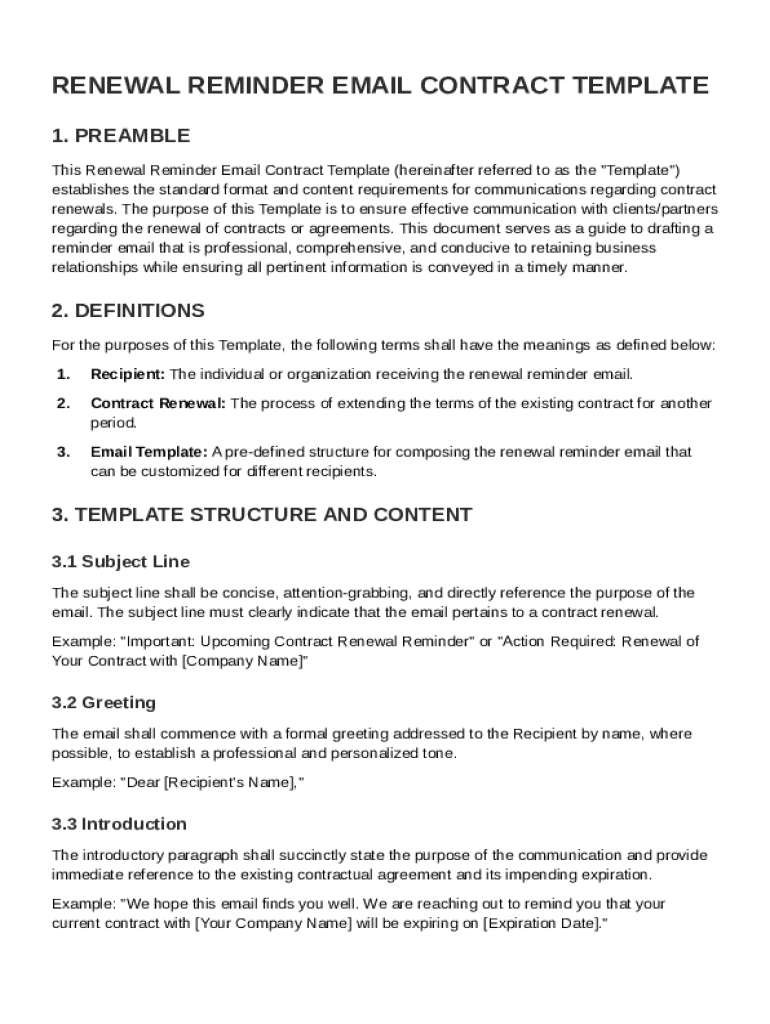
The Renewal Reminder Email Contract Template is a structured format used to create professional emails that remind clients of upcoming contract renewals. This template standardizes the communication process by outlining specific sections such as subject lines, greetings, details about the contract in question, calls to action, and the sender's signature. The emphasis is on clarity, ensuring that all relevant information is clearly communicated to the client.
Key Elements of the Renewal Reminder Email Contract Template
The template includes several crucial components that ensure the email is comprehensive and professional:
- Subject Line: A concise summary that indicates the purpose of the email.
- Greeting: A respectful and personalized opening.
- Contract Details: Specifics about the contract, including the renewal date and any terms that may have changed.
- Call to Action: Instructions for the recipient, such as confirming the renewal or making a payment.
- Additional Information: Any further details that the recipient may need.
- Closing Statement: A polite conclusion to the email.
- Sender Signature: Contact information and professional title of the sender.
Steps to Complete the Renewal Reminder Email Contract Template
Following these steps ensures the template is effectively filled out:
- Start with the Subject Line: Use clear and direct language to indicate the email’s purpose.
- Insert the Greeting: Personalize it with the recipient's name to enhance engagement.
- Detail the Contract: Include essential information such as the contract type, renewal date, and any modifications.
- Specify the Call to Action: Clearly articulate what the recipient needs to do next.
- Add Additional Information: Provide any extra context or resources the recipient might need.
- Conclude with a Closing Statement: Use a professional tone to maintain respect and politeness.
- Include a Sender Signature: Add full contact details for follow-up conversations.
Why Use the Renewal Reminder Email Contract Template
Organizations benefit from using this template because it:
- Ensures Consistency: Standardizes the renewal reminder process, minimizing the risk of miscommunication.
- Saves Time: Reduces the time spent drafting individual emails for each renewal situation.
- Maintains Professionalism: Helps uphold a high standard of communication with clients.
- Facilitates Organization: Keeps track of communications, making it easier to manage multiple client interactions.
Who Typically Uses the Renewal Reminder Email Contract Template
This template is widely used by:
- Business Managers: To maintain consistent communication with clients regarding renewals.
- Customer Service Representatives: To ensure timely follow-ups on contract renewals.
- Sales Teams: To remind clients of upcoming renewals and provide opportunities for upselling or cross-selling.


How to Obtain the Renewal Reminder Email Contract Template
You can easily access the Renewal Reminder Email Contract Template through platforms that offer document management solutions. These platforms often provide a variety of templates, including renewal reminders, that can be customized to fit specific business needs. Look for services that offer flexible imports from cloud storage or direct computer uploads to begin customization immediately.
Important Terms Related to the Renewal Reminder Email Contract Template
Understanding key terms within the template can aid in crafting accurate and effective reminders:
- Renewal Date: The specific date by which the contract needs to be renewed to avoid lapse.
- Contract Terms: The agreed-upon conditions under which the contract operates.
- Client Name and Details: Personalization elements that help in addressing the client correctly.
- Expiration Notifications: Alerts sent to remind of the approaching renewal date.
Legal Use of the Renewal Reminder Email Contract Template
To ensure compliance, the template should adhere to legal standards such as the ESIGN Act for electronic communications. Providing documented proof of renewal reminders can be essential in legal settings, underscoring the importance of transparency and record-keeping within business practices. Organizations should confirm that communication aligns with both federal and state regulations regarding electronic communications and contracts.