
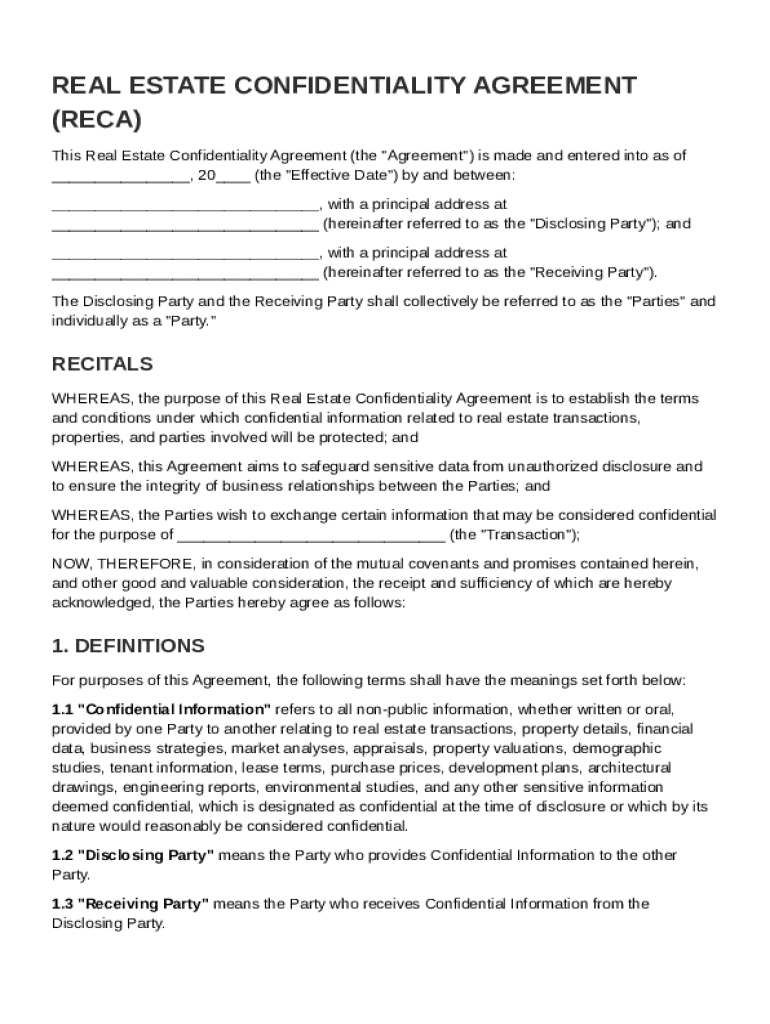







Definition & Meaning
The Real Estate Confidentiality Agreement (RECA) establishes a contractual framework to protect sensitive information that is exchanged during real estate transactions. This agreement is crucial for safeguarding proprietary information, trade secrets, or any other confidential details that the Disclosing Party wishes to keep secure. The document outlines what constitutes confidential information, sets the obligations of the Receiving Party, and clarifies any exclusions from confidentiality. It ensures that both parties understand the importance of maintaining privacy and sets the groundwork for trust in professional dealings.
Key Elements of the Real Estate Confidentiality Agreement Template
The RECA comprises several critical components that together ensure comprehensive protection of confidential information:
- Definitions: Clearly describes what information is considered confidential.
- Obligations: Outlines the responsibilities of the Receiving Party to protect the disclosed information.
- Exclusions: Specifies any information not covered by the confidentiality terms.
- Return/Destruction of Information: Procedures for handling information once it is no longer needed.
- Governing Law and Severability: Details the jurisdiction under which the agreement is enforceable and the separability of its terms.
- Remedies for Breaches: Consequences and actions available if the agreement is violated.
Steps to Complete the Real Estate Confidentiality Agreement Template
- Fill in the Parties' Information: Begin by entering the full legal names and contact details of the Disclosing and Receiving Parties.
- Define Confidential Information: Specify what constitutes confidential information for this particular agreement.
- Set the Term Duration: Determine how long the confidentiality obligations will remain in effect.
- Specify Obligations and Exclusions: Clearly state what the receiving party can and can't do with the information.
- Include Breach Remedies: Outline the legal remedies available in the event of a breach.
- Sign and Date: Ensure that both parties sign and date the agreement to validate its enforceability.
Legal Use of the Real Estate Confidentiality Agreement Template
The legal use of an RECA involves recognizing and adhering to the terms set forth in the document. In the United States, these agreements are legally binding and enforceable under contract law. They are essential in ensuring that sensitive information remains protected within business transactions, preventing unauthorized disclosure or use of proprietary information. Legally, the document encompasses stipulations for what actions constitute a breach and outlines the recourse available to the violating party.
Who Typically Uses the Real Estate Confidentiality Agreement Template
Various parties involved in real estate transactions can utilize the RECA:
- Real Estate Agents and Brokers: To protect client information.
- Property Developers and Investors: Ensuring project details and financial data remain confidential.
- Consultants and Contractors: When sensitive project information needs to be shared.
- Potential Buyers and Sellers: Protecting personal and financial information during negotiations.


Important Terms Related to Real Estate Confidentiality Agreement Template
Understanding key terms within the RECA is vital for clarity and legal compliance:
- Disclosing Party: The person or entity sharing confidential information.
- Receiving Party: The person or entity obliged to protect confidential information.
- Confidential Information: Data or details that are meant to be kept private.
- Non-Disclosure: The obligation to not share specific information.
- Indemnification: Compensation for any breaches or unauthorized disclosures.
State-Specific Rules for the Real Estate Confidentiality Agreement Template
In the U.S., the enforceability of confidentiality agreements may vary by state due to different governing laws and precedents:
- California: Tends to restrict overly broad non-disclosure agreements due to its strong public policy favoring employee mobility.
- New York: Generally enforces confidentiality agreements unless they are deemed too broad or vague.
- Florida: Recognizes NDAs as enforceable but requires a legitimate business interest for their protection.
Consider consulting a local attorney to ensure compliance with specific state regulations when drafting your RECA.
Examples of Using the Real Estate Confidentiality Agreement Template
Real-world applications of the RECA offer insight into its versatility:
- During Negotiations: A seller shares property valuations and development prospects with potential buyers, ensuring they're obligated to confidentiality.
- Market Research Firms: Confidentiality is maintained when proprietary research data is shared with real estate clients.
- Joint Ventures: When multiple real estate entities collaborate, ensuring project specifics and client details remain internal.
These examples highlight the document's role in facilitating protected communication within the competitive realm of real estate.




