
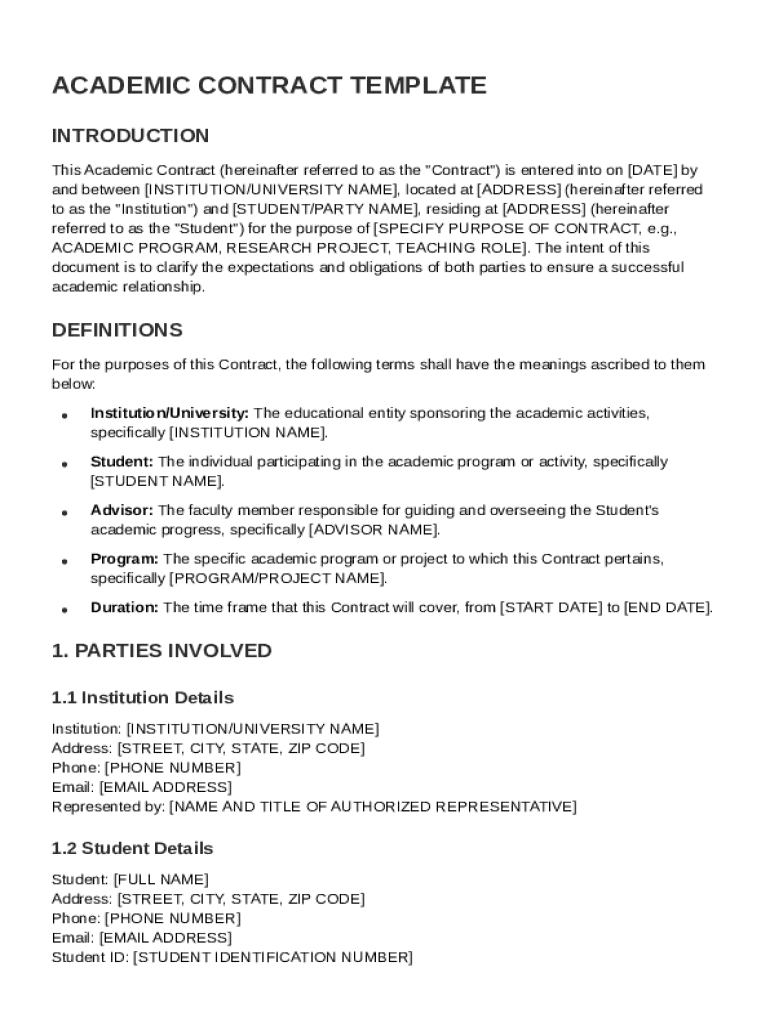







Definition and Meaning of the Academic Contract Template
The Academic Contract Template serves as a formal agreement between an educational institution and a student. This document outlines the roles, responsibilities, and expectations of both parties concerning academic involvement. This includes the academic activities the student is required to engage in, the support the institution promises to provide, and the specific evaluation measures that will be employed. By setting clear terms, both parties can ensure a mutual understanding and avoid potential disputes. This document is crucial in defining the scope of academic relationships and establishing a comprehensive guide to the educational terms and conditions that must be adhered to.
How to Use the Academic Contract Template
Applying the Academic Contract Template effectively involves several steps. First, both the student and the institution must thoroughly review the template to ensure all sections are relevant to their specific academic circumstances. This template typically allows users to customize entries, such as the specific courses involved, the deadlines for assignments, and any additional obligations both parties might agree upon.
- Review the Template: Examine all clauses to ensure they align with the specific needs of both the institution and the student.
- Customize Entries: Adjust the sections as necessary, particularly those concerning course specifics, deadlines, and any unique obligations.
- Agreement Verification: Ensure that both parties fully understand and are willing to comply with each section of the document.
- Signatures: Obtain legally binding signatures from both the student and the representative from the educational institution.
Customized use of this template helps in creating an efficient and dependable framework that supports the student's educational journey.
Steps to Complete the Academic Contract Template
Completing an Academic Contract Template requires careful attention to detail to ensure all requirements are satisfied. Here is a step-by-step process:
- Gather Required Information: Before filling out the template, collect all necessary details, such as the academic curriculum, course outlines, and the roles and expectations of both parties.
- Fill in Personal Details: Enter the student's name, contact information, and relevant academic background.
- Detail Academic Responsibilities: Clearly outline the student's duties, such as attending lectures, submitting assignments on time, and participating in prescribed activities.
- Specify Support Services: Describe the support mechanisms and resources that the institution will provide, including tutoring services, library access, and counseling.
- Outline Evaluation Measures: Specify the assessment methods and criteria that will be used to evaluate the student's performance.
- Clarify Financial Obligations: Detail any tuition fees, scholarships, or financial aid, including deadlines for payment and refund policies.
- Finalize with Signatures: Ensure the document is read, agreed upon, and signed by all relevant parties.
Ensuring a thorough and accurate completion of the template establishes a strong foundation for a successful academic tenure.
Key Elements of the Academic Contract Template
The Academic Contract Template comprises several essential elements that dictate the agreement's framework. These elements ensure a structured and harmonious academic relationship:
- Roles and Responsibilities: Detailed explanations of both the student and institution's duties, including attendance, submissions, and academic integrity.
- Financial Obligations: Clear articulation of any monetary responsibilities, such as tuition fees, scholarships, and payment schedules.
- Confidentiality and Privacy: Guidelines on how personal and academic information will be protected.
- Intellectual Property Rights: Specifications regarding the ownership and rights of any intellectual output, such as research findings or academic assignments.
- Dispute Resolution Mechanism: Strategies for addressing disagreements, including mediation steps and legal recourse.
- Amendments Clause: Protocols for modifying the agreement if conditions or circumstances change.
These key components ensure that all critical areas of the academic relationship are covered and understood.
Legal Use of the Academic Contract Template
The Academic Contract Template is legally binding and can have significant implications if not adhered to. As such, its use must comply with relevant laws and educational standards:
- Legal Compliance: Ensure that the template adheres to federal and state educational laws and regulations.
- Confidentiality Laws: Contracts must respect confidentiality mandates, particularly those concerning student records and personal data.
- Binding Agreement: Both parties must willingly agree and sign the document for it to be enforceable.
By adhering to these legal aspects, both the institution and student can maintain a fair and compliant academic relationship.
Who Typically Uses the Academic Contract Template
This template is primarily used by educational institutions, such as universities and colleges, in conjunction with their students. It is essential in various scenarios:
- Undergraduate and Graduate Programs: To define terms for courses, research projects, and university services.
- Continuing Education Courses: To articulate responsibilities and expectations for adult learners revisiting academia.
- Student Exchange Programs: To establish guidelines for students studying abroad, detailing obligations and support services.
- Research Collaborations: Used by research students to outline objectives, deliverables, and intellectual property considerations.
In each scenario, the template ensures clarity and formalization of mutual expectations.


Important Terms Related to Academic Contracts
Understanding key terms in academic contracts is vital for preventing misunderstandings and ensuring a clear agreement. Some terms frequently included are:
- Academic Integrity: Expectations regarding honest and responsible scholarship.
- Course Load: The total credit or study requirements for the student during the academic term.
- Mitigation of Circumstances: Procedures for addressing unforeseen issues such as health problems or personal emergencies affecting the course of study.
- Force Majeure: Clauses addressing events beyond control, like natural disasters, that could hinder contractual obligations.
These terms are fundamental in outlining both typical and extraordinary circumstances that affect academic agreements.
State-Specific Rules for Academic Contract Templates
State-specific rules can significantly affect the terms outlined in an Academic Contract Template. Regulations may differ according to state educational policies, impacting certain aspects of the contract:
- State Education Code Compliance: Different states might have varied requirements for tuition policies, refund schedules, and academic evaluation criteria.
- Privacy Laws: States may have unique guidelines regulating student data protection and privacy.
- Dispute Resolution Mechanisms: While some states mandate mediation before litigation, others may allow immediate legal proceedings.
Familiarizing oneself with state-specific regulations ensures the contract remains valid and enforceable across different jurisdictions.




