






Definition and Meaning
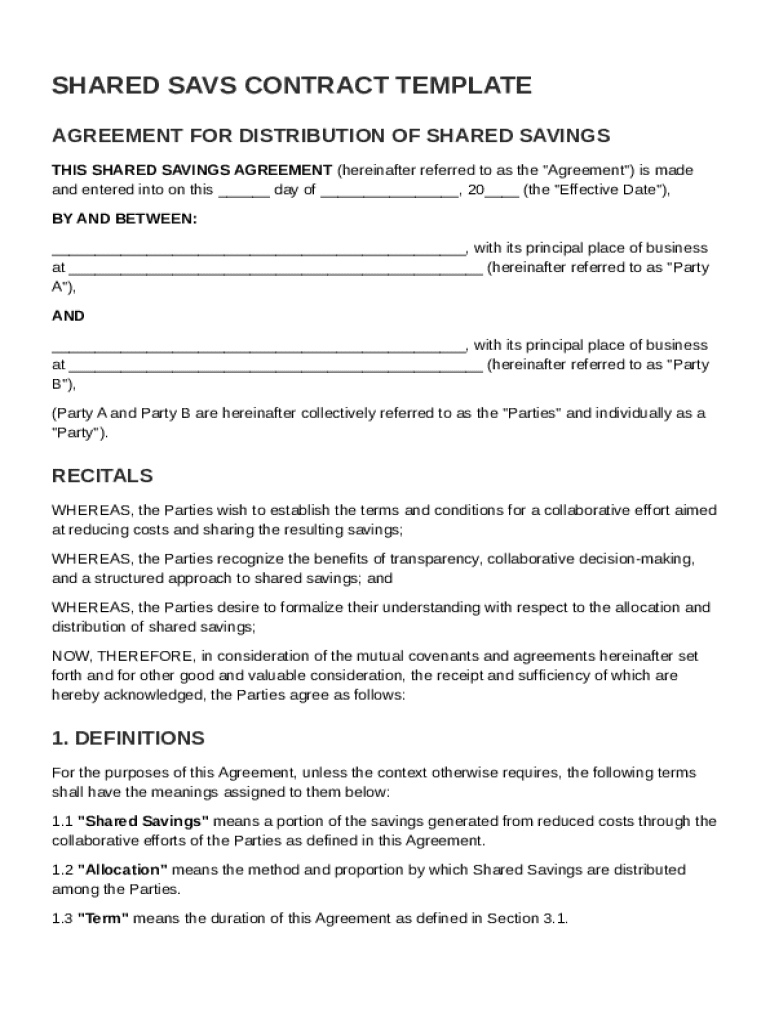
The Shared Savings Contract Template is a formal agreement used between two parties with the objective of achieving cost reductions and sharing the resulting savings. The document outlines various essential components, including key terms, responsibilities, and objectives that both parties agree upon. This contract aims to foster collaboration, efficiency, and transparency between partners by clearly defining how savings will be realized and distributed. Additionally, it includes provisions for confidentiality, dispute resolution, and amendments, ensuring a comprehensive understanding of all parties involved.
How to Use the Shared Savings Contract Template
Utilizing the Shared Savings Contract Template effectively involves several critical steps to ensure both parties' needs are addressed. Initially, both parties must agree on the baseline costs and the specific areas where savings are anticipated. The template should then be customized to outline the responsibilities of each party and the methods used for calculating savings. Importantly, provisions for evaluating performance, reporting, and renegotiation should be included, allowing for a dynamic and responsive agreement. Once finalized, both parties should review the contract together to confirm mutual understanding and agreement.
Customizing the Template
- Identify key cost areas: Specify which expenses the contract will target.
- Clarify roles: Define each party’s duties in the cost-saving process.
- Determine savings calculation: Agree on the method for measuring and validating savings.
Steps to Complete the Shared Savings Contract Template
Completing the Shared Savings Contract Template requires a systematic approach to ensure clarity and comprehensiveness. Begin by gathering necessary data, such as baseline costs and target savings areas. Once the pertinent information is available, proceed to fill out the template with details specific to your agreement:
- Identify parties involved: Clearly state the names and roles of each entity.
- Define goals and objectives: Articulate the intended outcomes and measures of success.
- Establish financial terms: Specify how savings will be calculated, shared, and monitored.
- Outline operational responsibilities: Document each party's obligations to achieve the shared goals.
- Incorporate legal provisions: Ensure sections for confidentiality, dispute resolution, and amendments are included.
- Review and sign: Verify all details and obtain signatures from both parties to finalize the agreement.
Important Terms Related to the Shared Savings Contract Template
Understanding the terminology used in the Shared Savings Contract Template is vital for successful implementation. Key terms frequently encountered include:
- Baseline costs: Initial cost levels against which savings are measured.
- Savings realization: The process of calculating and confirming the financial benefits achieved.
- Cost-sharing percentages: The agreed-upon division of the savings between the parties.
- Performance metrics: Measurements outlined to assess the effectiveness of cost-saving strategies.
- Amendments: Changes or modifications made to the contract after mutual agreement.
Key Elements of the Shared Savings Contract Template
The Shared Savings Contract Template includes several fundamental elements that must be addressed to ensure efficacy:
- Parties and roles: Clearly identify all involved parties and their respective roles.
- Objective: Define the purpose and goals of the agreement.
- Financial terms: Spell out how savings will be calculated and split.
- Operational guidelines: Provide detailed descriptions of the processes and procedures associated with the partnership.
- Confidentiality clauses: Outline terms for handling sensitive information.
- Dispute resolution: Set mechanisms for conflict resolution between parties.
- Amendments: Include details on how the contract can be adjusted or modified.
Legal Use of the Shared Savings Contract Template
The Shared Savings Contract Template is legally binding as it establishes the agreed terms and responsibilities of the involved parties. By adhering to the stipulations within the contract, both parties can ensure compliance with legal standards for savings distribution and collaboration. Including clauses for confidentiality and dispute resolution guards against potential legal conflicts and provides a framework for addressing discrepancies.
Dispute Resolution
- Mediation: Initiate a third-party mediation process for dispute resolution.
- Arbitration: Outline arbitration procedures should mediation fail.
State-Specific Rules for the Shared Savings Contract Template
Customizing the Shared Savings Contract Template to adhere to state-specific regulations is critical for its validity and effectiveness in the U.S. Different states may have varying legal requirements that could impact the enforcement of such agreements. It's important to verify and incorporate any pertinent state laws regarding savings contracts, taxation implications, or operational guidelines that could affect the agreement.
Examples of Using the Shared Savings Contract Template
In practice, the Shared Savings Contract Template can be applied in various scenarios, providing a structured framework for documenting and managing collaborative cost-saving efforts. For example:
- Healthcare partnerships: Hospitals and insurers collaborating to reduce operational expenses can utilize the contract to structure savings initiatives.
- Energy efficiency projects: Energy companies working with businesses to implement cost-reducing efficiencies can document roles and savings targets.
- Supply chain optimization: Manufacturers and suppliers aiming to streamline logistics processes might use the template to set collaborative performance goals.
By addressing the unique requirements of each scenario, the template helps parties achieve mutual financial benefits effectively.