
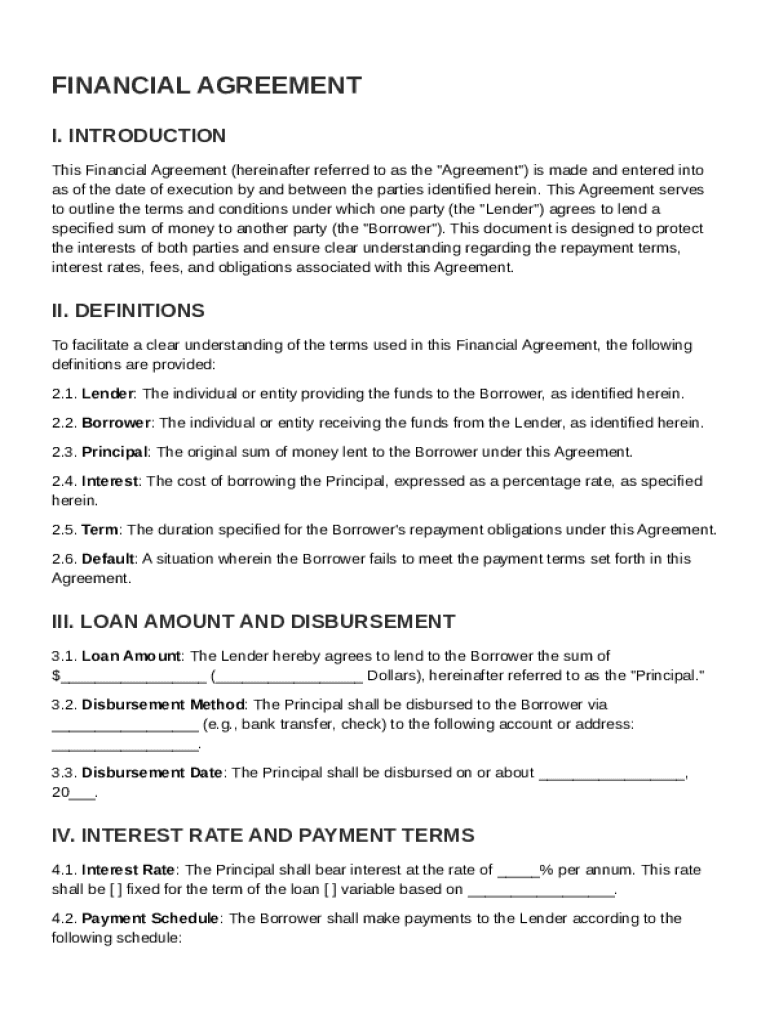







Definition and Meaning of a Financial Agreement Template
A financial agreement template is a standardized document used to outline the terms and conditions of a financial transaction between parties, typically a lender and a borrower. This form provides a clear framework for detailing loan terms such as the loan amount, interest rates, payment schedule, and duration. It also includes provisions for handling defaults, governing law, and protecting both parties' interests. The use of a financial agreement template ensures consistency and legal compliance across different transactions, reducing the risk of miscommunication.
Real-World Scenarios for Using the Form
Consider a scenario where a small business owner wants to borrow funds from a local bank to expand operations. Both parties can use a financial agreement template to define the loan amount, set an interest rate, and agree upon a repayment schedule that aligns with the business's cash flow. Similarly, individuals borrowing from private lenders can use this template to formalize their agreement, providing legal protection and clarity for both parties.
How to Use the Financial Agreement Template
Step-by-Step Process
-
Select the Template: Begin by choosing a financial agreement template that best matches the nature of your transaction. Ensure the template includes fields for all essential details relevant to your agreement.
-
Customize the Document: Edit the template to include specific information such as the names of the lender and borrower, loan amount, interest rate, payment terms, and any special conditions.
-
Review Legal Terms: Carefully review the legal terms included in the template. This section may cover dispute resolution methods, default scenarios, and applicable governing laws.
-
Consult a Legal Advisor: To ensure all local and federal regulations are adhered to, consider having a legal professional review the customized agreement.
-
Collect Signatures: Once finalized, gather signatures from all involved parties. The document should become a legally binding contract upon signing.
Practical Examples
- Personal Loan: Use the template to detail a personal loan between family members, ensuring that both parties understand the repayment terms and potential impact of late payments.
- Business Financing: A startup seeking capital from multiple investors can utilize the template to outline each party's contributions and the terms under which they will be repaid.
Key Elements of the Financial Agreement Template
Essential Components
- Loan Amount: Clearly specify the total principal amount to be lent or borrowed.
- Interest Rate: Define the interest rate, including whether it is fixed or variable, and how it will be applied over the loan period.
- Repayment Schedule: Detail the frequency and amount of each repayment installment, including any allowable grace periods.
- Duration: Specify the loan term length, and clarify starting and ending dates.
- Governing Law: Identify which state's laws will govern the agreement to mitigate any jurisdictional disputes in case of default.
Examples of Additional Provisions
- Prepayment Penalties: Conditions under which the borrower may face penalties for paying off the loan early.
- Collateral Requirements: Any assets used to secure the loan should be specified, outlining actions in case of non-payment.
Importance of Using the Financial Agreement Template
Legal and Professional Benefits
Utilizing a financial agreement template ensures the transaction is recorded in a legally binding format, which provides protection and enforcement capability to all parties involved. It also reduces the time and resources required to craft a new agreement from scratch, promoting efficient and consistent documentation practices.
Case Study: Loan Default Prevention
In a case study involving a technology company, using a well-structured financial agreement template helped to clarify repayment expectations and facilitated successful mediation when the company faced cash flow issues. The clear terms outlined in the template prevented a potential legal dispute, emphasizing the importance of such documents.
Who Typically Uses the Financial Agreement Template


Common Users
- Businesses: From startups seeking investment to established enterprises needing capital for expansion projects.
- Individuals: Engaging in private loans from relatives or acquaintances, ensuring terms are understood.
- Financial Institutions: Offering standardized loan agreements to streamline their operations and client interactions.

Sector-Specific Applications
- Real Estate: Developers and buyers use these templates for property financing arrangements, aligning on terms and timelines.
- Healthcare: Medical practitioners may fund new equipment or facility expansions through tailored financial agreements.
State-Specific Rules for the Financial Agreement Template
Variations Across Jurisdictions
Different states may have regulations that impact the enforceability and structure of a financial agreement. For example, some states may impose caps on interest rates or require specific clauses to be included in agreements. It's crucial to modify the template to adhere to all local laws and practices.
Examples
- Usury Laws: Some states have strict limits on the interest rates that can be charged, impacting how financial agreements are structured.
- Contract Disclosure Requirements: States may have specific mandates on disclosures that need to be included in financial agreements to protect consumers.
Legal Use of the Financial Agreement Template
Ensuring Compliance with U.S. Law
For a financial agreement to be legally valid, it must comply with federal and state laws, such as the Truth in Lending Act (TILA), which aims to protect consumers in credit transactions and ensure transparency. The template should be reviewed to meet all regulatory requirements, including clear disclosure of terms and borrower rights.
Practical Advice
- Legal Consultation: Regular review by legal experts can prevent non-compliance issues.
- Template Updates: Consistent updates based on legal changes ensure ongoing adherence to regulations, protecting both lenders and borrowers.
Software Compatibility and Digital Use
Integration with Document Management Tools
The financial agreement template, when used with platforms like DocHub, offers enhanced functionality for editing, signing, and managing documents in a digital format. Compatibility with tools like Google Workspace elevates the user experience, seamlessly integrating document management within existing workflows.
Benefits of Digital Versions
- Easy Accessibility: Provides the ability to store, retrieve, and sign agreements electronically, increasing efficiency.
- Security Features: Digital templates can incorporate password protection and encryption, safeguarding sensitive financial information.
Preparing a financial agreement using a template not only streamlines the documentation process but also provides a robust framework for clarity, legal compliance, and secure transactions in a variety of scenarios.







