




01. Edit your form online
Type text, add images, blackout confidential details, add comments, highlights and more.

Type text, add images, blackout confidential details, add comments, highlights and more.

Draw your signature, type it, upload its image, or use your mobile device as a signature pad.

Send it via email, link, or fax. You can also download it, export it or print it out.
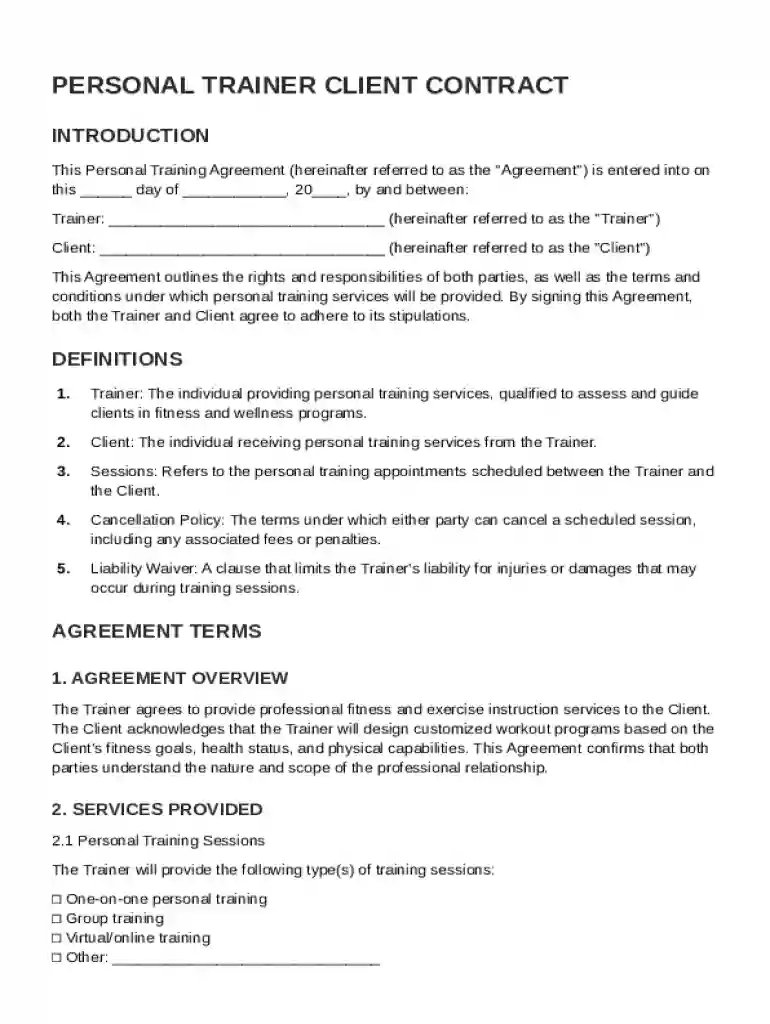
A Personal Trainer Client Contract is a legally binding agreement between a personal trainer and their client. This document outlines the terms and conditions under which the trainer provides services to the client. It serves as a formal record of the expectations and responsibilities of both parties involved, ensuring clear communication and mutual understanding.
Key components typically include definitions of provided services, payment arrangements, cancellation policies, confidentiality provisions, liability waivers, and termination conditions. The contract aims to protect the rights of both the trainer and the client, and it generally requires signatures from both parties to be enforceable.
Using the Personal Trainer Client Contract Template involves several steps to ensure that it meets the specific needs of both the client and the trainer:
Review the Template: Begin by thoroughly going through the template to understand its structure and content. Pay attention to sections covering service details, payment terms, and legal clauses.
Customize Content: Adjust the template sections to reflect the unique aspects of your service offerings and client preferences. This might include specifying types of training sessions, frequency, or any special conditions that apply.
Input Personal Details: Fill in the names, contact information, and other personal details of both the trainer and client to personalize the document.
Negotiate Terms as Needed: If there are terms that need further negotiation—such as fees or session cancellations—discuss these with the client to reach mutual agreement before finalizing the document.
Sign and Date: Once both parties are satisfied with the contract, ensure that all sections are completed and have both parties sign and date the contract to make it officially binding.
Distribute Copies: Provide a copy of the signed contract to both the trainer and the client for their records.
The effectiveness of a Personal Trainer Client Contract is largely due to its comprehensive coverage of important elements:
Service Description: Clearly outlines the nature and scope of the personal training services to be rendered, including location, session duration, and frequency.
Payment Terms: Details the payment structure, including rates, due dates, and accepted payment methods. It may also include clauses for late payments or refunds.
Cancellation Policy: Specifies rules regarding session cancellations by either party, including any applicable fees or requirements for notice.
Liability Waiver: Protects the trainer against certain claims, ensuring the client acknowledges risks associated with physical training.
Confidentiality: Ensures that both parties agree to keep personal information and training details private, building trust and protecting privacy.
Termination Clause: Details conditions under which either party may terminate the agreement, protecting both sides from unforeseen circumstances.
Understanding key terms used in a Personal Trainer Client Contract can help clarify expectations and responsibilities:
Acquiring a Personal Trainer Client Contract Template can be straightforward, and several options are available:
To ensure that the Personal Trainer Client Contract Template complies with legal standards, consider the following:
Personal Trainer Client Contracts are used in various scenarios, each unique in requirements:
Understanding state-specific guidelines is crucial for ensuring contract validity:
State-specific adaptations ensure the contract remains enforceable and relevant to regional legal frameworks.
At DocHub, your data security is our priority. We follow HIPAA, SOC2, GDPR, and other standards, so you can work on your documents with confidence.

This Handbook is written to provide essential information to candidates (those considering or preparing to sit for the NASM-CPT examination) and Certified
Information provided indicates the firm is fitness/training facility. The worker performed services for the firm as a personal trainer for tax years 2012.
Client/Personal Trainer Agreement. This agreement ensures that the role of the trainer to client and client to trainer is clearly appreciated and understood.


