






Definition & Meaning
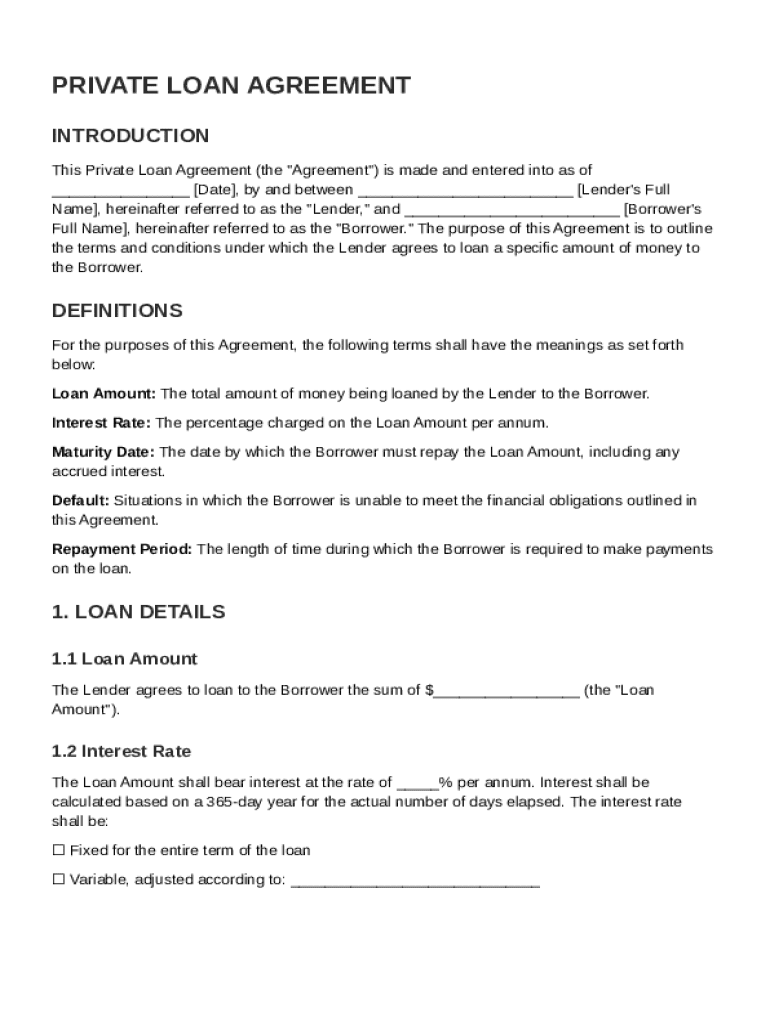
A Private Loan Agreement Template is a formal document that outlines the terms under which a lender agrees to provide a loan to a borrower. This template serves as a customizable framework that articulates the specific terms and obligations of each party involved. It typically includes key elements such as the principal loan amount, the interest rate, repayment terms, and conditions for default. Moreover, it establishes the legal parameters governing the loan, ensuring both parties understand and agree to their commitments under U.S. law.
The use of a template provides consistency and ensures that all necessary provisions are included, reducing the risk of misunderstandings or legal disputes. It serves a dual purpose by protecting both the lender's investment and the borrower's interests, providing a clear foundation for the financial relationship.
Key Elements of the Private Loan Agreement Template
A well-structured Private Loan Agreement Template incorporates several essential components:
- Loan Amount and Interest Rate: It specifies the total principal amount of the loan and the agreed-upon interest rate, whether fixed or variable.
- Repayment Terms: Details the payment schedule, frequency of payments, and the total duration of the loan term.
- Default Definitions and Remedies: Clarifies what constitutes a default and the actions the lender can take if the borrower fails to fulfill their obligations.
- Amendments and Severability: Outlines the process for making changes to the agreement and explains how individual clauses remain enforceable even if others are deemed invalid.
- Governing Law: Specifies the jurisdiction's laws that will govern the agreement, typically aligning with the lender's or borrower's location.
These elements are crucial for crafting a legally binding document that aligns with both parties' expectations and legal standards.
Steps to Complete the Private Loan Agreement Template
Creating a comprehensive Private Loan Agreement involves several steps:
- Gather Necessary Information: Collect all pertinent details about the loan terms, including loan amount, interest rate, and repayment schedule.
- Customize the Template: Use the available template to fill in specific details relevant to the particular loan agreement. Adjust sections to reflect any unique conditions or terms.
- Review Legal Terms: Ensure all legal terminology and clauses comply with applicable laws and regulations.
- Consult Legal Counsel: Before finalizing the agreement, both parties should consult with legal professionals to validate the document's enforceability.
- Signatures and Acknowledgements: Both the lender and the borrower must sign the agreement, acknowledging their understanding and acceptance of the terms.
This step-by-step process helps ensure that the loan agreement is thorough, legally compliant, and tailored to the specific transaction.
Important Terms Related to Private Loan Agreement Template
Understanding key terms in a Private Loan Agreement is vital for both parties:
- Amortization: The process of spreading out loan payments over time to pay off the debt, including principal and interest.
- Collateral: An asset offered by the borrower to secure the loan, acting as a safety net for the lender.
- Promissory Note: A financial instrument that includes a written promise by the borrower to pay back the lender under specified terms.
These terms are commonly used and hold significant importance in the financial arrangement outlined in a Private Loan Agreement.
State-Specific Rules for the Private Loan Agreement Template
Different states in the U.S. have unique regulatory requirements that may impact a Private Loan Agreement:
- Usury Laws: These laws vary by state and set maximum allowable interest rates to protect borrowers from excessive charges.
- Record-Keeping Requirements: Some states mandate specific disclosures or documentation, which must be included in the loan agreement.
- Enforcement Provisions: The ability to enforce or modify loan terms can depend on state-specific consumer protection laws.
Understanding these variations is crucial to ensure that the agreement is valid and enforceable across state lines.
Legal Use of the Private Loan Agreement Template
Utilizing a Private Loan Agreement Template has legal implications:
- Enforceability: A legally sound document ensures that the agreement is enforceable in court, offering protection to both parties in case of breach.
- Compliance: Adhering to local, state, and federal laws preserves the validity of the loan terms and conditions.
- Clarity: By clearly outlining obligations and rights, both parties can minimize the risk of future disputes.
These legal considerations are critical for the legitimate and effective use of the template.
Examples of Using the Private Loan Agreement Template
Private Loan Agreements can be applied in various scenarios:
- Family Loans: Agreements between family members or friends to formalize the exchange of funds while preserving personal relationships through clear terms.
- Business Loans: Small businesses obtaining loans from private lenders to fund operations or expansion plans, ensuring professional and legal clarity.
- Real Estate Transactions: Utilizing the agreement for personal financing when purchasing real estate, where a traditional mortgage might not be suitable.
These examples demonstrate the template's flexibility in meeting diverse borrowing and lending needs.
Versions or Alternatives to the Private Loan Agreement Template
While the basic structure remains consistent, variations exist:
- Secured vs. Unsecured Loans: An agreement tailored to whether the loan is secured by collateral or based solely on the borrower's creditworthiness.
- Interest-Only Loans: Templates for loan agreements that require only interest payments until the principal is due.
- Hybrid Agreements: Combining features of different loan types to meet specific requirements.
Recognizing and choosing the appropriate version ensures that the agreement aligns with the specific needs of the transaction, offering tailored legality and practical utility.