






Definition & Meaning
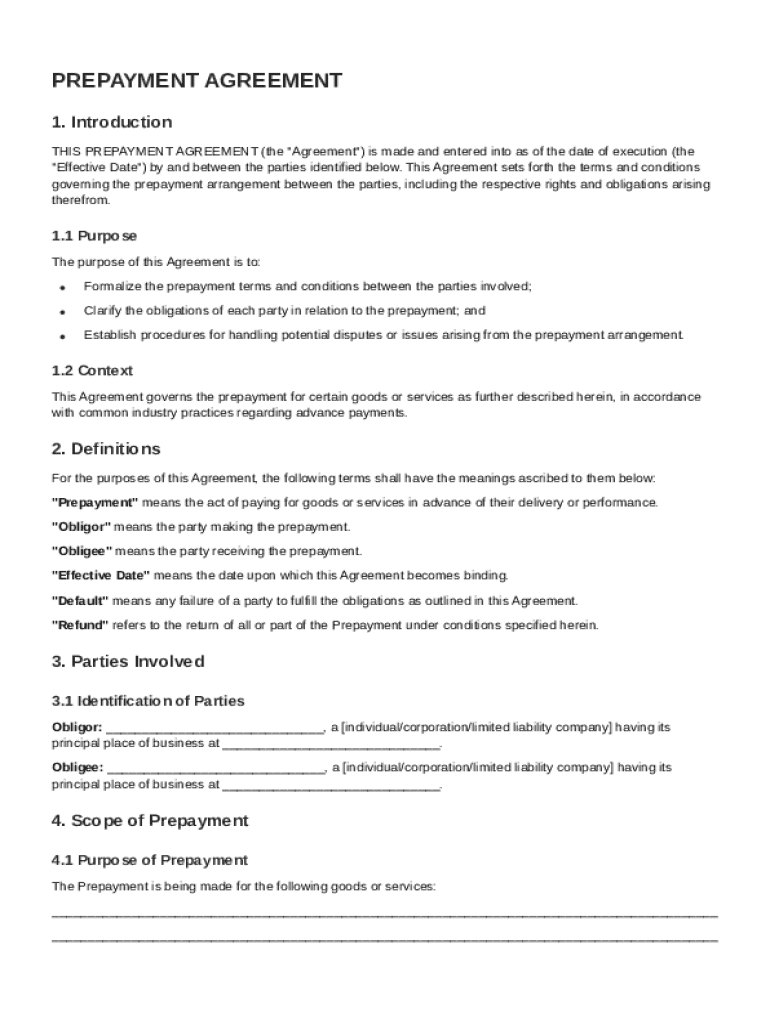
A Prepayment Agreement is a contractual document that outlines the terms and conditions for a prepayment arrangement between two parties. It details their rights and obligations and covers the key terms such as 'Prepayment', 'Obligor', and 'Obligee'. These agreements are typically used to prepay for goods or services, ensuring that both parties are aware of their commitments. For example, a company may prepay for raw materials from a supplier, securing the price and availability. Such an agreement seeks to formalize the prepayment process and mitigate potential disputes, providing a clear understanding of what each party expects from the arrangement.
How to Use the Prepayment Agreement Template
To efficiently use a Prepayment Agreement Template, begin by downloading the template, preferably in a format compatible with your editing software, such as DOC or PDF. After opening the template, fill in the necessary details including the parties involved, the prepayment amount, and the service or product description. Common fields to complete are the payment schedules, methods of payment, and conditions for refund. Once all information is included, review the document carefully to ensure accuracy before any signing parties verify and sign it. This process facilitates clear communication and understanding between the involved parties.
Specific Steps for Completion
- Identify Parties: Clearly mention the obligor and obligee names along with their contact information.
- Detail the Prepayment: Specify the amount, currency, and purpose of the prepayment.
- Outline Payment Schedule: Describe when and how payments will be made, including key dates.
- Incorporate Terms: Include terms for refunds, penalties for defaults, and methods for dispute resolution.
Important Terms Related to Prepayment Agreement Template
Understanding the terminology within the Prepayment Agreement Template is crucial. Key terms often included are:
- Prepayment: An advance payment made ahead of the due date for services or products.
- Obligor: The party responsible for making the prepayment.
- Obligee: The party who receives the prepayment.
- Refund Conditions: Circumstances under which a prepayment may be refundable.
- Default Scenarios: Situations where the obligor fails to meet the agreed payment terms.
Having familiarity with these terms ensures all parties have a consistent understanding of their roles and responsibilities.
Legal Use of the Prepayment Agreement Template
The legal framework surrounding a Prepayment Agreement Template necessitates compliance with relevant laws and regulations. This may include aligning with the Uniform Commercial Code (UCC) for sales agreements in the U.S. or adhering to consumer protection laws. Legal consultation is advisable to ensure the agreement’s language correctly reflects local jurisdictional requirements. For instance, in certain industries like construction, additional statutory conditions might influence agreement terms. Ensuring legal compliance helps protect both parties against potential legal challenges post-agreement.
Key Elements of the Prepayment Agreement Template
The Prepayment Agreement Template comprises several essential sections:
- Parties Involved: Clearly identify the names and roles of each party.
- Prepayment Amount and Purpose: Specify the financial details and what the prepayment is intended for.
- Payment Terms: Define the conditions and schedules for payments.
- Penalties for Breach: Outline potential penalties or consequences for failing to adhere to the terms.
- Dispute Resolution: Describe the agreed mechanism for resolving any disagreements.
These sections ensure clarity and completeness of the agreement, safeguarding the interests of involved parties.
Examples of Using the Prepayment Agreement Template
Practical examples of prepayment arrangements can offer insights into their application. For instance, a small business might prepay a wholesaler for a bulk order of inventory to secure a discounted rate. Alternatively, a freelancer could use a prepayment agreement with a client to ensure payment for a large project requiring significant upfront costs. These examples illustrate how various industries utilize such agreements to manage risk, improve cash flow, and establish trust between parties.
State-Specific Rules for the Prepayment Agreement Template
Prepayment Agreement Templates may need to adapt to state-specific legal requirements. For example, in California, certain prepayments for residential construction work might need to follow additional consumer protection statutes. Meanwhile, states like New York may have specific filing or registration requirements for service prepayment exceeding a particular threshold. It is crucial to research and understand state-specific nuances to ensure full legal compliance with the agreement, preventing potential enforceability issues.
Digital vs. Paper Version
The choice between digital and paper versions of the Prepayment Agreement Template depends on various factors, including convenience and environmental considerations. Digital documents can be easily edited, shared, and stored, providing accessibility and convenience in handling multiple revisions. Conversely, physical copies might be preferred in cases where electronic signatures are not recognized legally, or parties simply prefer hard copies for security reasons. Regardless of the version, ensuring that the document is stored securely and accessible to authorized parties is paramount.