




01. Edit your form online
Type text, add images, blackout confidential details, add comments, highlights and more.

Type text, add images, blackout confidential details, add comments, highlights and more.

Draw your signature, type it, upload its image, or use your mobile device as a signature pad.

Send it via email, link, or fax. You can also download it, export it or print it out.
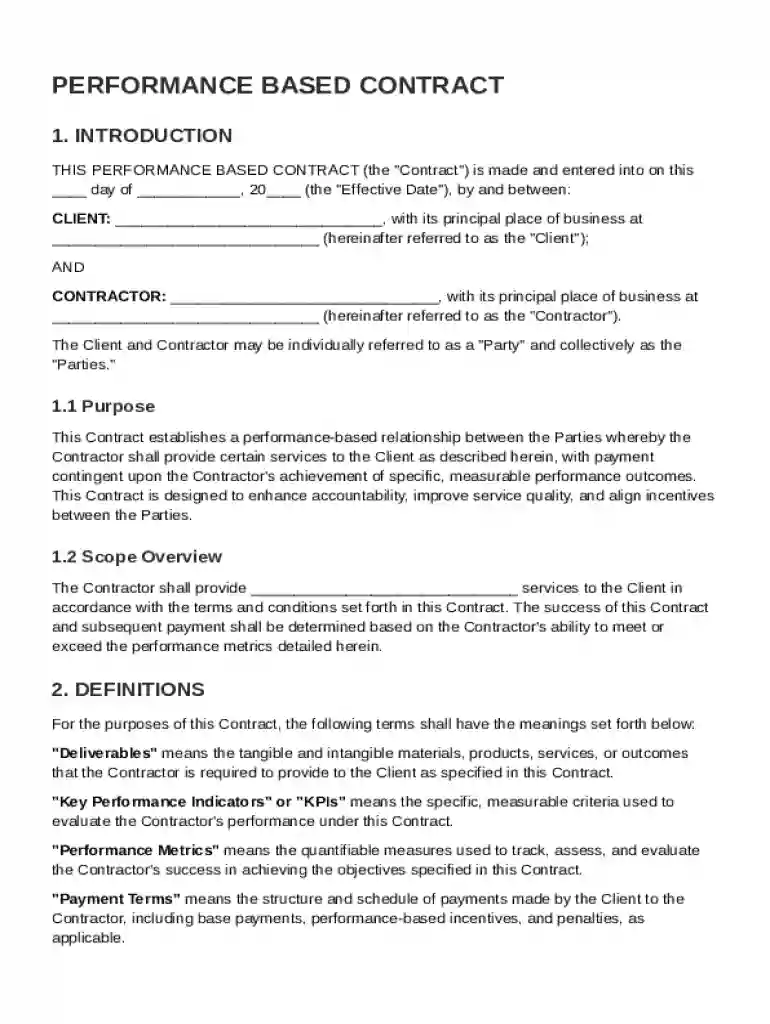
The Performance Based Contract Template is a legal framework designed to establish agreements where payment is tied to the contractor's achievement of specified performance metrics. This type of contract is commonly used to enhance accountability and align incentives between parties, ensuring that service quality meets pre-defined expectations. The template typically outlines the scope of work, key performance indicators (KPIs), payment terms, confidentiality obligations, and dispute resolution mechanisms. Such contracts are integral in sectors where performance is directly linked to project outcomes, providing a clear structure for both clients and contractors to manage responsibilities and reward success.
The template covers several critical elements to ensure all necessary components of an effective performance-based contract are included. Key elements often feature:
These elements combine to create a robust contract that governs the relationship between the client and contractor effectively.
To use the Performance Based Contract Template effectively, parties should follow a structured approach:
By following these steps, users can ensure that the contract is both comprehensive and legally sound, reducing potential conflicts.
This contract template is predominantly used by businesses across various industries looking to engage contractors whose payments depend on performance outcomes. Key users include:
These users benefit from the template's structured approach, which promotes accountability and transparency in business dealings.


Practical applications of the Performance Based Contract Template can be seen in diverse scenarios:
Each example highlights how performance metrics drive contractor incentives, thereby aligning the service quality with client expectations.
To ensure that the Performance Based Contract Template is legally binding, it must comply with relevant U.S. laws, such as contract and employment law. Key legal considerations include:
Adhering to these legal principles helps in forming a valid contract that can be enforced if disputes arise.
Understanding the terminology associated with this type of contract is vital to its proper execution:
Being familiar with these terms ensures better negotiation and execution of the agreement.
Completing the template involves several key steps:
Following these steps ensures a comprehensive agreement that clearly defines expectations and obligations.
At DocHub, your data security is our priority. We follow HIPAA, SOC2, GDPR, and other standards, so you can work on your documents with confidence.




Use the templates and examples on this page to create your own performance-based contracting approach for your next agile service requirement. Statement of
Mar 24, 2022 Discover the essential components of a robust consulting agreement. Learn how to create a solid contract with these 12 key elements.


