






Definition and Meaning
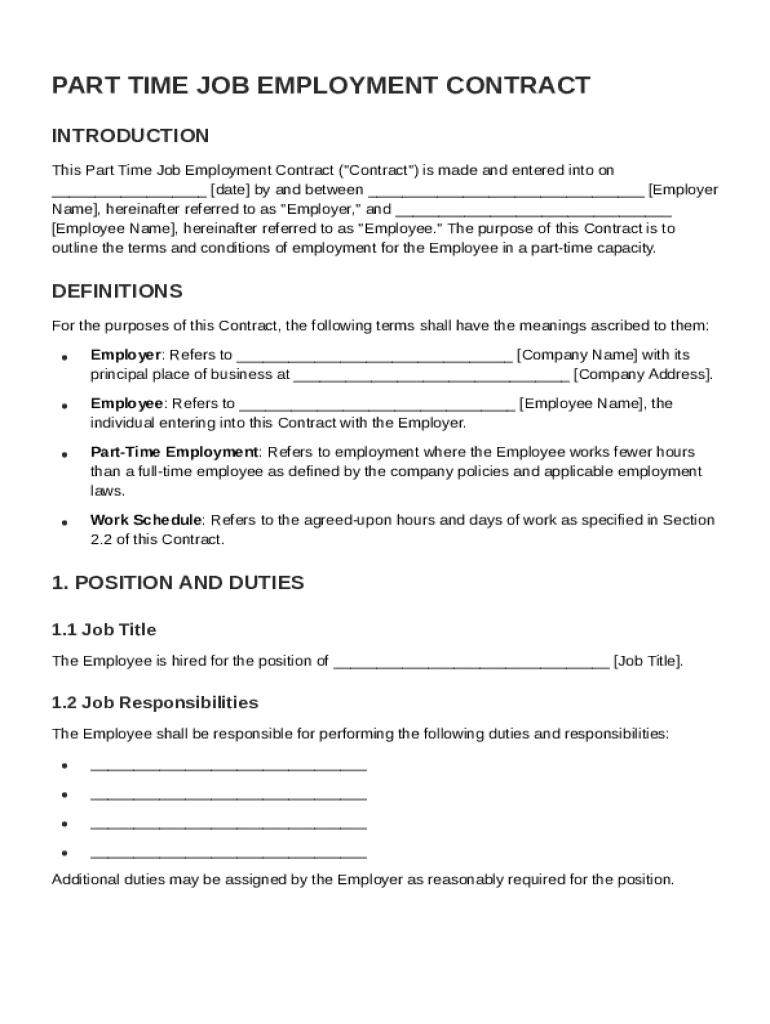
A Part-Time Job Contract Template is a legally binding document that outlines the terms and conditions of part-time employment between an employer and an employee. The primary purpose of this template is to set clear expectations regarding work responsibilities, work hours, compensation, and other employment-related factors. It ensures both parties understand their obligations and rights, thereby reducing potential disputes. It typically includes sections such as job duties, work schedule, compensation, termination procedures, confidential information handling, and miscellaneous provisions.
Key Elements of the Part-Time Job Contract Template
Crafting a comprehensive Part-Time Job Contract requires understanding the essential components that should be included:
-
Job Position and Duties: Clearly define the role of the employee and the specific tasks they are expected to perform. This section helps eliminate ambiguity concerning job responsibilities.
-
Work Schedule: Specify the expected work hours. For a part-time role, this usually covers a set number of hours per week or month, potentially detailing flexible hour arrangements.
-
Compensation: Include details about wages or salary, payment frequency, and any potential overtime pay. Additional compensation elements might comprise bonuses or commissions if applicable.
-
Benefits: Outline any benefits available to the part-time employee, such as health insurance, retirement plans, or paid time off. Note that benefits for part-time roles may differ significantly from full-time ones.
-
Confidentiality Obligations: Highlight the importance of maintaining confidentiality regarding company information and trade secrets, including any consequences for breach of this clause.
-
Termination Procedures: Define the conditions and process for ending employment, either by resignation or dismissal, including notice periods and any severance pay.
Steps to Complete the Part-Time Job Contract Template
Effective completion of the Part-Time Job Contract Template involves step-by-step documentation:
-
Gather Essential Information: Start by collecting personal details of both parties, including names, contact information, and job titles.
-
Define the Employment Terms: Clearly record the agreed-upon hours, wages, and period of work. Ensure that all negotiated terms are accurately captured.
-
Specify Job Responsibilities: Detail the employee's duties and expectations to avoid any future misunderstandings.
-
Outline Confidentiality Requirements: Set forth the expectations regarding confidentiality and any relevant non-disclosure agreements.
-
Clarify Termination Conditions: Note acceptable grounds for termination from both sides, and outline required notice periods.
-
Review and Amend as Necessary: Double-check all data for accuracy and relevance, adjusting any clauses as needed to suit specific needs.
-
Finalize with Signatures: Once both parties have reviewed the contract, ensure they sign and date it to render it legally binding.
Who Typically Uses the Part-Time Job Contract Template
The Part-Time Job Contract Template serves a diverse set of users:
-
Small Business Owners: Often utilize the template to formally engage part-time help in roles like customer service, sales, and administration.
-
HR Departments: Leverage these templates to manage part-time hires efficiently and keep legal documentation standardized and accessible.
-
Freelancers and Contractors: When offering part-time services to different employers, freelancers might use this contract to formalize their working relationship.
-
Educational Institutions: Schools and universities employing part-time instructors or staff members make use of such contracts to codify terms of employment.


State-Specific Rules for the Part-Time Job Contract Template
U.S. states may have varying labor laws that affect part-time employment, necessitating adjustments to standard contract templates:
-
Minimum Wage Laws: Some states have higher minimum wage standards that must be considered when drafting compensation sections.
-
Working Hours Regulations: Certain states enforce strict rules regarding the number of hours a part-time employee can work weekly before qualifying for benefits.
-
Termination Protections: Legal guidelines for termination notices and severance pay can differ, requiring particular attention to state-specific regulations.
-
Non-Compete Agreements: The enforceability of non-compete agreements can vary, impacting how confidentiality sections should be crafted.
Software Compatibility
For digital management of the Part-Time Job Contract Template, compatibility with the software is crucial:
-
PDF Editors: Platforms like DocHub facilitate the seamless editing of contract templates directly from PDF format, simplifying revisions and annotations.
-
Cloud Integration: Compatible with Google Drive, Dropbox, and OneDrive, these templates can be easily shared and stored, providing accessibility from diverse locations.
-
E-Signature Solutions: DocHub and similar tools offer electronic signature functionalities that simplify contract finalization, ensuring legal compliance with digital operations.
Legal Use of the Part-Time Job Contract Template
The Part-Time Job Contract Template must conform to legal standards to maintain enforceability:
-
Compliance with Employment Laws: Each clause in the document should align with federal and state employment laws to ensure that both parties' rights are protected.
-
Legally Binding Conditions: The template must include necessary legal language to ensure it's recognized as binding by courts, affirming its validity.
-
Incorporating Updates: Regular reviews are necessary to incorporate changes in labor laws or company policies that may impact contract terms.
Variations and Alternatives to the Part-Time Job Contract Template
Individuals or businesses may explore different versions of the Part-Time Job Contract according to unique requirements:
-
Freelancer Agreements: Similar to part-time contracts but often cover short-term or project-based work rather than ongoing roles.
-
Internship Contracts: Tailored for temporary positions that may include training and educational components, often offering less comprehensive pay structures.
-
Temporary Employment Contracts: These cover short-term employment, possibly full-time for a limited period, and provide different protections and expectations.