






Definition and Meaning of the Ownership Contract Template
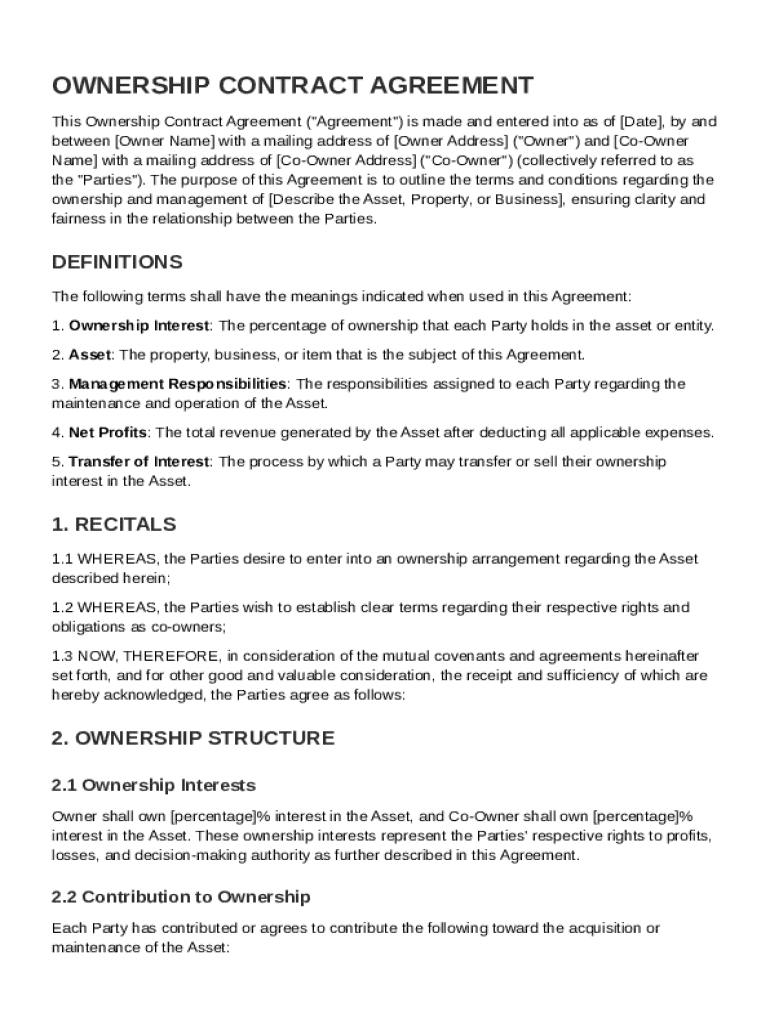
An Ownership Contract Template establishes the terms and conditions for shared ownership and management of an asset. It clearly defines ownership interests, management responsibilities, profit-sharing arrangements, procedures for transferring interests, dispute resolution methods, and applicable governing law. This document primarily serves to ensure clarity and fairness between the parties involved, preventing disputes by setting out all agreed-upon terms in a legally binding format.
Components of an Ownership Contract
- Ownership Interests: Specifies each party's percentage of ownership in the asset.
- Management Responsibilities: Details who is responsible for the asset's day-to-day management.
- Profit Sharing: Outlines how profits, losses, and expenses will be divided among the owners.
- Transfer Procedures: Describes procedures for an owner who wishes to sell or transfer their share.
- Dispute Resolution: Establishes methods for resolving conflicts, such as mediation or arbitration.
- Governing Law: Identifies the jurisdiction that will interpret the contract, typically based on where the asset is managed or located.
How to Use the Ownership Contract Template
To efficiently deploy this template, begin by carefully reviewing each section to understand its purpose and ensure that it aligns with your specific needs. Replace placeholder text with relevant details about the asset, owners, and specific terms agreed upon.
Step-by-Step Guidance
- Review the Template: Understand the structure and content to ensure completeness.
- Gather Information: Collect necessary data, including ownership percentages and management roles.
- Customize Content: Replace generic clauses with specific details about the asset and parties involved.
- Consult Professionals: Engage legal advisors to ensure compliance and adhere to local laws.
- Finalize and Sign: Once satisfied, have all parties review, agree upon, and sign the document.
Important Terms Related to the Ownership Contract Template
Familiarizing yourself with key terms is essential for effective completion and comprehension of the ownership contract. These terms clarify the roles and responsibilities of each party, and their meanings are crucial in interpreting the document correctly.
Key Terms
- Co-Owner: A party with a shared interest in the asset, carrying rights and obligations.
- Asset Management: The process of overseeing and running an asset in accordance with agreed-upon procedures.
- Interest Transfer: The legal method for an owner to relinquish their ownership stake.
- Resolution Procedures: Predetermined methods for addressing and solving disputes.
- Fiduciary Responsibility: The legal obligation to act in the best interests of all parties involved.
Key Elements of the Ownership Contract Template
Understanding the critical elements of the contract helps ensure that essential details are not overlooked. These components form the foundation of the agreement and require meticulous attention.
Core Components
- Clarity: Define roles and responsibilities in specific language to prevent future disputes.
- Flexibility: Allow for amendments with the consent of all parties to adapt to changing circumstances.
- Transparency: Ensure all terms, especially those related to finances, are clear and agreed upon by all involved.
Legal Use of the Ownership Contract Template
In the United States, an Ownership Contract Template is legally binding once signed by all parties. It is recommended to draft this document in accordance with legal standards to ensure its enforceability.
Legal Considerations
- Compliance: Ensure the contract complies with federal, state, and local laws.
- Binding Nature: Once signed, it legally binds all parties to the terms unless mutually amended.
- Regulation Adherence: Include required regulations if the asset is subject to specific industry standards.
Who Typically Uses the Ownership Contract Template
Various stakeholders may find the Ownership Contract Template beneficial. These include individuals and entities engaged in joint ventures, family-owned businesses, or co-owned properties.


Common Users
- Business Partners: Joint business owners seeking to outline roles and profit-sharing details.
- Property Owners: Individuals sharing ownership of real estate or investment properties.
- Estate Planners: Individuals or professionals managing shared family assets.

State-Specific Rules for the Ownership Contract Template
State laws can significantly influence the terms and enforceability of an ownership contract. It is crucial to consider these variations when preparing your agreement.
Regional Variations
- Jurisdictional Preferences: Different states may favor specific dispute resolution methods.
- Property Laws: States have varying statutes regarding property management and ownership rights.
- Tax Implications: Consider state tax laws that might affect profit-sharing calculations or asset transfers.
Steps to Complete the Ownership Contract Template
Completing the Ownership Contract Template requires careful attention to detail to ensure accuracy and compliance with all parties' expectations.
Step-by-Step Process
- Identify Participants: Determine and document who the owners are, including their respective roles.
- Define Asset: Clearly describe the asset, including its value, location, and any distinctive features.
- Detail Financials: Break down how costs, revenues, and potential liabilities will be divided.
- Set Management Protocols: Establish who will handle various operational aspects.
- Outline Dispute Resolution: Agree on a process for handling any potential disagreements.
- Finalize Agreement: Secure signatures after all parties have reviewed and concurred on the terms.