







Definition & Meaning
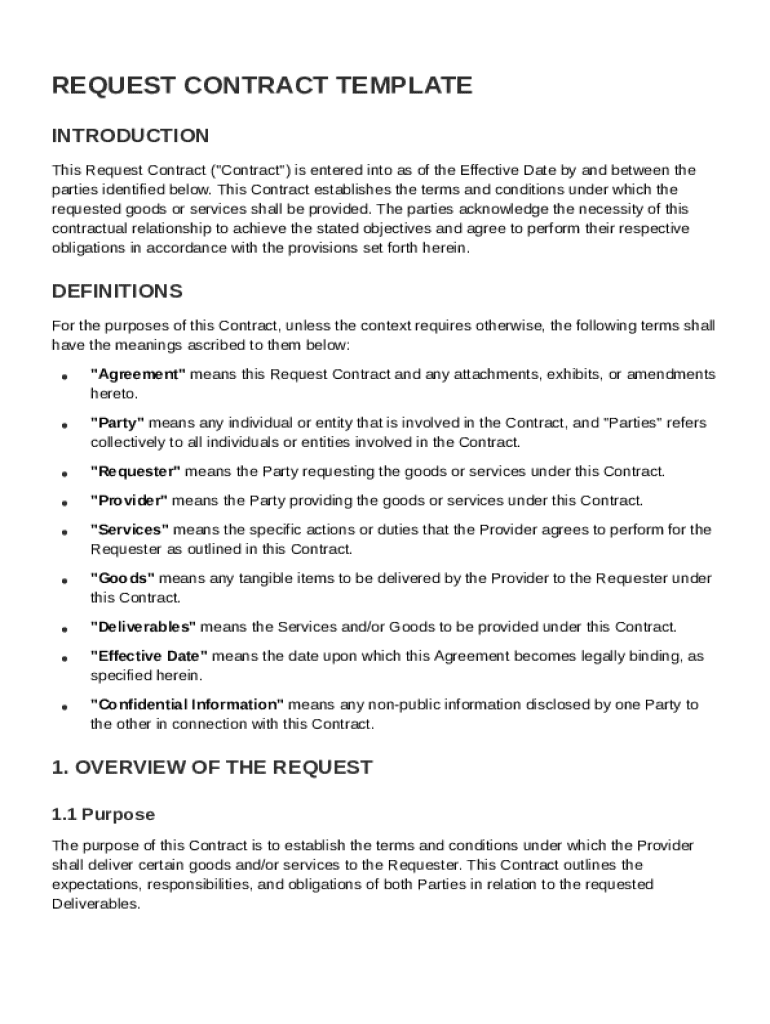
A Request Contract Template is a formal document used to detail the terms and conditions for providing goods and/or services between two parties: the Requester and the Provider. This contract template serves as the foundation for establishing clear expectations and responsibilities, setting the stage for successful transactions and business relationships. It includes key aspects such as definitions, obligations, payment terms, and conditions for dispute resolution, amendments, and termination.
The template is structured to ensure that both parties thoroughly understand their roles, facilitating transparent communication and reducing the potential for conflicts. By outlining the terms in advance, the template helps parties avoid misunderstandings, ensuring that the agreed-upon deliverables are met.
Practical Example
Consider a scenario where a software company (Requester) hires a freelance developer (Provider) to create a mobile application. The Request Contract Template is used to define the project scope, deliverables, deadline, and payment terms, such as a 50% deposit and the remaining 50% upon project completion.
Key Elements of the Request Contract Template
Major Components
-
Definitions: This section clarifies the terminology used within the contract, ensuring that all parties have a mutual understanding of the key terms.
-
Responsibilities: It specifies the duties and responsibilities of both parties, detailing the tasks that each party must fulfill to successfully complete the contract.
-
Payment Terms: Here, the template outlines the payment structure, including invoicing schedules, payment methods, and penalties for late payments.
-
Dispute Resolution: This part describes the mechanisms for resolving disagreements, such as mediation or arbitration, to avoid lengthy and costly court proceedings.
-
Amendments and Termination: The template provides guidelines for how the contract can be modified or terminated, including notice periods and conditions under which termination is permissible.
Real-World Scenario
Imagine a catering company (Provider) entering into a contract with an event planner (Requester) for a large corporate event. Important elements detailed in their Request Contract Template might include preparations for specific dietary restrictions and timelines for service delivery.
How to Use the Request Contract Template
Step-by-Step Instructions
-
Review Existing Templates: Begin by reviewing available templates to select one that best meets your needs.
-
Customize the Content: Adjust the template to match the specifics of your agreement, including inserting names, dates, and particular terms.
-
Consult with Legal Experts: It's advisable to have the contract reviewed by legal counsel to ensure compliance and adequacy, especially if the agreement involves significant risks or financial commitments.
-
Negotiate Terms: Discuss the template with the other party, negotiate terms if necessary, and make mutually agreed-upon adjustments.
-
Finalize the Document: Upon agreement, finalize the document by obtaining the necessary signatures from both parties.
Example
For a design agency preparing a Request Contract Template for a new client, make sure that the document includes specific deliverables and milestones, allowing for clear reporting and evaluation of work completed against expectations.
Steps to Complete the Request Contract Template
Detailed Process
-
Gather Information: Collect all necessary details about the parties involved and the services or goods to be provided.
-
Fill Out Sections: Enter all critical information in designated sections, ensuring accuracy to prevent future disputes.
-
Review and Verify: Double-check all filled information for correctness and clarity. Pay attention to sections that involve numbers, such as payment and timelines.
-
Ensure Comprehensiveness: Make sure every essential component, such as responsibilities and termination conditions, is included.
-
Finalize and Execute: Once all details are verified, both parties should sign the document to make it legally binding.
Example
In a construction project, the template should clearly itemize each phase of the build, associated costs, and responsibilities, avoiding misinterpretations about project expectations.
Who Typically Uses the Request Contract Template


Typical Users
-
Business Entities: Companies of various sizes use this template when engaging in transactions that require clear documentation of terms.
-
Freelancers: Independent contractors utilize it to delineate the scope of their work for clients, protecting their interests.
-
Service Providers: From IT consultants to creative professionals, this template is vital for ensuring an evidence-based structure for their services.
-
Event Planners: In planning and executing events, using a standardized contract helps manage expectations and deliverables efficiently.
Example
A digital marketing consultant might use a Request Contract Template to define the services they promise to deliver for a client's campaign, such as SEO optimization and social media management.
Legal Use of the Request Contract Template
Compliance and Legality
Using the template ensures adherence to legal standards by documenting mutual agreements comprehensively. It prevents misunderstandings and serves as a legal record if disputes arise. Each contract must comply with state or federal laws, which can be ensured by having legal professionals draft or review the contract.
Example
An eCommerce company implementing a contract with an online advertising agency would include specifics about compliance with digital advertising laws and regulations, supported by the template, to mitigate legal risks.
Important Terms Related to Request Contract Template
Common Terms
-
Effective Date: The date on which the contract begins to apply.
-
Force Majeure: Conditions under which contract obligations can be delayed or waived due to unforeseen events.
-
Confidentiality: Clauses that protect sensitive information disclosed during the agreement.
Example
A logistics company uses templates to ensure that clauses regarding liability and confidentiality are clear, maintaining a secure exchange of goods.
Examples of Using the Request Contract Template
Diverse Applications
-
Partnership Agreements: To outline duties and profit-sharing in business partnerships.
-
Vendor Contracts: For suppliers and vendors to stipulate the terms of delivery and payment for products.
-
Project-Based Contracts: For creative projects, setting forth rights, timelines, and deliverables.
Case Study
A tech startup engaged a third-party developer for app development. Using a Request Contract Template, they defined the development phases, technology stack, and ownership rights for the final product.
Software Compatibility with Request Contract Template
Integration with Tools
-
DocHub and Cloud Services: The template can be easily edited and managed using DocHub through seamless integration with cloud platforms such as Google Drive.
-
Online Platforms: Customize templates with online editing tools, ensuring they are accessible on desktops and mobile devices for real-time collaboration.
Example
A law firm utilizes the template within their document management system, ensuring clients receive personalized contracts that align with digital toolsets like DocHub.




