
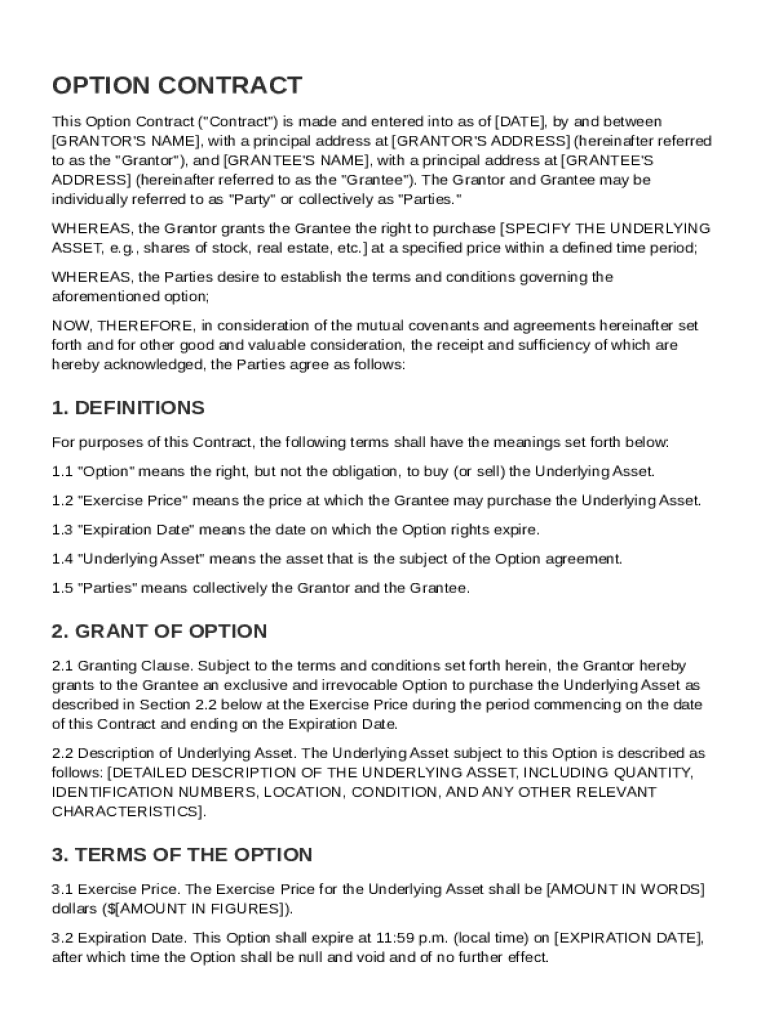







Definition and Meaning of Option Contract Template
An option contract template is a structured document that outlines the grantor's offer giving the grantee the right, but not the obligation, to purchase a specific asset at a predetermined price within a stipulated timeframe. An option contract is a critical legal instrument used to secure potential future transactions without committing immediately. It clearly defines the terms and conditions under which the option may be exercised, safeguarding both parties' interests. Typical elements include definitions of the parties involved, a clear description of the underlying asset, exercise price, and the option's validity period.
Important Terms Related to the Option Contract Template
Understanding the jargon associated with option contracts is essential for effective use. Key terms include:
- Grantor: The party offering the option.
- Grantee: The party receiving the right to exercise the option.
- Underlying Asset: The item or property subject to the option.
- Exercise Price: The agreed price at which the grantee can purchase the asset.
- Validity Period: The timeframe during which the option can be exercised.
These terms are foundational, ensuring all involved parties have a clear understanding of their rights and obligations.
Key Elements of the Option Contract Template
Proper construction of an option contract requires several vital components to be included:
- Detailed Description of Asset: Comprehensive identification of the asset to avoid ambiguities.
- Exercise Procedure: Clear instructions on how and when the option can be exercised.
- Representations and Warranties: Assurances from both parties validating their capacity and intent.
- Indemnification Clauses: Provisions for protecting parties against losses arising from specific events.
- Covenants: Promises by the parties concerning the future state or behavior.
These elements help in clearly documenting the precise terms of the agreement, minimizing the chance of future disputes.
Steps to Complete the Option Contract Template
- Gather Required Information: Ensure you have the correct details of the grantor, grantee, and the underlying asset.
- Define Terms and Conditions: Outline the exercise price, validity period, and any specific conditions for exercising the option.
- Draft the Contract: Use the template to input gathered information, ensuring all blanks are filled accurately.
- Review Legal Obligations: Cross-check against relevant laws and regulations to ensure compliance.
- Collaborate and Sign: Both parties should review, make necessary amendments, and sign.
A thorough review by legal counsel is advisable to safeguard compliance with applicable laws.
Why Use an Option Contract Template
Opting for a template ensures uniformity and reduces the risk of missing critical components. It provides a comprehensive framework that is easy to tailor to specific needs, saving time and resources. Additionally, it reduces legal risks by ensuring all the necessary legal formalities and standard clauses are covered, thereby protecting both parties' interests in the transaction.
Who Typically Uses the Option Contract Template?
Different entities and individuals may require an option contract template, including:
- Real Estate Investors: Often use options to secure property transactions without immediate obligations.
- Business Corporations: Utilize option contracts for future acquisitions and stock options.
- Individual Investors: Engage in options as strategic financial instruments for investment purposes.
This diversity showcases the template's versatility across various sectors.


Legal Use of the Option Contract Template
Option contracts are subject to state and federal laws that regulate financial transactions. Parties must ensure that the template complies with the Uniform Commercial Code (UCC) where applicable and any state-specific regulations. Legal counsel can verify that representations, warranties, and obligations conform to current legal standards, which prevents unenforceable terms.
State-Specific Rules for the Option Contract Template
Different states may impose distinct rules regarding option contracts, especially concerning real estate and securities. For instance, California has specific disclosure requirements and forms that must accompany real estate option contracts. It's crucial for parties operating in various jurisdictions to adjust the template to meet regional legal standards, avoiding future compliance issues.
Examples of Using the Option Contract Template
Examples illustrate the broad applicability of option contracts in real-world scenarios:
- Investment Strategies: An investor might use an option contract to reserve shares at a current price, anticipating a future increase.
- Real Estate Transactions: A developer might secure an option on land while arranging financing, thus avoiding immediate purchase commitments.
- Corporate Mergers: Businesses may negotiate options to buy smaller companies, contingent on satisfactory due diligence.
These scenarios highlight the strategic flexibility options offer in various business contexts.




