






Definition and Purpose of the Employee Key Holder Agreement
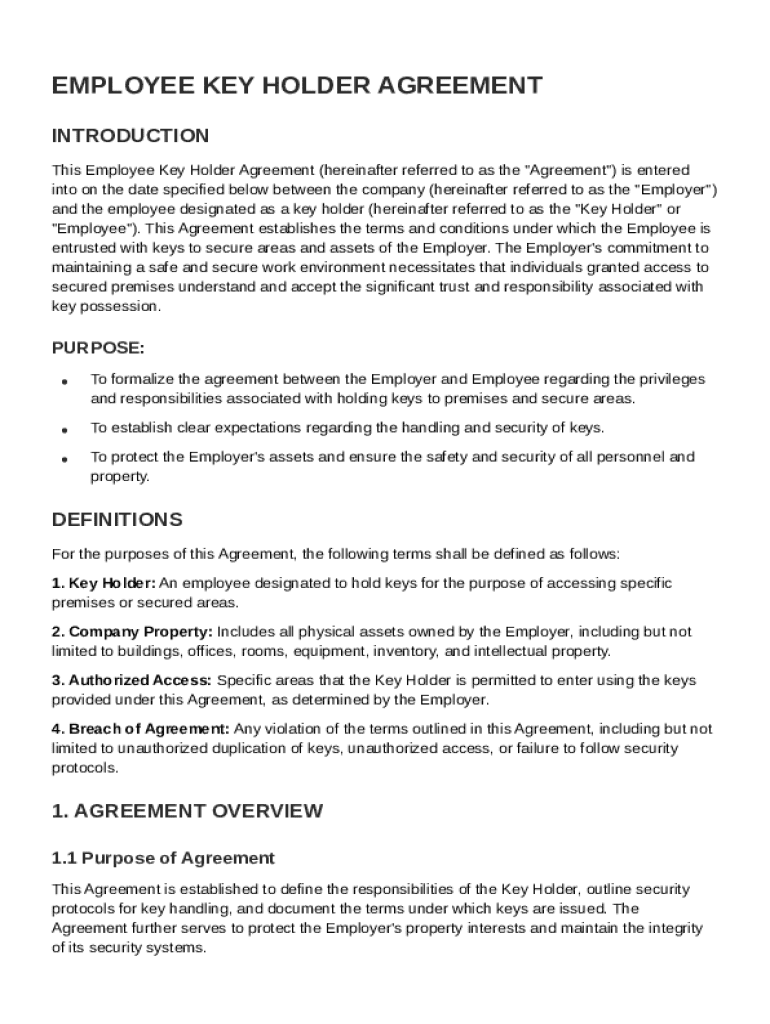
The Employee Key Holder Agreement is a legal document that establishes the responsibilities and obligations of an employee who is entrusted with the keys to secure company areas. This agreement outlines the trust placed in the key holder, detailing how access to restricted areas should be managed. It establishes protocols to ensure the security and confidentiality of company assets. This document is an essential tool for managing who has access to sensitive areas and helps mitigate risks associated with unauthorized access.
Steps to Complete the Employee Key Holder Agreement
-
Review Agreement Terms: Thoroughly read the entire agreement to understand the expectations and responsibilities outlined for key holders. Pay special attention to security protocols, conditions for key usage, and liability clauses.
-
Fill in the Key Holder Information: Specify the employee's name, position, and contact information. This ensures that the agreement is directly linked to the individual responsible.
-
Define Security Protocols: Outline the specific security measures that the key holder must follow. This can include alarm codes, procedures for locking and unlocking areas, and guidelines for handling lost keys.
-
Key Issuance Details: Record details such as the key type, serial number, and areas for which the key provides access. This section should also cover the conditions for key return.
-
Acknowledge Liability Terms: The employee should review and acknowledge their understanding of the liability terms, including any repercussions for lost or damaged keys.
-
Sign and Date: Both the employee and an authorized company representative should sign and date the agreement, officially acknowledging their understanding and commitment to the terms.
Key Elements of the Employee Key Holder Agreement
-
Roles and Responsibilities: Clearly defines the position of the key holder and their responsibility in ensuring the security of the areas they access.
-
Security Requirements: Details the necessary security precautions, including the proper handling, storage, and return of keys.
-
Liability Provisions: Specifies the employee's liability in the event of loss or damage to keys and the potential financial or disciplinary repercussions.
-
Compliance Conditions: The agreement mandates adherence to company policies regarding security and confidentiality.
-
Acknowledgment Clause: Confirms the employee has read, understood, and agrees to the terms outlined in the document.
Legal Use of the Employee Key Holder Agreement Template
This agreement is legally binding and serves as a formal record of responsibility. It is used to protect the company in instances of security breaches resulting from negligence or misconduct. Compliance with this agreement helps ensure that key holders respect and maintain the security of the company’s secured environments. Businesses rely on this form for legal recourse should an employee fail to comply with the specified terms.
Importance of the Employee Key Holder Agreement
Using this template is crucial for establishing a formal understanding of the responsibilities tied to holding company keys. It underscores the level of trust the company places in its employees and highlights the importance of adhering to established security protocols. This agreement is vital in protecting company assets and minimizing risks associated with unauthorized access.
State-Specific Considerations for Employee Key Holder Agreements
It's essential to acknowledge that legal requirements may vary depending on state-specific laws in the U.S. Businesses should tailor the agreement to reflect any local laws or regulations regarding employment agreements and asset control. Consulting with legal professionals familiar with state legislation may be beneficial to ensure compliance.
Who Typically Uses the Employee Key Holder Agreement Template
This form is commonly utilized by businesses of any size that need to manage access to secured areas. Industries such as retail, hospitality, and security services frequently require employees to sign these agreements. Key holders typically include managerial staff, security personnel, and other roles requiring access to sensitive or restricted areas.


Software Compatibility and Integration
DocHub offers seamless integration with various software platforms, including Google Workspace, enabling smooth management and completion of agreement templates. This compatibility ensures that users can easily draft, edit, and finalize agreements directly within their existing workflow without the need for additional software or cumbersome conversions.
Practical Examples and Case Studies
Consider a retail store where managers require access to supply rooms containing valuable inventory. An Employee Key Holder Agreement would stipulate access protocols, ensuring only authorized personnel control entry. Understanding this, businesses minimize the risk of theft and ensure accountability among staff. Similarly, in a corporate setting, IT personnel might need access to the server room, necessitating an agreement to outline specifics on access and security responsibilities, thereby protecting sensitive data.