




01. Edit your form online
Type text, add images, blackout confidential details, add comments, highlights and more.

Type text, add images, blackout confidential details, add comments, highlights and more.

Draw your signature, type it, upload its image, or use your mobile device as a signature pad.

Send it via email, link, or fax. You can also download it, export it or print it out.
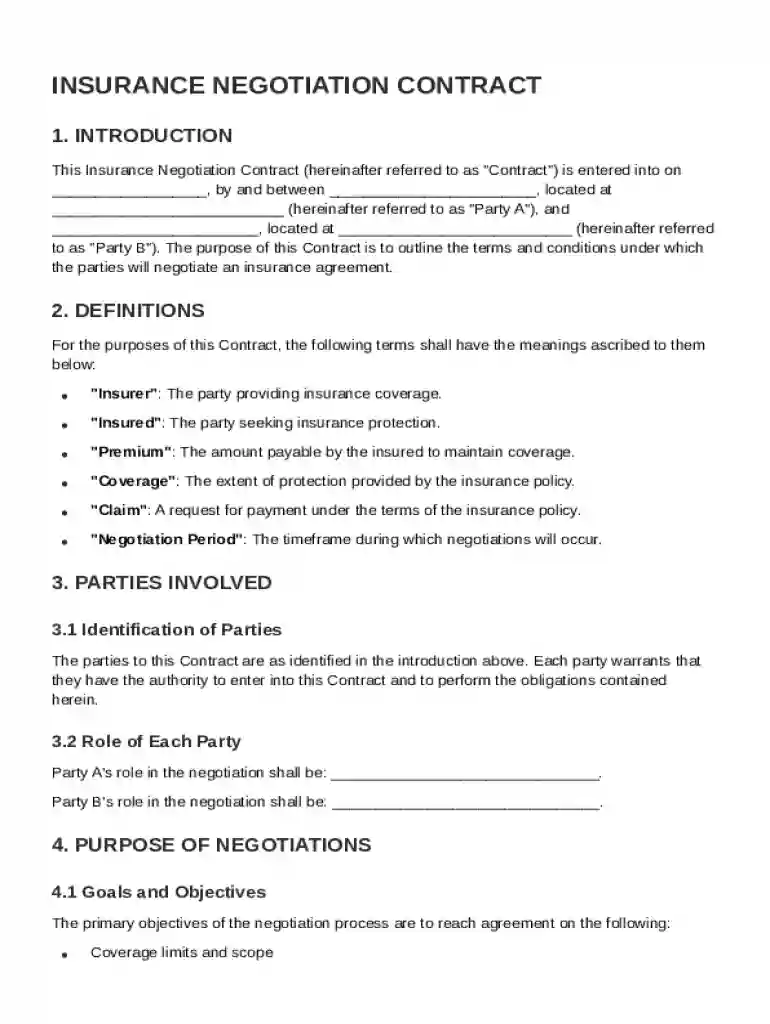
The "Insurance Negotiation Contract Template" establishes a formal agreement framework for negotiating insurance terms between two parties, designated as Party A and Party B. This document formalizes critical aspects of the insurance negotiation process, predominantly focusing on key terms like 'Insurer', 'Insured', and 'Premium'. It delineates specific roles and responsibilities for each party, thereby ensuring clarity in their negotiation procedures. This contract also defines objectives vital to the negotiation, such as establishing coverage limits, setting premium rates, and outlining procedures for claims.
Utilizing the Insurance Negotiation Contract Template requires a systematic approach to tailoring the document to the specific needs of the negotiating parties. Typically, the process begins by identifying the key terms and objectives relevant to the parties involved. This includes clearly defining coverage requirements, premium schedules, and claims procedures. The template allows users to edit various sections, thus enabling customization to suit specific negotiation contexts. It is essential to review and modify any guidelines related to communication and confidentiality to ensure they reflect the unique circumstances of the negotiation.
The Insurance Negotiation Contract Template serves a critical role in providing a legally binding framework for both parties. It aligns with the norms set by various regulatory bodies, ensuring compliance and protection against legal disputes. This agreement is usually governed by U.S. laws and typically includes clauses that comply with relevant legislation to ensure enforceability. Legal professionals often review these contracts to ensure that all clauses are adhered to and that both parties' rights and obligations are protected.
The template is commonly used by insurance companies, brokers, and corporate clients engaged in negotiating insurance agreements. Each of these entities may include legal counsel or risk management personnel who specialize in insurance law. Parties involved might also consist of procurement teams in large organizations negotiating comprehensive insurance packages or small businesses seeking optimal coverage at competitive rates.


Different states may have unique regulations and requirements affecting insurance contract negotiations. For instance, some states may impose specific coverage types as mandatory, while others might have particular dispute resolution requirements. It is crucial to be aware of these variations and integrate state-specific clauses within the contract to ensure it adheres to local laws and provides necessary protections for both parties.
Several scenarios illustrate the practical application of this template. For instance, a manufacturing company negotiating a comprehensive liability insurance policy might use this template to set detailed terms of coverage and premium obligations. Alternatively, an individual engaging in negotiations for specialized health insurance coverage could tailor the template to specify personalized medical needs and service expectations. Each use case showcases how this structured approach facilitates efficient and clear communication between negotiating parties.
At DocHub, your data security is our priority. We follow HIPAA, SOC2, GDPR, and other standards, so you can work on your documents with confidence.

Apr 1, 2017 Contracts, templates, and Material Amendments must comply with the requirements of these Guidelines, 10 NYCRR Subpart 98-1, and all other
Feb 16, 2024 All insurance policies (with the exception of Workers Compensation and Employers Liability) will be endorsed and name The University of Texas


