





Definition and Understanding of Debt Assignment Agreement
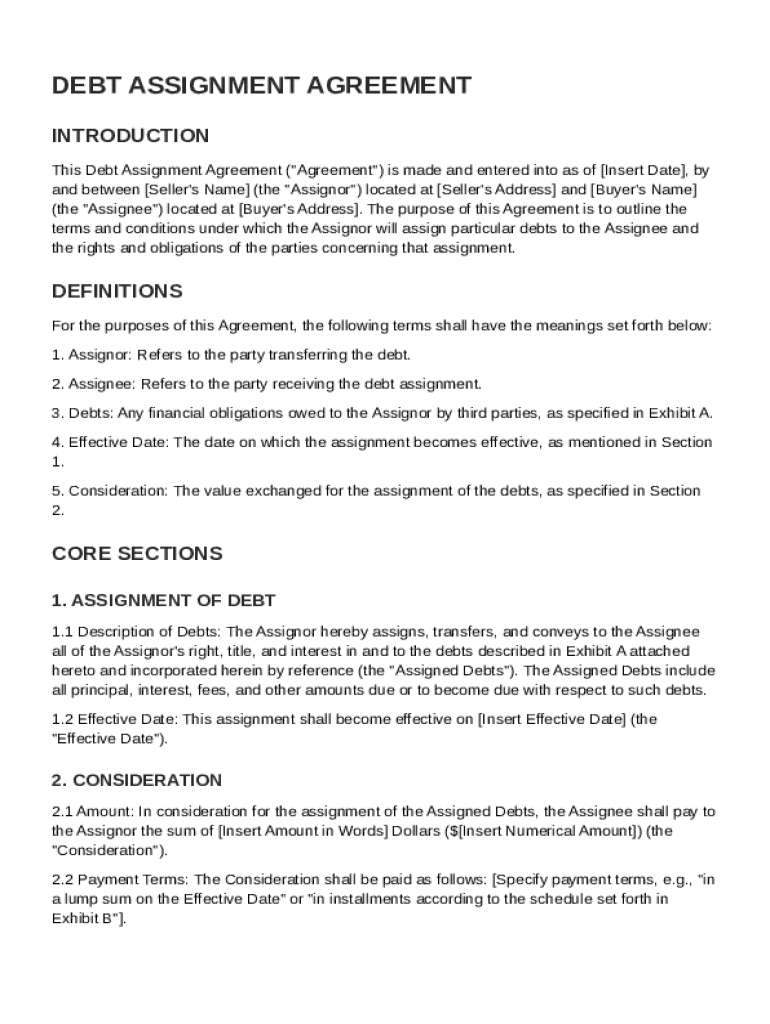
A Debt Assignment Agreement is a legal document that facilitates the transfer of debt from one party, known as the Assignor, to another party, called the Assignee. This transaction typically involves the Assignor selling or transferring the right to collect the debt to the Assignee. Such agreements are instrumental in financial transactions where businesses or individuals choose to divest unwanted debts or monetize receivables. Specific provisions relating to the terms of the transfer, the amount involved, and the rights and obligations of both the Assignor and Assignee are outlined within the agreement. This instrument also specifies indemnification clauses, governing laws, severability clauses, and conditions for amendments, all designed to ensure legal clarity and compliance during the debt transfer process.
Beneficiaries of Debt Assignment Agreement Template
Various entities and individuals can benefit from using the Debt Assignment Agreement Template. Businesses undergoing restructuring might use it to manage or offload liabilities. Financial institutions utilize such templates to streamline the sale of defaulted loans or credit card debts. Assignees, like collection agencies, benefit by obtaining legal rights to pursue debt collection, which can be a lucrative venture. Legal professionals, accountants, and financial consultants also frequently employ these templates to provide their clients with tailored solutions for asset and liability management. This template serves different sectors, from real estate investors offloading bad debts to corporations enhancing their balance sheets by cleaning up non-performing assets.
Key Elements and Structure of the Debt Assignment Agreement Template
Within a Debt Assignment Agreement Template, several key elements are crucial for its validity and effectiveness.
-
Parties Involved: The agreement should clearly identify the Assignor and Assignee, including detailed information such as their full names and addresses.
-
Description of Debt: It is imperative to detail accurately the nature and amount of the debt being transferred. This includes specifying any underlying contracts or references to previous agreements.
-
Consideration: This section outlines what the Assignee is offering in exchange for the debt. This could be a set monetary amount, which should be agreed upon and documented.
-
Payment Terms: If the transfer involves staggered payments, the agreement must detail schedules, amounts, and methods.
-
Rights and Obligations: Both parties must understand their rights and obligations post-assignment; this includes the Assignee’s right to collect the debt and any warranties provided by the Assignor.
-
Governing Law: Detail the state laws that will govern the agreement, addressing any jurisdictional peculiarities.
-
Termination Conditions: Specify under what circumstances the agreement can be terminated, which protects both parties from future disputes or misunderstandings.
Detailed Guide on Using the Debt Assignment Agreement Template
Utilizing a Debt Assignment Agreement Template involves a series of detail-oriented steps.
-
Accurate Data Entry: Begin by filling in all relevant information concerning the debt and parties involved. This ensures there is no ambiguity in the agreement.
-
Review Legal Requirements: It is crucial to ensure the template aligns with current legal standards and jurisdictional requirements. Consulting with legal counsel can provide clarity and confirm compliance.
-
Customizing Clauses: Adapt standard clauses to reflect the specifics of your agreement. This might involve altering payment schedules or adding unique terms suited to your situation.
-
Confirmation of Agreement: Both parties should review the template thoroughly. Ensuring clarity and mutual consent before proceeding can prevent disputes.
-
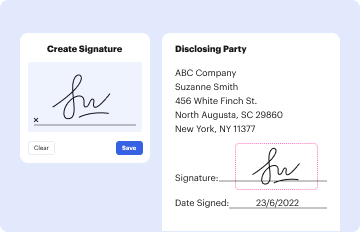
Formal Signing: With all parties satisfied, formalize the agreement through signatures. Using digitally authenticated signatures can expedite this process and add a layer of security.
-
Secure Storage: Once signed, ensure the document is securely stored. Utilizing platforms like DocHub can aid in securely maintaining digital records, ensuring easy retrieval and management of your agreement.
Legal Implications and Compliance
Legal compliance is paramount in executing a Debt Assignment Agreement. Adherence to the Electronic Signatures in Global and National Commerce (ESIGN) Act ensures that electronic agreements are as legally acceptable as their paper counterparts. Parties involved should be aware of state-specific laws that could impact the assignment process or the parties' rights. Ensuring the agreement is meticulously detailed and clear reduces the risk of disputes and challenges to its enforceability. Additionally, consistent updates in legal standards necessitate periodic reviews and potential amendments to the template to uphold its legal standing.
Nuances and Variations of the Debt Assignment Agreement
Each Debt Assignment Agreement might exhibit unique nuances or variations, depending on the specific circumstances and requirements of the parties involved.
-
Different Debt Types: Certain agreements might deal with secured vs. unsecured debts, requiring distinct terms and legal considerations.
-
Complex Debt Structures: For deals involving pools of debts or syndicated loans, the template should reflect these complexities, potentially requiring bespoke clauses addressing inter-creditor arrangements.
-
State-Specific Modifications: Variations may also be needed to account for differing state regulations concerning debt assignments, such as those affecting interest rates or allowable collection practices.
Examples in Practical Use
Several real-world scenarios demonstrate the practical application of Debt Assignment Agreements. A bank managing its risk exposure might sell a portion of its non-performing loans to specialized recovery agencies, utilizing this agreement to legally transmute the collection responsibility. In another case, a business conglomerate undergoing restructuring might assign debts linked to divested operations to streamline its financial statements. Additionally, individuals might utilize this agreement to transfer personal debts to relatives or third parties, establishing a legal framework for continuing obligations and potential benefits.
Exploring Related Versions and Alternatives
While the Debt Assignment Agreement is a standard form, there are versions and alternatives worth considering. Syndicated loan agreements with multiple lenders might have clauses resembling those in assignment agreements but require coordination among all parties. Novation agreements offer another pathway, effectively replacing one party in the original contract with another, rather than merely transferring obligations. Understanding these alternatives allows parties to choose the most suitable legal vehicle for their specific transfer needs, ensuring alignment with their strategic objectives and legal requirements.