
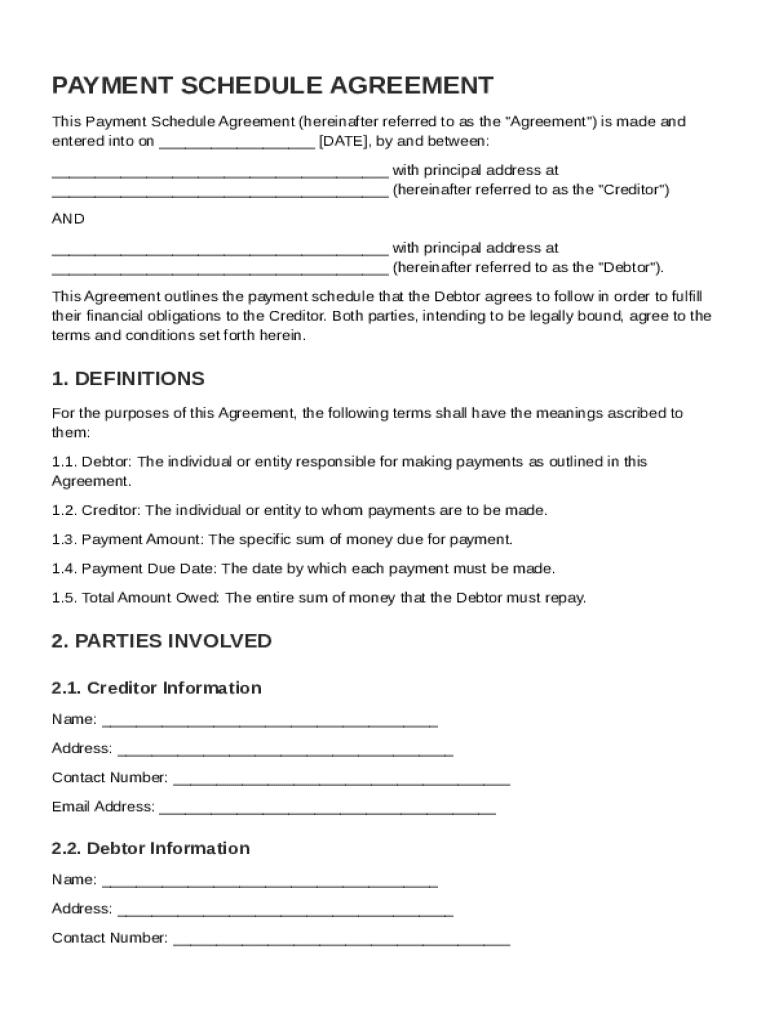







Definition and Purpose of the Payment Schedule Agreement
The Payment Schedule Agreement serves as a formal contract between a creditor and a debtor, detailing the terms for repayment of a specified amount owed. This document ensures that both parties are aligned on the expectations and obligations related to the debt repayment. It typically includes:
- Definitions of key terms relevant to the agreement
- Detailed payment terms, including amounts and due dates
- Specified payment methods accepted by the creditor
- Terms regarding late fees and penalties
- Procedures for modifying the payment schedule
- Governing law that dictates how disputes will be resolved
- Additional provisions to cover miscellaneous aspects of the agreement
In essence, it acts as a binding legal document that helps secure the interests of both parties, reducing the risk of disputes and misunderstandings.
Utilizing the Payment Schedule Agreement Template
To effectively utilize the Payment Schedule Agreement Template, follow these steps:
-
Identify the Required Information: Ensure you have all necessary details, including the borrower’s and lender’s legal names, the agreed total amount, the repayment schedule, and any applicable interest rates or late fees.
-
Fill in the Details: Use the template to enter all relevant data. Ensure clarity and accuracy to reflect the terms agreed upon by both parties.
-
Customize as Necessary: Amend sections of the template that require specific information unique to the agreement, such as state-specific legal considerations or additional clauses.
-
Review and Confirm: Double-check all entries for accuracy. It may be beneficial for both parties to review the document to ensure mutual understanding.
-
Sign the Document: Use legally binding electronic signatures if the agreement is processed digitally. Ensure signatures are saved for records and future reference.
Steps to Complete the Payment Schedule Agreement Template
Completing the template involves specific steps to ensure compliance and accuracy:
-
Gather Party Information: Collect the full legal names, addresses, and contact details of both parties involved in the agreement.
-
Outline the Financial Terms: Clearly define the total amount owed, including any interest and the repayment schedule. Specify the frequency of payments and the final due date.
-
Include Payment Methods: Detail the acceptable modes of payment, such as bank transfers, checks, or digital payments.
-
Specify Penalties for Late Payments: Mention any applicable fees or penalties if payments are missed or delayed, ensuring these terms are clear and agreed upon.
-
Add Modification Clauses: Include provisions on how the agreement might be altered in the future, ensuring any modifications require mutual consent.
-
Define Governing Law: State the legal jurisdiction that will govern any disputes arising from the agreement.
-
Final Review and Signing: Both parties should thoroughly review the agreement before providing their signature, affirming their understanding and acceptance of the terms.
Key Elements of the Payment Schedule Agreement Template
The template includes several crucial components:
- Parties Involved: Names and details of the creditor and debtor.
- Payment Terms: The agreed-upon amount, schedule, and payment methods.
- Late Fees: Penalties applicable for late or missed payments.
- Modification Procedures: How changes to the agreement will be managed.
- Termination Conditions: Outline scenarios that could lead to early termination.
- Legal Provisions: Clauses regarding mediation or arbitration in case of disputes.
- Additional Clauses: Any other relevant terms or conditions unique to the agreement.
These elements ensure the agreement is comprehensive and protective of the interests of both parties involved.
Legal Considerations for the Payment Schedule Agreement Template
Legal safeguards embedded in the template ensure compliance with U.S. legal standards:
- Binding Nature: The agreement is intended to be legally enforceable, ensuring both parties adhere to their commitments.
- State Laws: The document should acknowledge state laws that may affect various terms, especially for interest rates and penalty fees.
- Legally Binding Signatures: Electronic signatures collected through secure platforms like DocHub are compliant with the ESIGN Act, ensuring their legality.
- Dispute Resolution: Provisions for mediation or arbitration can prevent costly legal battles if disputes arise.
Adhering to these considerations helps in avoiding legal pitfalls and maintaining a valid agreement.
Who Typically Uses the Payment Schedule Agreement Template
Various individuals and organizations can benefit from this template:
- Lenders and Creditors: Establish clear repayment terms with borrowers.
- Small Business Owners: Manage accounts receivable with clients.
- Individuals: Formalize personal loans with friends or family.
- Educational Institutions: Allow students to arrange payment plans for tuition.
- Healthcare Providers: Set up manageable payment plans for patients.
Each user needs to ensure the template is customized to meet their specific requirements while adhering to legal standards.

Important Terms Related to Payment Schedule Agreement
Understanding these terms can enhance clarity:
- Creditor: The entity or individual to whom money is owed.
- Debtor: The individual or organization responsible for repaying the loan.
- Principal Amount: The original sum of money borrowed before interest.
- Interest Rate: The percentage charged on the borrowed amount, influencing total repayment.
- Amortization: The process of spreading payments over a fixed period.
- Default: The failure to repay according to the agreed terms, which may lead to legal action.
- Security Agreement: An additional document if collateral is involved.
Familiarity with these terms ensures both parties are well-informed about their obligations and rights.
State-Specific Rules for Payment Schedule Agreements
State regulations can influence the conditions within the agreement:
- Interest Rates: Certain states have caps on how much interest can be charged, impacting loan terms.
- Consumer Protection Laws: These regulations may offer more stringent criteria for transparency and fairness.
- Minimum Payment Requirements: Some jurisdictions outline minimum payment terms for certain agreements.
- Statutes of Limitations: Vary by state, affecting the time frame in which a creditor can file a lawsuit for non-payment.
Understanding and integrating these state-specific regulations help in creating a compliant and effective agreement.




