
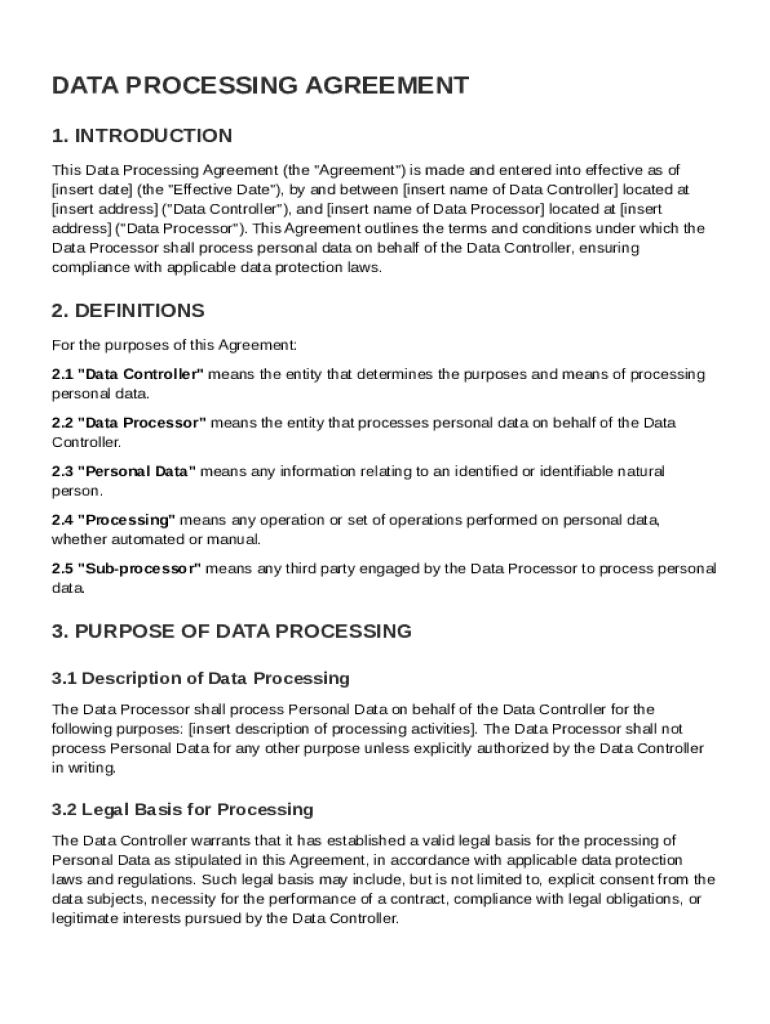







Definition & Meaning
The Data Processing Agreement (DPA) Template is a comprehensive document designed to outline the parameters under which a Data Processor manages personal data for a Data Controller, ensuring adherence to data protection regulations. This agreement serves a critical legal function by defining the respective roles, obligations, and rights concerning data processing. Key aspects include implementing security measures, controlling sub-processing activities, regulating data transfers, and ensuring responsibilities are followed after the agreement terminates. Confidentiality and ensuring the facilitation of data subjects' rights are also emphasized, laying down a robust framework for lawful data management.
How to Use the Data Processing Agreement Template
To effectively utilize the Data Processing Agreement Template, follow these steps:
-
Identify the Parties Involved: Start by clearly naming the Data Controller and Data Processor, along with their respective contact details, to delineate roles and responsibilities.
-
Define the Scope of Data Processing: Specify the type of personal data to be processed, the nature and purpose of the processing, and the duration of the engagement.
-
Outline Obligations and Rights: Detail the obligations of both parties, including security measures, the need for confidentiality, and compliance with data protection laws.
-
Incorporate Security Standards: Establish the specific security measures to protect personal data, aligning with industry standards and legal requirements.
-
Determine Sub-Processing Terms: Clarify the rules around sub-processors, including prior consent and compliance requirements.
-
Detail Data Transfer Protocols: Describe conditions under which data can be transferred outside of initial jurisdictions and any necessary safeguards.
-
Conclude with Termination Procedures: Define the responsibilities and processes for data return or destruction upon termination of the agreement.
By carefully following these steps, you ensure the DPA Template is customized to your specific needs and legal requirements.
Key Elements of the Data Processing Agreement Template
Understanding and incorporating the key elements of a Data Processing Agreement Template is essential for compliance and operational effectiveness:
-
Data Processing Details: Clearly outline what data will be processed, processing activities, duration, and purpose, aligning with the principle of data minimization.
-
Security Measures: Document the technical and organizational measures in place to protect personal data, tailoring these measures to the unique risks faced by your organization.
-
Rights of the Data Subjects: Include provisions for data subjects to exercise their rights, such as access and rectification, ensuring your agreement facilitates compliance with relevant legal standards.
-
Sub-Processor Clause: Define the conditions under which sub-processors may be engaged, including requirements for written consent from the Data Controller.
-
Data Breach Protocols: Establish procedures for handling data breaches, including timely notification obligations.
-
Audit and Compliance: Set terms for auditing processing activities, facilitating the Data Controller’s ability to ensure compliance with the agreement.
-
Termination and Consequences: Clearly specify conditions for termination and outline the processor's obligations for data return or destruction after termination.
By addressing these critical elements, the DPA Template serves as a practical tool to manage data processing activities legally and transparently.
Steps to Complete the Data Processing Agreement Template
Completing a Data Processing Agreement Template involves a series of detailed steps:
-
Customize Template Headings: Adjust all headings in the template to reflect the operational context while maintaining legal rigor.
-
Gather Required Information: Collect comprehensive details about the processing activities from both the Data Controller and Processor.
-
Engage Legal Expertise: Collaborate with legal experts to ensure that all terms are consistent with current data protection laws and organizational policies.
-
Iterate Drafts: Develop multiple drafts, integrating feedback from legal experts, parties involved, and stakeholders.
-
Finalize Legal Terms: Ensure all legal terms have been reviewed and are clearly understandable by both parties, minimizing ambiguity.
-
Obtain Approvals: Secure necessary approvals from each party’s legal or compliance departments.
-
Implement Signature Protocols: Establish a legally recognized signature procedure, possibly utilizing DocHub or similar platforms for electronic signatures.
Taking these steps helps ensure that the DPA Template is thorough, compliant, and ready for formal execution.
Legal Use of the Data Processing Agreement Template
The Data Processing Agreement Template must be employed within the legal confines of data protection laws, primarily focusing on:
-
Regulatory Compliance: Ensures compliance with laws such as the General Data Protection Regulation (GDPR) when processing personal data within or from jurisdictions under its influence.
-
Liability and Risk Management: Acts to minimize legal liabilities by clearly outlining responsibilities, thus protecting parties from potential breaches and disputes.
-
Transparency and Accountability: The agreement promotes accountability by documenting defined roles and enabling oversight through audits and reports.
-
Contractual Obligations: Ensure that both the Data Processor and Controller understand their contractual obligations, which are legally enforceable should a data mishap occur.
-
Confidentiality Clauses: Embed robust confidentiality clauses to safeguard against unauthorized disclosure of sensitive information.
The proper legal use of this template ensures adherence to applicable laws and improves trust between parties and their data subjects.
Important Terms Related to Data Processing Agreement Template
The DPA Template incorporates several vital terms crucial for understanding its application:
-
Data Controller: The entity determining the purposes and means of the processing of personal data.
-
Data Processor: The entity processing personal data on behalf of the Data Controller.
-
Personal Data: Any information relating to an identified or identifiable natural person.
-
Data Subject: The individual to whom personal data pertains.
-
Sub-Processor: Any processor engaged by the Data Processor to support data processing activities.
-
Legal Basis for Processing: The lawful grounds upon which data processing activities are justified.
Understanding these terms is essential for grasping the scope and obligations embedded within the agreement template.
Who Typically Uses the Data Processing Agreement Template
The DPA Template is widely used by:
-
Business Enterprises: Entities engaging third-party service providers to process customer or employee personal data.
-
IT and Cloud Service Providers: Companies offering hosting, processing, or cloud services that involve handling personal data for their clients.
-
Nonprofit Organizations: Groups partnering with external processors to manage donor, volunteer, or beneficiary information.
-
Healthcare Providers: Institutions working with data processors for patient information management, ensuring compliance with relevant regulations such as HIPAA in the United States.
-
Educational Institutions: Schools and universities that outsource data management services need a structured data processing framework.
The template's flexibility makes it suitable across various industries, allowing adaptation to specific processing contexts.


Examples of Using the Data Processing Agreement Template
Real-world scenarios where the DPA Template is applied include:
-
E-commerce Platforms: An online retailer uses a DPA Template to contract a payment service provider, ensuring customer financial data is processed securely and in compliance with PCI DSS standards.
-
Marketing Firms: A marketing agency employs a data processor to analyze consumer behavior, utilizing a DPA to ensure data is handled securely and in accordance with data protection laws.
-
Healthcare Research: A research institution collaborates with external data analysts, requiring a DPA to maintain patient confidentiality and comply with regulatory requirements.
-
Educational Services: An institution partners with an e-learning platform, using a DPA to manage student data while complying with protection laws.
In each example, the DPA Template facilitates secure, lawful, and transparent data processing relationships, aligning with organizational and legal standards.




