




01. Edit your form online
Type text, add images, blackout confidential details, add comments, highlights and more.

Type text, add images, blackout confidential details, add comments, highlights and more.

Draw your signature, type it, upload its image, or use your mobile device as a signature pad.

Send it via email, link, or fax. You can also download it, export it or print it out.
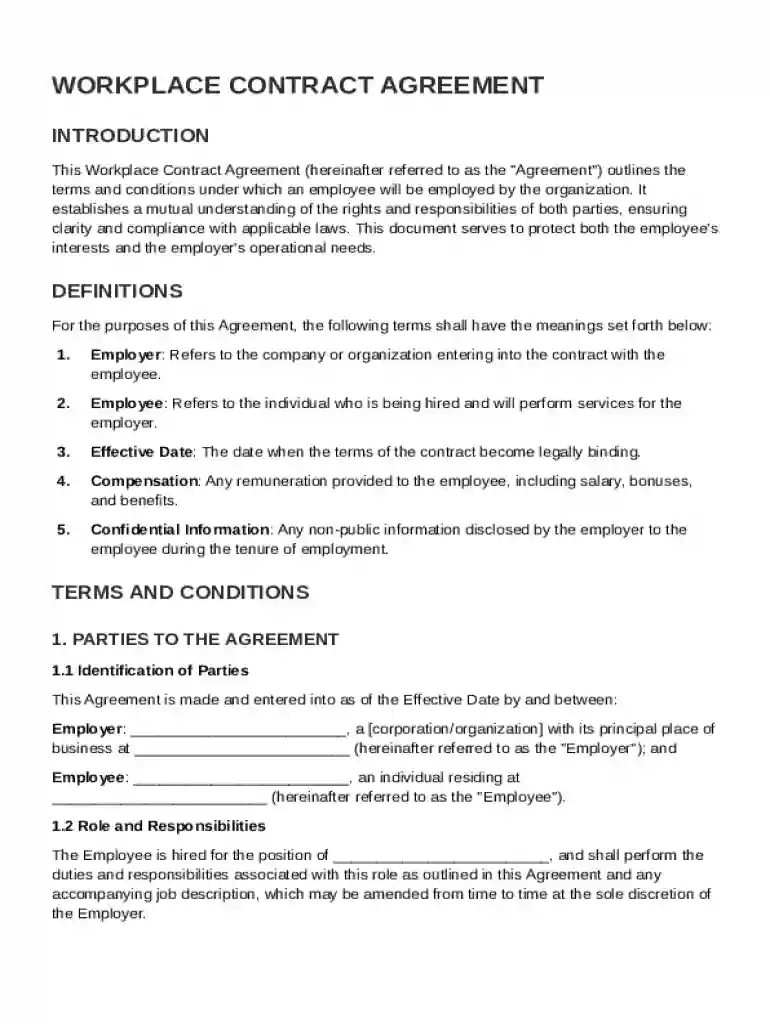
The Workplace Contract Template is a comprehensive document that sets out the terms and conditions of employment between an employer and an employee. It serves to clearly define the rights and responsibilities of both parties involved. This template typically includes sections that cover key terms, employment duration, compensation details, job duties, performance expectations, and confidentiality obligations. It also addresses termination conditions, dispute resolution processes, governing law, and procedures for amendments. The purpose of this template is to ensure compliance with applicable laws while protecting the interests of both the employer and the employee.
Using the Workplace Contract Template involves several steps to customize the document to fit the specific needs of the employment relationship. Start by reviewing the template to familiarize yourself with its structure and content. Identify areas that require customization, such as job title, employee name, compensation, and specific duties. Make sure to fill in these fields accurately, ensuring all information aligns with the agreed-upon terms. Employers should pay special attention to clauses related to confidentiality and intellectual property rights, tailoring them to match the nature of their industry and business needs. It's advisable to have a legal professional review the completed contract to ensure compliance with local labor laws.
The Workplace Contract Template is composed of several critical components to ensure a clear and thorough agreement between the parties.
Completing the Workplace Contract Template involves a systematic approach to ensure all critical information is included.
The legal use of a Workplace Contract Template involves ensuring that the document adheres to employment laws and regulations. It's crucial that the contract complies with labor standards, nondiscrimination policies, and wage laws relevant to the jurisdiction. Utilizing a well-structured template can prevent potential legal disputes and misunderstandings, making it a valuable tool for both new hires and ongoing employment arrangements. Employers must ensure that all clauses within the contract are legally enforceable and do not infringe on the statutory rights of the employee.
Understanding the terminology used within a Workplace Contract Template is vital for both parties:
A wide array of business entities use the Workplace Contract Template to formalize employment relationships, including:


State-specific rules may influence the content and structuring of a Workplace Contract Template. Employment laws can vary significantly across states, affecting aspects such as minimum wage, overtime compensation, and the enforceability of non-compete clauses. Employers should ensure the contract complies with the state’s labor codes and consult professionals who are familiar with these regional differences. In some cases, states may require additional clauses or modify the enforceability of standard contract terms based on local legislation.
Practical scenarios can illustrate the application of the Workplace Contract Template:
At DocHub, your data security is our priority. We follow HIPAA, SOC2, GDPR, and other standards, so you can work on your documents with confidence.



Download Word Format (docx) [83 KB] Download a model contract for domestic workers to use with their employers. Learn more
The following are workplace expectations for the Office of A Wonderful Work Experience. Please review these expectations carefully and determine whether these
May 8, 2021 Staff.Wiki comes with a number of sample policies and procedures. Weve compiled a list below of some of the useful ones.


