




Definition & Meaning
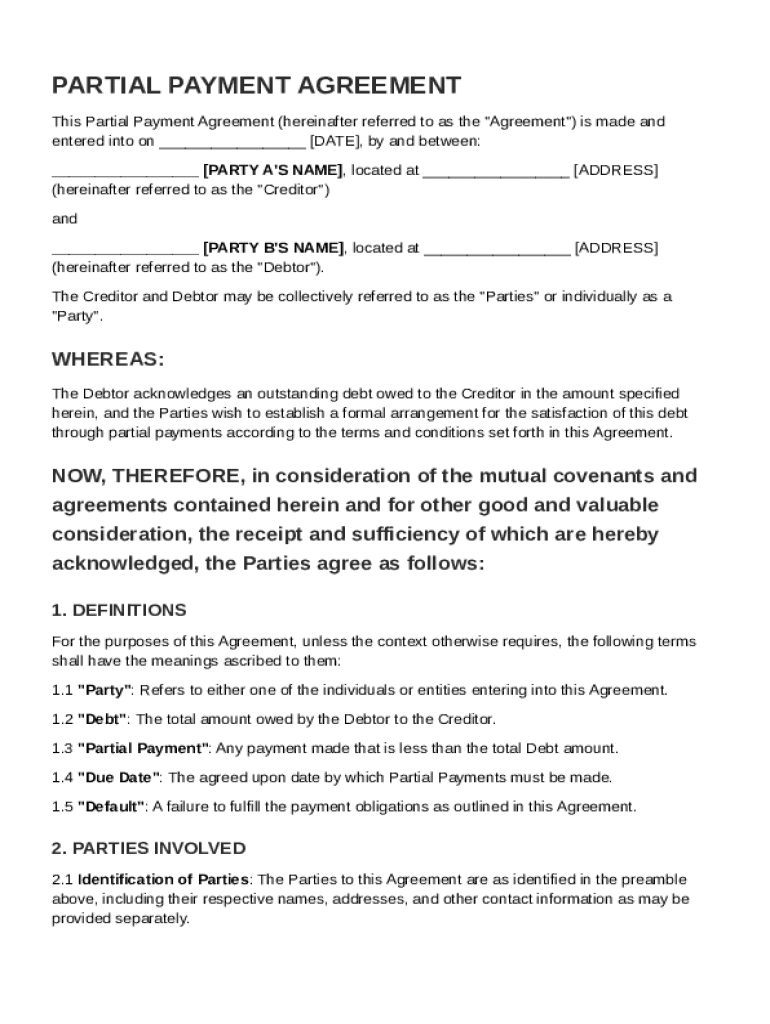
The Partial Payment Agreement Template is a legally binding document that delineates the terms under which a creditor agrees to accept partial payments from a debtor to settle an existing debt. Its primary purpose is to set clear expectations for both parties by outlining the conditions, schedules, and implications of these payments. The agreement serves a critical role in formalizing the understanding between the parties and ensuring both adhere to the mutually agreed terms.
- Creditor and Debtor Relationship: This document typically involves a creditor, who is owed money, and a debtor, who is responsible for repaying the debt. It helps in providing a structured approach to repayment that might otherwise result in disputes or misunderstandings.
- Repayment Structure: The agreement can specify different types of payment structures, such as fixed periodic payments or variable payment schedules based on the debtor's financial situation.
- Default Consequences: Provisions related to default clarify the steps that may follow should the debtor fail to meet the payment terms, including potential legal actions or the imposition of penalties.
Key Elements of the Partial Payment Agreement Template
Understanding the key elements of the Partial Payment Agreement Template is essential for ensuring clarity and compliance with the agreed terms. Each element plays a vital role in covering various aspects of the repayment process.
- Parties Involved: Clearly defining the creditor and debtor provides a legal grounding for the agreement. Both parties’ names, addresses, and contact information should be explicitly mentioned.
- Payment Schedule: Establishing a detailed payment schedule allows both parties to track and manage payments effectively. This schedule should include due dates, amounts, and any conditions for early or late payments.
- Interest and Fees: Some agreements may incorporate interest rates or additional fees, which need clear articulation to avoid any unforeseen financial burdens on the debtor.
- Termination and Modification Clauses: These clearly outline how the agreement can be terminated or modified, usually requiring written consent from both parties to ensure no misunderstandings arise.
- Governing Law: Specifying the state laws under which the agreement is governed is critical, as this influences the enforceability of the contract and the interpretation of its terms.
Steps to Complete the Partial Payment Agreement Template
Filling out the Partial Payment Agreement Template correctly is crucial for its validity and enforceability. Following a step-by-step approach ensures all necessary information is captured accurately.
- Gather Information: Begin by collecting all pertinent details about the creditor, debtor, and any third parties involved.
- Define Terms: Clearly articulate the terms of payment, including frequency, amounts, and any special conditions. These should be realistic and agreed upon by both parties.
- Review Legal Requirements: Ensure the agreement aligns with applicable state laws, which often dictate the formulation and execution of such agreements.
- Include Necessary Elements: Ensure all essential components, such as the payment schedule and consequences of default, are included.
- Seek Legal Counsel: Before finalizing, it's wise to consult with a legal professional to ensure the document’s terms are fair and enforceable.
Legal Use of the Partial Payment Agreement Template
Ensuring the legal compliance of the Partial Payment Agreement Template is essential for its enforceability. Here’s how it functions within a legal context:
- Statutory Compliance: The agreement must comply with local, state, and federal laws to be enforceable. Non-compliance may render the agreement null and void.
- Court Recognition: In case of disputes, a well-documented agreement provides evidence in court, making it easier to resolve any conflicts based on the stipulated terms.
- Modification in Writing: Any changes to the agreement should be documented in writing, ensuring both parties agree to and understand the new terms. This helps maintain legal standing and prevents future disagreements.
Who Typically Uses the Partial Payment Agreement Template
Different individuals and entities use the Partial Payment Agreement Template for various reasons. Understanding the typical users can help tailor the agreement to specific needs.
- Individuals in Debt: This includes individuals who have fallen behind on payments, offering them a structured approach to debt repayment.
- Businesses Facing Financial Strain: Companies often use such agreements to manage cash flow issues while still maintaining good relationships with creditors.
- Creditors Seeking Assurance: Creditors benefit by creating a formal structure where payments are systematically received rather than uncertain lump sums.
- Legal Advisors: Attorneys or financial advisors may use these templates to craft agreements on behalf of their clients, ensuring all legal bases are covered.

State-Specific Rules for the Partial Payment Agreement Template
State laws can significantly affect the validity and execution of a Partial Payment Agreement Template. It is vital to consider these state-specific regulations.
- Interest Rate Caps: Some states impose limits on the interest rates that can be charged. Knowing these limits ensures the agreement does not exceed legal thresholds.
- Recovery Procedure: States have different procedures for recovering debts, including the required steps for pursuing legal action in case of default.
- Contractual Flexibility: Variations between states in terms of contractual language and enforceability can affect how modifications and terminations are handled.
- Statutory Penalties: Awareness of any penalties associated with non-compliance or breach of contract enhances the agreement’s enforceability.
Examples of Using the Partial Payment Agreement Template
Providing practical examples can illuminate the various ways this template can be integrated into real-world scenarios.
- Settlement of Medical Bills: Patients facing large medical debts can enter into a partial payment agreement with healthcare providers, spreading payments over time.
- Consumer Credit Arrangements: Credit card companies may offer partial payment agreements to consumers who have fallen behind, allowing them to pay off balances without collection proceedings.
- Property Rental: Landlords may utilize these agreements with tenants facing temporary financial challenges, ensuring continued tenancy while securing future payments.
Important Terms Related to the Partial Payment Agreement Template
Grasping the terminology associated with the Partial Payment Agreement Template ensures clarity and understanding between parties.
- Debtor: The individual or entity obligated to make payments under the terms of the agreement.
- Creditor: The party to whom the debt is owed, having the right to receive payments.
- Default: A failure to meet the payment terms as outlined in the agreement.
- Amortization: The process of gradually reducing the debt through scheduled partial payments.