






Definition and Meaning of a Consulting Service Level Agreement
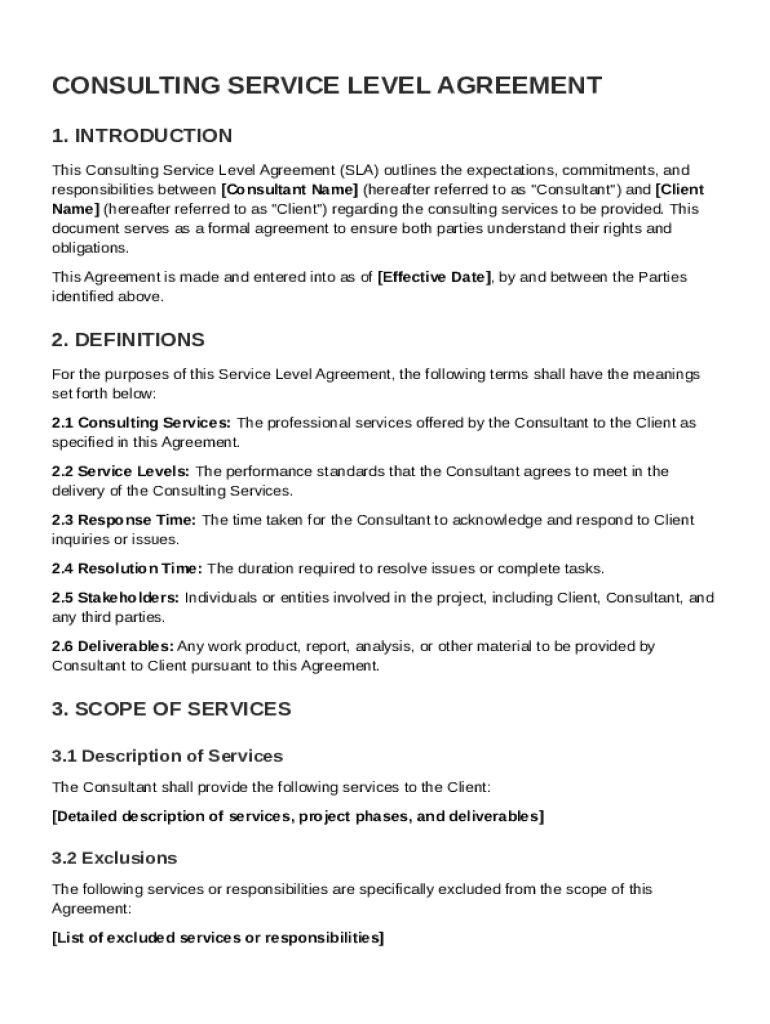
A Consulting Service Level Agreement (SLA) is a formal document that outlines the expectations, responsibilities, and commitments between a consultant and a client regarding the provision of consulting services. It serves as a foundational contract that establishes the scope of services, performance criteria, and roles of both parties. By clearly defining these elements, the agreement aims to foster mutual understanding and transparency, reducing the likelihood of disputes and ensuring the successful provision of services.
-
Scope of Services: The SLA details the specific consulting services to be delivered by the consultant, including any limitations or exclusions. This section is crucial for setting realistic expectations and ensuring that both parties are aligned.
-
Performance Metrics: The agreement typically includes measurable performance indicators that evaluate the consultant's effectiveness. These metrics can involve timelines, quality standards, and delivery benchmarks, ensuring accountability for outcomes.
-
Responsibilities of Parties: The SLA specifies the duties and responsibilities of each party, ensuring that both the consultant and the client know their respective roles in the service delivery process.
How to Use the Consulting Service Level Agreement Template
The Consulting Service Level Agreement Template is a versatile tool designed to streamline the drafting of an SLA for consulting services. Here are steps to effectively use the template:
-
Download the Template: Obtain the template from your document management platform, allowing for easy customization according to your specific needs.
-
Review Key Sections: Familiarize yourself with the main components of the template, such as the scope of services, responsibilities, and performance metrics, ensuring all sections are relevant to your agreement.
-
Customize According to Needs: Tailor the template to reflect the particularities of the consulting engagement. Modify language, performance measures, and responsibilities to suit the specific context and expectations of both parties.
-
Ensure Legal Compliance: Consult with legal advisors to verify that the SLA complies with applicable laws and regulations, particularly if the services span multiple jurisdictions.
-
Circulate for Review: Share the draft document with the involved parties to gather feedback and ensure mutual understanding and agreement on all aspects of the SLA.
Steps to Complete the Consulting Service Level Agreement Template
Completing a Consulting Service Level Agreement Template requires careful attention to detail. Here's a comprehensive guide to finalize the document:
-
Prepare Initial Draft: Using the template, create a draft SLA that includes all necessary information such as the definition of services, timelines, and terms.
-
Input Specific Details: Enter the names and contact information of the consultant and client, and specify the start and end dates of the agreement.
-
Define Services: Clearly outline the services to be provided, incorporating detailed descriptions and any limitations of the services.
-
Set Performance Standards: Establish performance metrics that accurately measure the successful completion of services, aligning with industry standards.
-
Detail Payment Terms: Precisely describe the compensation structure, including payment schedules, methods, and potential penalties for late payments.
-
Insert Termination Clauses: Include conditions under which either party may terminate the agreement and the ramifications of such actions.
-
Review and Finalize: Conduct a thorough review of the document, making necessary edits before obtaining signatures from both parties to validate the agreement.
Key Elements of the Consulting Service Level Agreement Template
Understanding the primary components of a Consulting Service Level Agreement is crucial for a comprehensive and effective document. Below are the key elements:
-
Scope of Services: Clearly defines what the consultant will achieve, ensuring there are no ambiguities regarding deliverables.
-
Responsibilities and Roles: Outlines the obligations of both the consultant and the client, detailing their expected participation in the service delivery process.
-
Performance Standards: Specifies measurable objectives to evaluate whether the consultant is meeting the agreed-upon expectations.
-
Payment Terms: Includes the pricing model, billing schedule, and other pertinent financial arrangements, ensuring transparency and a basis for accountability.
-
Termination Clause: Describes the conditions under which the agreement can be ended by either party, including any notice periods or financial penalties.
-
Dispute Resolution: Provides a mechanism for resolving disagreements, outlining mediation strategies or arbitration processes to manage conflicts efficiently.
Important Terms Related to the Consulting Service Level Agreement Template
A Consulting SLA contains specific terms that define the legal and operational framework of the agreement:
-
Service Deliverables: Refers to the specific outcomes or outputs the consultant is expected to provide.
-
Client Obligations: Details the responsibilities and contributions required from the client, such as providing necessary resources or information.
-
Indemnification Clause: Protects both parties from potential legal liabilities or claims arising from the consulting activities.
-
Confidentiality Agreement: Ensures that sensitive information shared during the engagement is kept secure and not disclosed without permission.
-
Amendment Procedures: Outlines the process for initiating changes to the agreement, emphasizing the need for written consent from both parties.
Examples of Using the Consulting Service Level Agreement Template
Consulting Service Level Agreements are widely used across various scenarios to formalize service relationships:
-
Management Consulting: A company engaging a consultant to improve business processes can use an SLA to clearly define objectives, expected outcomes, and timelines.
-
IT Consulting: Firms often require specialized IT consultations, necessitating SLAs to outline system requirements, upgrades, and support provisions.
-
Marketing Strategy Consulting: An SLA might specify deliverables such as market research reports, campaign strategies, and performance metrics to evaluate service efficacy.
By providing structured documentation, SLAs serve as critical tools in ensuring successful collaborations, reducing misunderstandings, and improving service outcomes.
Who Typically Uses the Consulting Service Level Agreement Template
The Consulting Service Level Agreement Template is valuable for a broad range of users:
-
Consultants: Independent professionals or consulting firms use SLAs to formalize their service commitments and manage client expectations.
-
Businesses: Organizations engaging consultants to provide external expertise often require SLAs to clarify deliverables and performance expectations.
-
Project Managers: Individuals overseeing contracts benefit from SLAs by having a structured framework that guides the management and evaluation of consultancy services.
-
Legal Advisors: Professionals involved in drafting or reviewing contracts utilize SLAs to ensure all legal and operational aspects are comprehensive and enforceable.