






Key Elements of the Relationship Agreement Template
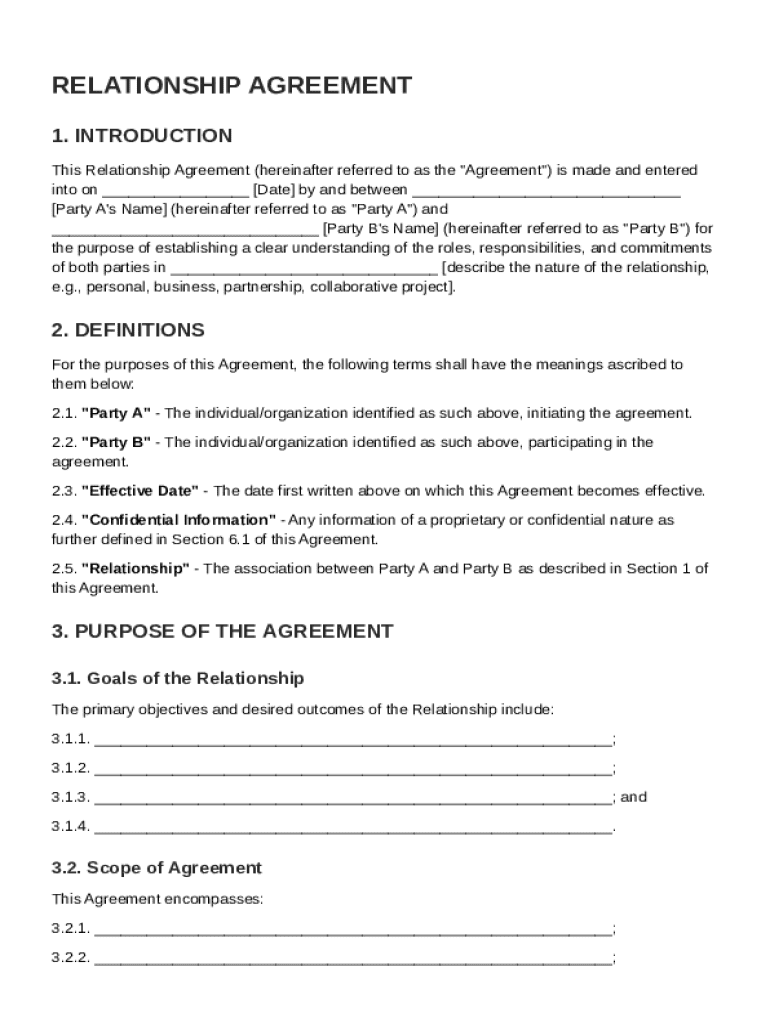
The Relationship Agreement Template is a comprehensive document designed to delineate the roles, responsibilities, and commitments of the parties involved, often referred to as Party A and Party B. This agreement is crucial for establishing a mutual understanding of relationship dynamics. Key elements typically include:
-
Roles and Responsibilities: Clearly defining what each party is expected to do within the relationship. By setting these expectations upfront, both parties can collaborate more effectively, reducing potential conflicts.
-
Definitions of Key Terms: To avoid misunderstandings, the template outlines clear definitions for terms used throughout the document. This ensures that all terms are interpreted consistently.
-
Purpose of the Agreement: This section details the objectives of the relationship, providing a shared vision. Establishing a clear purpose helps guide the decision-making process and ensures all parties are aligned in their goals.
-
Confidentiality Obligations: Protecting sensitive information is often a priority. The agreement specifies what data or material is considered confidential and the obligations of each party to maintain secrecy.
-
Dispute Resolution Procedures: It is not uncommon for disagreements to occur. This section describes the preferred methods for resolving disputes, such as mediation or arbitration, to ensure a fair and efficient process.
-
Amendments and Termination: Circumstances can change, and there should be a structured process for amending the agreement or terminating it if necessary. This includes details about the notice period and any conditions that must be met.
How to Use the Relationship Agreement Template
Using the Relationship Agreement Template involves several careful considerations to ensure it accurately reflects the intended relationship. Here’s a step-by-step guide:
-
Identify Parties Involved: Clearly specify Party A and Party B, including their respective addresses and contact information. Accuracy here is essential for legal recognition.
-
Customize the Template: Tailor the sections to reflect the specific relationship context. Adjust roles, responsibilities, and other terms to fit the nature of the collaboration.
-
Review Key Terms and Definitions: Ensure all definitions align with the context of the relationship. Misinterpretations can lead to complications down the line.
-
Specify Term Length: Define the duration of the agreement, including an effective start date and any renewal terms or conditions.
-
Consult Legal Advisors: Before finalizing, it may be wise to have a legal professional review the document. This adds an extra layer of protection and compliance.
-
Finalize and Sign: Once both parties agree on the terms, the document should be signed and dated by all involved parties. Retain copies in a secure location.
Why Use the Relationship Agreement Template
Utilizing a Relationship Agreement Template offers multiple benefits that enhance clarity and security within a professional relationship:
-
Reduces Ambiguity: By detailing specific roles and responsibilities, it minimizes the chances of misunderstandings.
-
Ensures Legal Compliance: The agreement helps ensure that the parties operate within legal frameworks, protecting against potential disputes or claims.
-
Protects Confidential Information: With clear confidentiality clauses, sensitive data is protected, reducing the risk of leaks or unauthorized disclosures.
-
Enhances Professionalism: A formal agreement underscores a commitment to professionalism, contributing to a more productive and respectful relationship.
-
Facilitates Dispute Resolution: In the event of a conflict, having a pre-determined resolution process can save time and resources.
Steps to Complete the Relationship Agreement Template
Here is a detailed process to fill out the Relationship Agreement Template:
-
Gather Required Information: Collect all relevant data, such as parties' details, agreement objectives, and confidential information.
-
Complete Each Section: Work through the template methodically, filling out sections such as roles, responsibilities, and confidentiality obligations.
-
Double-Check Legal Terms: Ensure that all legal terms are correctly interpreted and documented, seeking legal advice if needed.
-
Confirm Agreement Period: Clearly state the effective date, term length, and conditions for renewal or termination.
-
Review and Revise: Allow both parties to review the completed document and propose any necessary changes to ensure mutual consent.
-
Sign and Secure: Once finalized, both parties sign the agreement. Ensure each party retains a copy for their records.
Legal Use of the Relationship Agreement Template
The Relationship Agreement Template is designed to comply with legal standards, making it a valuable tool for formalizing expectations and protecting interests:
-
Compliance with the Law: Incorporates elements to ensure adherence to relevant U.S. laws and regulations, like the contractual laws of the parties’ jurisdictions.
-
Legally Binding Commitment: When correctly executed, the agreement becomes a legally enforceable document, providing a framework for addressing any breaches.
-
Validity Across States: Generally, such agreements are recognized across different states, though specific provisions may vary based on local laws.
-
Customizable Clauses: Allows for the inclusion of state-specific clauses, ensuring compliance with regional legislation.
Who Typically Uses the Relationship Agreement Template
Various entities might find the Relationship Agreement Template useful, each leveraging it to support different types of relationships:
-
Business Partners: Defining terms for collaboration, shared projects, or ventures to ensure all parties are aligned.
-
Freelancers and Clients: Providing a clear framework for services, deliverables, and payment terms, reducing the potential for disputes.
-
Employees and Employers: Clarifying expectations, confidentiality requirements, and dispute resolution mechanisms.
-
Collaborative Teams: Within organizations, teams may use it to define roles and manage confidential information effectively.
-
Suppliers and Retailers: Establishing terms for ongoing supply arrangements, including confidentiality and dispute resolution.


Important Terms Related to the Relationship Agreement Template
Several terms commonly appear in relationship agreements, each carrying specific implications:
-
Confidential Information: Data or details that must remain private between parties; often includes trade secrets, client lists, or sensitive operational data.
-
Amendment: An official change made to the agreement post-signing, requiring agreement from all involved parties.
-
Effective Date: The date upon which the agreement becomes valid and enforceable.
-
Dispute Resolution: Mechanisms outlined for settling conflicts, often involving mediation or arbitration.
-
Termination Clause: Conditions under which the agreement may be ended prematurely.
State-Specific Rules for the Relationship Agreement Template
Relationship agreements must sometimes account for differing legal requirements across U.S. states:
-
Contractual Law Variations: Each state has unique approaches to contract law, which may affect elements like enforceability or amendment processes.
-
Confidentiality Requirements: States differ in how they define and enforce confidentiality, influencing relevant sections of the agreement.
-
Dispute Resolution Preferences: Some states may favor particular dispute resolution methods or have additional requirements for them.
-
Termination Procedures: Variations exist in how agreements can be terminated, with some states imposing stricter notice requirements.
By understanding and accommodating these state-specific nuances, users ensure the agreement remains valid and enforceable throughout its duration.