






Definition and Meaning of a Non-Disclosure Agreement
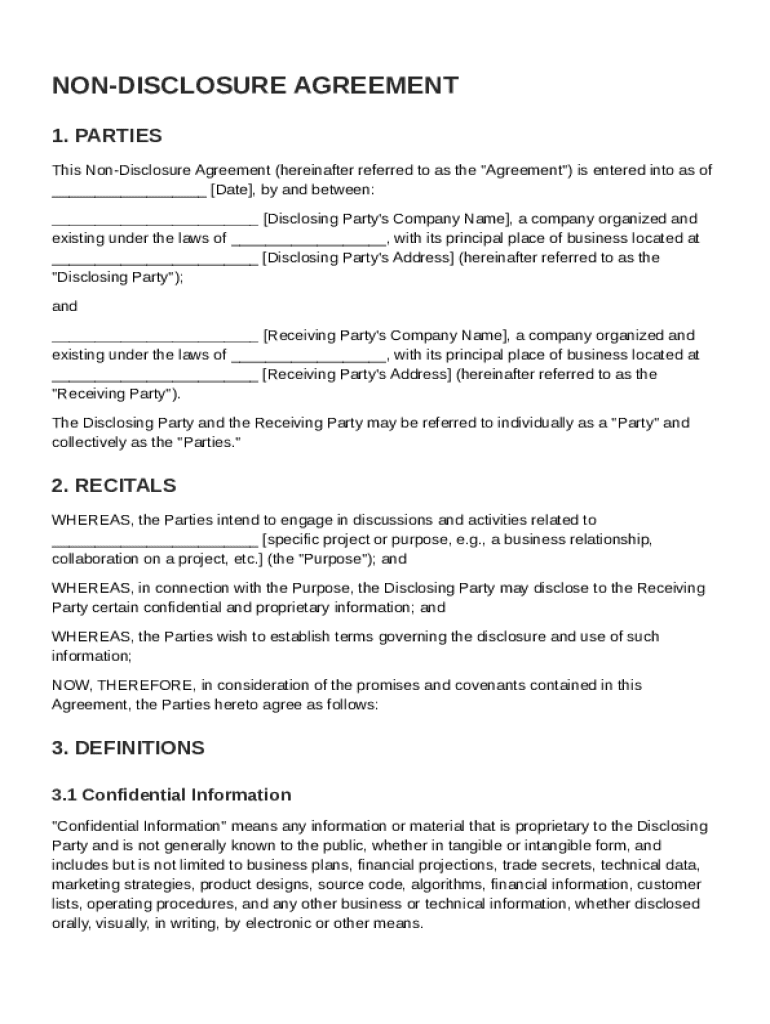
A Non-Disclosure Agreement (NDA) is a legally binding contract designed to protect confidential information exchanged between parties. It typically involves a Disclosing Party sharing sensitive business or intellectual property details with a Receiving Party. NDAs are fundamental in safeguarding innovative ideas, trade secrets, and other proprietary information that are valuable to a business. This agreement ensures that the Receiving Party does not misuse or disclose the shared information to unauthorized third parties.
Non-Disclosure Agreements are commonly used when businesses start discussions about potential partnerships or projects, protecting each side's interests. For example, during negotiations, a startup may disclose the technology underpinning its product to a potential investor or acquirer under an NDA. This legal buffer not only preserves the confidentiality of the data but also strengthens the trust between the entities involved.
How to Use the Non-Disclosure Agreement Template
To effectively utilize the Non-Disclosure Agreement Template, users should follow a structured approach. The first step involves identifying the specific information deemed confidential. This can include business strategies, financial data, or client lists. Once the scope of confidential information is established, both parties—Disclosing and Receiving—should be clearly identified in the agreement.
The template should be customized to describe accurately the terms under which confidential information is shared. This includes detailing the obligations of the Receiving Party, such as limitations on sharing the information with others and measures for safeguarding it. Parties should also agree on the duration of the NDA, specifying how long the confidentiality obligations will last.
Before finalizing, it's crucial to consult with legal professionals to ensure the template meets all legal requirements and accurately reflects the intentions of both parties. This step is essential to prevent any future legal disputes.
Steps to Complete the Non-Disclosure Agreement Template
-
Identify the Parties Involved: Begin by inserting the full legal names and addresses of the Disclosing and Receiving Parties. This clarifies who is bound by the agreement.
-
Define the Confidential Information: Clearly specify what constitutes confidential information. This could relate to anything from business plans to technical data.
-
Outline Obligations: Detail the Receiving Party's obligations to protect the confidentiality of the information, including how it can and cannot be used.
-
Set the Duration: Define how long the NDA will remain in effect. Typically, this period could range from one to five years, depending on the sensitivity of the information.
-
Add Breach Consequences: State the legal consequences if the Receiving Party breaches the agreement. This can include compensation for damages or injunctive relief.
-
Review and Customize: Ensure all clauses align with the specific context of the agreement. Consider involving legal counsel to address potential legal nuances.
-
Sign the Agreement: Both parties should review the agreement thoroughly before signing. Signatures signify agreement to all terms and conditions outlined.
Completing these steps ensures a comprehensive NDA that effectively protects the interests of both parties involved.
Key Elements of a Non-Disclosure Agreement
-
Definitions and Scope: Clearly defining what information is considered confidential and what is not.
-
Obligations of the Receiving Party: Detailing how the information must be protected and prohibited actions, such as unauthorized sharing.
-
Exclusions from Confidentiality: Includes information that is publicly known or independently developed by the Receiving Party.
-
Term and Duration: Establishing the length of time the NDA is in effect and how long confidentiality is to be maintained.
-
Governing Law and Jurisdiction: Which state’s law will govern the agreement and where any legal proceedings should occur.
These elements assure thorough protection and set clear expectations for both parties.
Legal Use of the Non-Disclosure Agreement Template
The Non-Disclosure Agreement Template should be used as a legal tool to protect sensitive information during business interactions. It serves to preserve privacy and control over proprietary data. The template can be adapted across various legal environments and is instrumental in maintaining competitive advantages.
Legal adherence means ensuring the NDA complies with relevant state laws in the U.S. and considering any federal regulations applicable to the industry in question. It’s vital for protecting trade secrets, which are crucial for maintaining a business's market position.
Legal counsel can help tailor the agreement to adhere to the specific regulatory landscape and guarantee that the agreements hold up in court if breached.
Examples of Using the Non-Disclosure Agreement Template
-
Startup Collaborations: When startups collaborate with larger firms for technology development or marketing strategies.
-
Mergers and Acquisitions: During due diligence in M&A transactions where sensitive financial data is shared.
-
Vendor Agreements: When businesses share proprietary systems or processes with third-party vendors for operational purposes.
These scenarios highlight the practical applications of NDAs in securing sensitive data and maintaining competitive advantage across industries.
Who Typically Uses the Non-Disclosure Agreement Template
NDAs are used by a wide range of entities:
-
Businesses and Corporations: To protect trade secrets and proprietary technology during business negotiations.
-
Entrepreneurs and Startups: When revealing innovative concepts to investors or potential partners.
-
Researchers and Developers: For safeguarding intellectual property when collaborating with others in academia or industry.
-
Consultants and Contractors: When accessing client's sensitive information is necessary to provide services.
These diverse applications underscore the versatility and importance of NDAs across multiple professional landscapes.

Variations or Alternatives to the Non-Disclosure Agreement Template
Different contexts may require variations of the standard NDA:
-
Mutual NDAs: Often preferred when both parties anticipate sharing confidential information.
-
Unilateral NDAs: Suitable when only one party discloses sensitive information to the other.
-
Employment NDAs: Tailored to employment contexts, protecting employer's confidential information throughout and after employment.
Understanding these variations helps parties tailor the NDA to their specific needs, ensuring appropriate confidentiality protection.
State-Specific Rules for Non-Disclosure Agreements
NDAs must align with state laws, which can vary significantly:
-
California: Strongly limits the enforceability of NDAs in employment contracts to protect employees’ rights.
-
New York: Requires careful drafting, especially around employee rights and protecting whistleblowing activities.
-
Texas: Allows robust protection of trade secrets but requires clear and reasonable scope definitions.
Familiarity with these nuances ensures that the NDA remains enforceable and legally sound within different jurisdictions.
Who Issues the Non-Disclosure Agreement
Typically, the party seeking to protect their confidential information initiates the NDA. For example:
-
Corporations and Employers: To protect proprietary technology and employee information.
-
Individual Inventors: To secure their inventions and ideas when seeking collaborators or investors.
-
Service Providers: Ensuring protection when dealing with sensitive client information.
The issuer aims to safeguard their interests by legally binding the receiving party to confidentiality obligations.