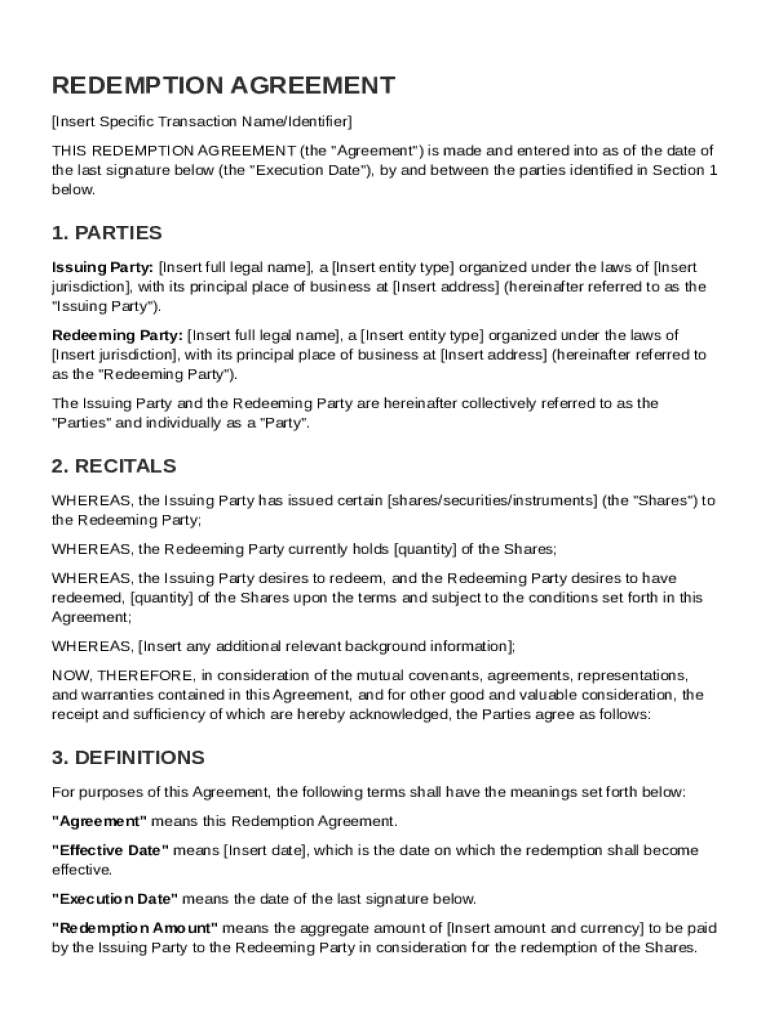







Key Elements of the Redemption Agreement Template
The Redemption Agreement Template is a crucial document for formalizing the redemption of shares by an issuing party. It typically includes detailed provisions necessary to ensure compliance with legal and financial obligations. Key elements consist of:
- Identification of Parties: Clearly define the Issuing Party and the Redeeming Party involved in the transaction.
- Redemption Amount: Specify the number of shares and the financial terms for redemption.
- Payment Terms: Outline how payments will be processed, whether in lump sum or installments, and include due dates.
- Effective Date: Establish when the agreement takes effect.
- Transfer of Shares: Detail the process for transferring shares back to the Issuing Party.
These elements serve to ensure mutual understanding and agreement between the parties involved. Additionally, they help define the expectations and responsibilities of each party throughout the transaction.
Steps to Complete the Redemption Agreement Template
Filling out the Redemption Agreement Template requires careful attention to detail to ensure accuracy and compliance. Follow these steps for a comprehensive submission:
- Identify Parties: Begin with the full legal names and contact details of both the Issuing Party and the Redeeming Party.
- Detail Redemption Terms: Clearly state the number of shares, the redemption price, and payment terms.
- Establish Effective Date: Indicate the specific date from which the agreement will be considered active.
- Transfer Provisions: Describe the method and timeline for transferring shares.
- Include Representations and Warranties: List any guarantees or assertions made by either party regarding their ability to enter the agreement.
By following these steps, both parties can ensure that the agreement is completed accurately and reflects their intentions.
Important Terms Related to Redemption Agreement Template
Understanding the terminology used within a Redemption Agreement Template is essential for drafting and interpreting the document accurately. Some critical terms include:
- Redemption Price: The price at which shares are reacquired by the issuing company.
- Issuing Party: The entity that originally issued the shares and is now buying them back.
- Redeeming Party: The shareholder whose shares are being repurchased.
- Covenants: Promises or stipulations laid down by the contract that must be adhered to by both parties.
- Indemnification: A provision to compensate one party for losses incurred in specific situations.
Knowing these terms aids in negotiating, drafting, and understanding the agreement comprehensively.
Legal Use of the Redemption Agreement Template
The legal application of a Redemption Agreement Template involves specific considerations to ensure compliance with applicable laws. This includes:
- Governing Law: Specify which jurisdiction’s laws will govern the agreement.
- Dispute Resolution: Define how any disagreements will be settled, such as through mediation or arbitration.
- Warranties and Representations: Ensure both parties declare their legal ability to engage in the agreement.
- Indemnification Clauses: Outline responsibilities for any liabilities that may arise during or after the transaction.
- Corporate Resolution: May be required to authorize the transaction formally, especially in corporate settings.
Such provisions are critical to making the agreement legally binding and enforceable.
How to Use the Redemption Agreement Template
Utilizing a Redemption Agreement Template involves several key steps, from drafting to execution:
- Initial Drafting: Use the template as a guideline to draft initial terms, modifying sections as needed.
- Customization: Tailor provisions to match the specific circumstances and requirements of the transaction.
- Review by Legal Counsel: Seek legal advice to ensure compliance with laws and regulations.
- Execution: Once finalized, both parties must sign the agreement to enact it legally.
- Implementation: Follow through with the financial and share transfer terms as outlined.
This process ensures the template is effectively used to meet both legal standards and transaction-specific needs.
State-Specific Rules for the Redemption Agreement Template
When dealing with a Redemption Agreement, be mindful of state-specific regulations that might affect the template's terms:
- Jurisdictional Laws: Each state might have unique laws affecting corporate share redemption.
- Tax Implications: States can differ in how they tax redeemed shares, which may need consideration in payment structures.
- Disclosure Requirements: Varying disclosure mandates might exist, necessitating additional documentation.
- Approval Processes: Some states require corporate actions like share redemptions to undergo specific approval processes.
Being aware of these differences enables the agreement to be tailored appropriately to meet state requirements.
Examples of Using the Redemption Agreement Template
Practical applications of a Redemption Agreement Template demonstrate its versatility and necessity in varying scenarios:
- Corporate Restructuring: A company undergoing reorganization might redeem shares as part of its strategy.
- Minority Shareholder Buyouts: Allows the company to consolidate ownership by buying out minority shareholders.
- Estate Planning: Facilitates the effective transfer of ownership upon the death of a shareholder.
- Employee Stock Programs: Used when reclaiming shares given as part of an employee incentive program.
These examples highlight the template’s role in managing and executing share buybacks effectively across different contexts.
Who Typically Uses the Redemption Agreement Template
The Redemption Agreement Template is primarily utilized by:
- Corporations: For managing shareholder relationships and corporate financial structure.
- Legal Professionals: Attorneys often help draft and review to ensure legal compliance.
- Corporate Accountants: Support in determining the financial feasibility and implications of share redemption.
- Shareholders: Individuals or entities looking to sell their shares back to the issuing company.
This broad range illustrates the template’s application in various professional and financial areas.