Definition & Meaning
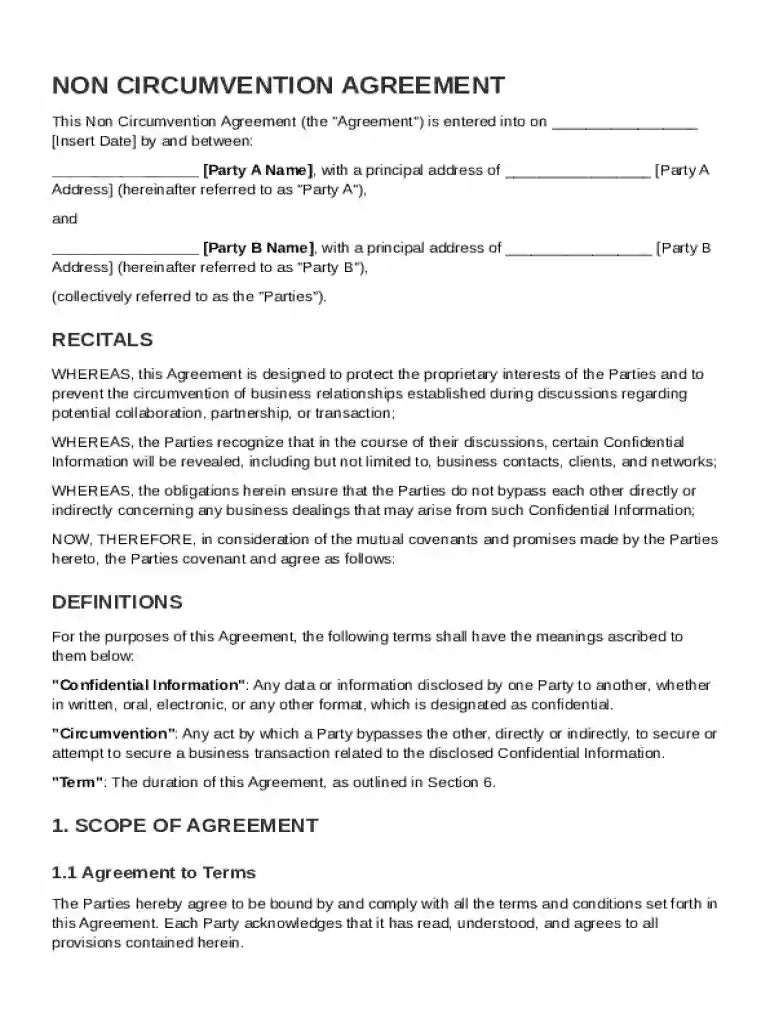
A Non Circumvention Agreement is a legal document designed to protect the proprietary interests of two or more parties during discussions related to potential business collaborations. Its primary purpose is to ensure that the parties involved will not bypass each other to conduct business directly with any third party introduced during the collaboration talks. This document is vital for safeguarding sensitive information and maintaining trust among the parties by clearly outlining restrictions and obligations.
Key Features
- Proprietary Protection: Prevents parties from engaging in direct business transactions that could bypass or undermine the other involved entities.
- Confidentiality Provisions: Includes clauses to protect sensitive business information from being disclosed to unauthorized parties.
- Defined Duration: Specifies the effective time period for which the non-circumvention obligations will apply, providing a clear timeline for contractual adherence.
Key Elements of the Non Circumvention Agreement Template
The Non Circumvention Agreement Template contains several critical components to ensure comprehensive coverage and protection of the involved parties' interests.
Core Components
- Parties Involved: Identifies the entities or individuals entering the agreement, ensuring clarity on who is bound by the terms.
- Scope of Agreement: Clearly states the nature and objectives of the potential collaboration and the business activities covered under the non-circumvention obligations.
- Exclusions and Limitations: Highlights any exceptions to the rule, where circumventing actions may be permitted under specific conditions.
Steps to Complete the Non Circumvention Agreement Template
Completing a Non Circumvention Agreement Template requires careful attention to detail to ensure all aspects are properly addressed.
Procedure
- Identify the Parties: Begin by filling in the names and details of all parties involved in the agreement.
- Define the Scope: Clearly outline the business relationships and transactions that the agreement will cover.
- Include Confidentiality Terms: Specify what constitutes confidential information and the obligations of each party to protect it.
- Establish Duration: Set the time period for which the non-circumvention obligations will be in effect, aligning with the intended duration of the business relationship.
- Agree on Dispute Resolution: Establish a clear process for resolving any disputes that may arise, such as mediation or arbitration clauses.
Important Terms Related to Non Circumvention Agreement Template
Grasping the terminology used in a Non Circumvention Agreement is essential for understanding its relevance and implications.
Key Terminologies
- Circumvention: Act of bypassing an entity to conduct direct business without involving the intermediary or the existing parties.
- Confidential Information: Any proprietary data or insights shared between parties with an expectation of privacy and restricted use.
- Indemnification Clause: A provision that allocates the responsibility to cover any losses incurred from a breach of the agreement.
Legal Use of the Non Circumvention Agreement Template
The legality of using a Non Circumvention Agreement Template is contingent on the adherence to laws and regulations in the jurisdiction where the agreement is enforced.
Compliance Considerations
- Adherence to Contract Law: Ensure the agreement is crafted in compliance with state and federal contract laws relevant to the business location.
- Regulatory Requirements: Be aware of specific industry regulations that might impose additional obligations or limitations on the agreement.
- Dispute Jurisdiction: Clearly define the legal jurisdiction that will govern the resolution of any disputes arising from the agreement.
Examples of Using the Non Circumvention Agreement Template
Real-world scenarios illustrate the practical use of a Non Circumvention Agreement across various industries and business contexts.
Practical Applications
- Joint Ventures: Used when businesses collaborate to explore mutual interests while protecting their individual client lists and proprietary business models.
- Brokerage Transactions: Essential for ensuring brokers are not bypassed in real estate or commodity transactions where they introduce buyers or sellers.
- Partnership Explorations: In partnerships or alliances where sensitive IP or business strategies are discussed, ensuring no direct competition arises from shared insights.
Potential Users
- Small and Medium Enterprises (SMEs): Often used in SME partnerships to protect business interests and prevent direct dealings that undermine partner relationships.
- Consultants and Advisors: Frequently employed by consultants to shield their network from being directly approached by clients or parties they connect.
- Corporate Entities: Utilized by large corporations involved in complex multi-party negotiations to safeguard proprietary business knowledge and strategic positioning.
Business Types That Benefit Most from Non Circumvention Agreement Template
Different business models can exploit the benefits of a Non Circumvention Agreement most effectively, depending on their operational needs.
Beneficiary Industries
- Technology Firms: Especially those involved in collaborative innovation or joint development projects where competition sensitivity is high.
- Service Providers: Whether in finance, marketing, or supply chains, service providers require such agreements to secure clientele and partnership integrity.
- Startups and Entrepreneurs: Use it in fundraising scenarios to protect their strategic insights and ensure investors cannot bypass them for direct engagements with partners.