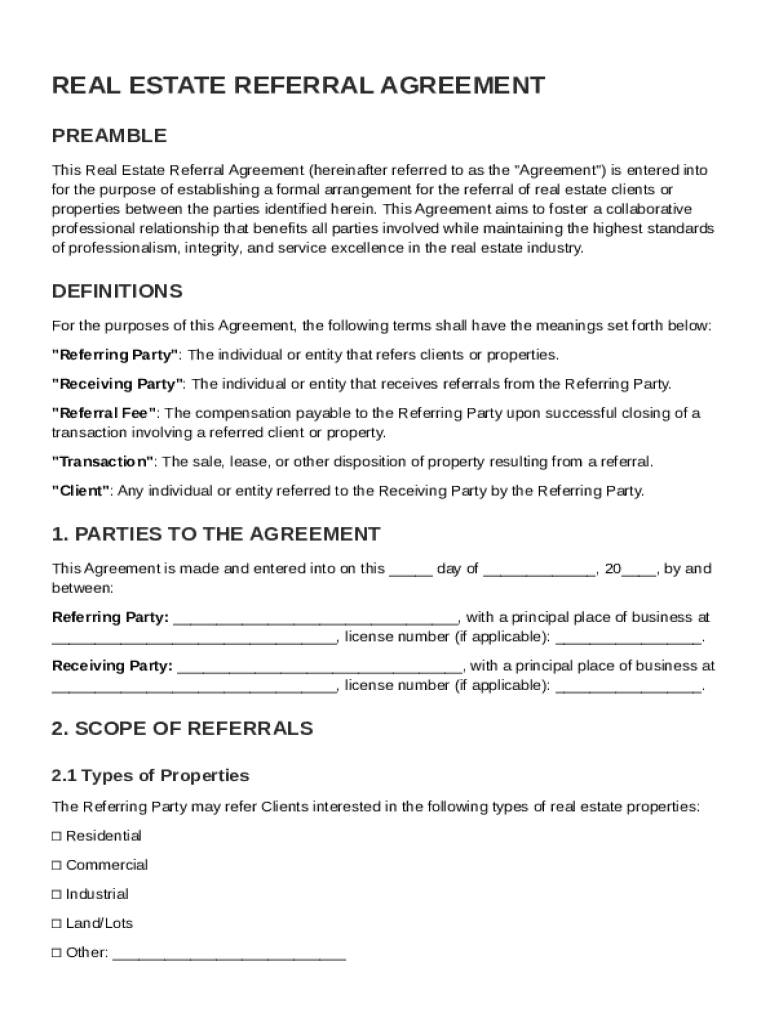







Definition and Purpose of Real Estate Referral Agreement Template
A Real Estate Referral Agreement Template is a formal document used between two parties in the real estate industry to establish a framework for client or property referrals. Its main objective is to delineate the roles and responsibilities of each party, known as the Referring Party and the Receiving Party, in a referral transaction. This template ensures clear communication and mutual understanding regarding the referral process, ensuring professionalism and efficiency in real estate dealings. The document typically covers the referral fee structure, confidentiality obligations, the arrangement's duration, and the conditions under which the agreement can be terminated.
Key Elements of the Real Estate Referral Agreement Template
The essential components of a Real Estate Referral Agreement Template include:
- Referral Fee Structure: Clearly outlines the percentage or specific amount of money the Referring Party will receive after a successful referral transaction.
- Definitions of Parties: Identifies the Referring Party and Receiving Party, detailing their roles and responsibilities.
- Confidentiality Clause: Ensures that both parties maintain the privacy of shared information, especially personal details of clients or sensitive business data.
- Duration and Termination: Specifies the duration of the agreement and the conditions under which it can be terminated by either party.
- Dispute Resolution Methods: Provides methods for resolving conflicts that may arise, such as mediation or arbitration.
These elements are crucial for a legally sound and functional referral agreement, ensuring that all involved parties have a comprehensive understanding of their obligations and rights.
Legal Use of the Real Estate Referral Agreement Template
The Real Estate Referral Agreement Template must adhere to federal and state laws to be legally enforceable. It should be drafted in clear, precise language to avoid ambiguity, with a focus on compliance with regulations such as the ESIGN Act for electronic agreements. Documents must include provisions for amending the agreement to accommodate changes in legal requirements or mutual consent between parties. Legal advisors often review these agreements to ensure they provide sufficient protection for both parties involved and simplify future legal challenges.
Practical Example
Consider a scenario where a real estate agent refers a client looking to buy commercial property to a renowned commercial real estate firm. By signing a Real Estate Referral Agreement, both the agent and the firm agree on a referral fee, ensuring transparency and avoiding potential disagreements.
Who Typically Uses the Real Estate Referral Agreement Template
A range of professionals in the real estate industry commonly uses this template, including:
- Real Estate Agents and Brokers: Looking to refer buyers, sellers, or renters to another agent or firm.
- Real Estate Firms: Engaging in agreements with independent agents to maximize market reach and business growth.
- Property Managers: Coordinating with sales agents for investment properties and tenant placements.
- Real Estate Investors: Establishing connections with agents for potential property acquisitions.
These roles benefit significantly from structured referral agreements, helping to enhance professional networking and client management.


Steps to Complete the Real Estate Referral Agreement Template
- Identify Parties: Clearly state the names and contact information of the Referring Party and Receiving Party at the beginning of the document.
- Define Terms and Conditions: Elaborate on the referral process, confidentiality clauses, referral fees, and payment terms.
- Set Specific Obligations: Specify any required actions from each party, such as keeping client information confidential or making agreed-upon payments.
- Agree on Duration and Termination: State the period the agreement will cover and any stipulations for ending the partnership.
- Review and Sign: Have both parties carefully review the document for accuracy before electronically signing via DocHub's legally binding e-signature features.
State-Specific Rules for the Real Estate Referral Agreement Template
While this template serves a national audience, individual states may have specific regulations regarding real estate agreements:
- Referral Fees: Some states have particular rules on the permissible percentage for referral fees.
- Licensing Requirements: Certain jurisdictions might restrict referrals between non-licensed entities.
- Disclosure Obligations: Different states have varying levels of mandatory disclosure for real estate transactions and professional agreements.
Professionals should familiarize themselves with these regional variations to ensure compliance and optimize the effectiveness of their referral agreements.
Important Terms Related to the Real Estate Referral Agreement Template
Understanding key terminologies associated with the Real Estate Referral Agreement Template is vital:
- Referring Party: The individual or entity referring a client or property within the agreement.
- Receiving Party: The professional or company receiving the referral, responsible for fulfilling the transaction.
- Referral Fee: The agreed-upon compensation for the Referring Party once a transaction is successful.
- Confidentiality: A clause ensuring that sensitive information shared during the transaction remains protected.
A clear comprehension of these terms fosters effective communication and reduces the risk of disputes.
Software Compatibility and Integration
DocHub's real estate referral agreements are designed to integrate smoothly with Google Workspace, enhancing productivity and convenience. Documents can be imported and exported from tools like Google Drive and Gmail, giving users the ability to edit, sign, and share agreements without leaving the Google ecosystem. This integration guarantees seamless transitions from document creation to finalization, offering substantial time savings and improved document management within real estate operations.