




Definition & Meaning
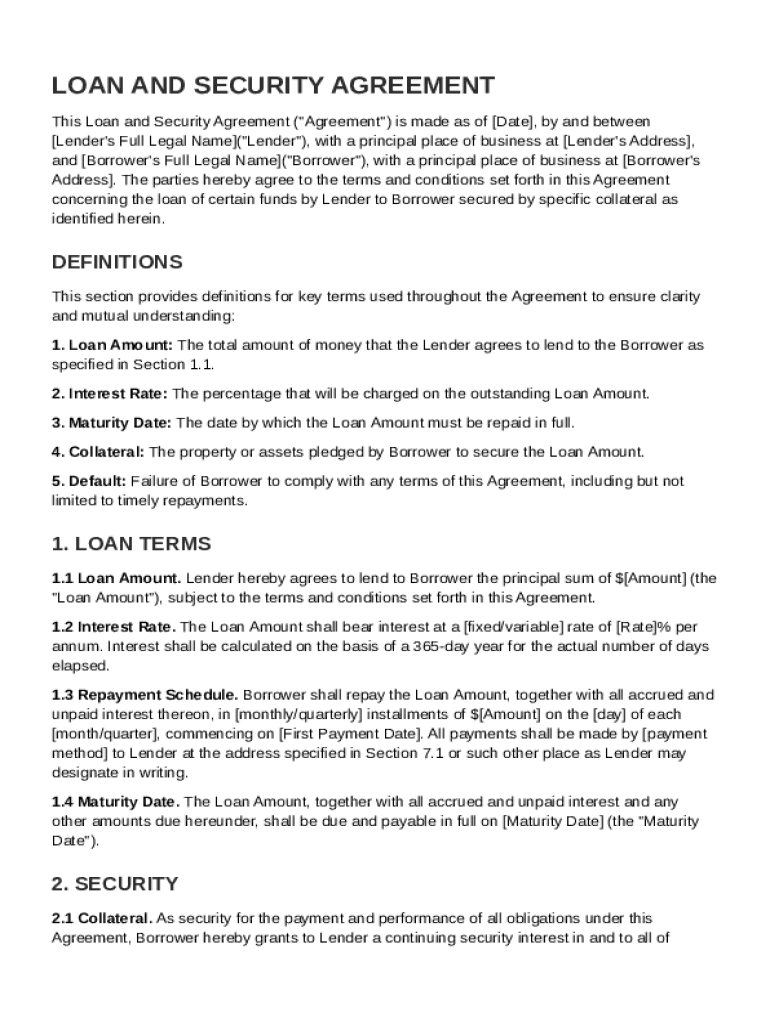
A Loan and Security Agreement is a legal contract between a lender and a borrower, outlining terms for a loan secured by collateral. This document describes the conditions under which a lender will provide financial assistance to a borrower, using specific assets as security. It ensures that the lender has recourse against the borrower should they fail to meet their obligations. This agreement helps both parties understand their rights and responsibilities, reducing potential disputes.
Key Elements of the Loan and Security Agreement Template
This template includes several crucial elements that provide a structured framework for the agreement. Key components include:
- Loan Amount and Interest Rate: This section defines the principal amount of the loan and the interest rate applied. Clarity in these terms helps avoid future financial misunderstandings.
- Collateral Description: A detailed description of the assets pledged as security for the loan. The template specifies how these assets are to be handled in case of borrower default.
- Repayment Schedule: This outlines the repayment timeline, including due dates and payment amounts, ensuring the borrower understands their financial obligations.
- Events of Default: Conditions under which a borrower is considered in default, triggering lender rights such as repossession of collateral.
Important Terms Related to Loan and Security Agreement Template
Several terms are pivotal in understanding the Loan and Security Agreement:
- Collateral: The asset pledged by the borrower to secure the loan. It can include real estate, equipment, or other vested interests.
- Default: Failure to fulfill the terms of the agreement, often leading to legal recourse for the lender.
- Maturity Date: The final date by which the loan must be repaid.
- Covenants: Legal obligations set forth in the agreement that the borrower must adhere to for the duration of the loan.
Steps to Complete the Loan and Security Agreement Template
Completing this template requires careful attention to detail:
- Review the Template: Understand the structure and required information.
- Specify Loan Details: Enter the amount, interest rate, and repayment terms.
- Identify Collateral: Clearly describe the assets used as security.
- Define Covenants and Events of Default: List any specific borrower obligations and default conditions.
- Finalize and Execute: After filling out the template, both parties should review the terms before signing.
State-Specific Rules for the Loan and Security Agreement Template
Laws governing Loan and Security Agreements can vary by state. Each state may have specific requirements regarding notice periods, default remedies, or collateral types. For example:
- California and New York: These states may require additional disclosures or consumer protection clauses.
- Texas: Additional provisions may be needed for agricultural or oil and gas loans.
Legal Use of the Loan and Security Agreement Template
The legal use of the Loan and Security Agreement ensures compliance with federal and state laws:
- ESIGN Act Compliance: Electronic signatures used in the agreement should be legally binding.
- UCC Articles: Adherence to the Uniform Commercial Code is crucial for agreements involving moveable collateral.
Examples of Using the Loan and Security Agreement Template
This template is versatile and applicable in various lending scenarios:
- Small Business Loans: Securing loans for inventory or equipment with the business assets as collateral.
- Real Estate Transactions: Using property mortgages to secure real estate development loans.
- Personal Loans: Securing personal funds against high-value assets like vehicles or collectibles.
Who Typically Uses the Loan and Security Agreement Template
The primary users of this template include:
- Financial Institutions: Banks and credit unions regularly use this to formalize secured lending arrangements.
- Private Lenders: Individuals providing loans for personal or business purposes often require such agreements.
- Businesses: Companies extending credit to others may use these agreements to secure receivables or inventory financing.

Versions or Alternatives to the Loan and Security Agreement Template
While there are standard versions available, alternative templates may be needed based on specific circumstances:
- Simplified Loan Agreement: For smaller loans where extensive collateral isn't involved.
- Subordination Agreement: Used when an additional lien is placed on collateral previously pledged to another creditor.
- Asset-Specific Security Agreement: Focuses on a particular type of asset, such as intellectual property or accounts receivable.
Business Types that Benefit Most from Loan and Security Agreement Template
Certain businesses find this template particularly valuable:
- Startups: Access capital by leveraging personal or business assets.
- Manufacturing Enterprises: Secure funds for equipment or raw materials.
- Retail Businesses: Use inventory as collateral for working capital.
How to Obtain the Loan and Security Agreement Template
Acquiring this template can be done through various means:
- Legal Counsel: Lawyers can draft or provide templates suited to specific legal contexts.
- Online Platforms: Websites offer downloadable templates tailored for different lending needs.
- Financial Institutions: Banks and credit unions may provide customized templates to their clients.