







Definition and Meaning
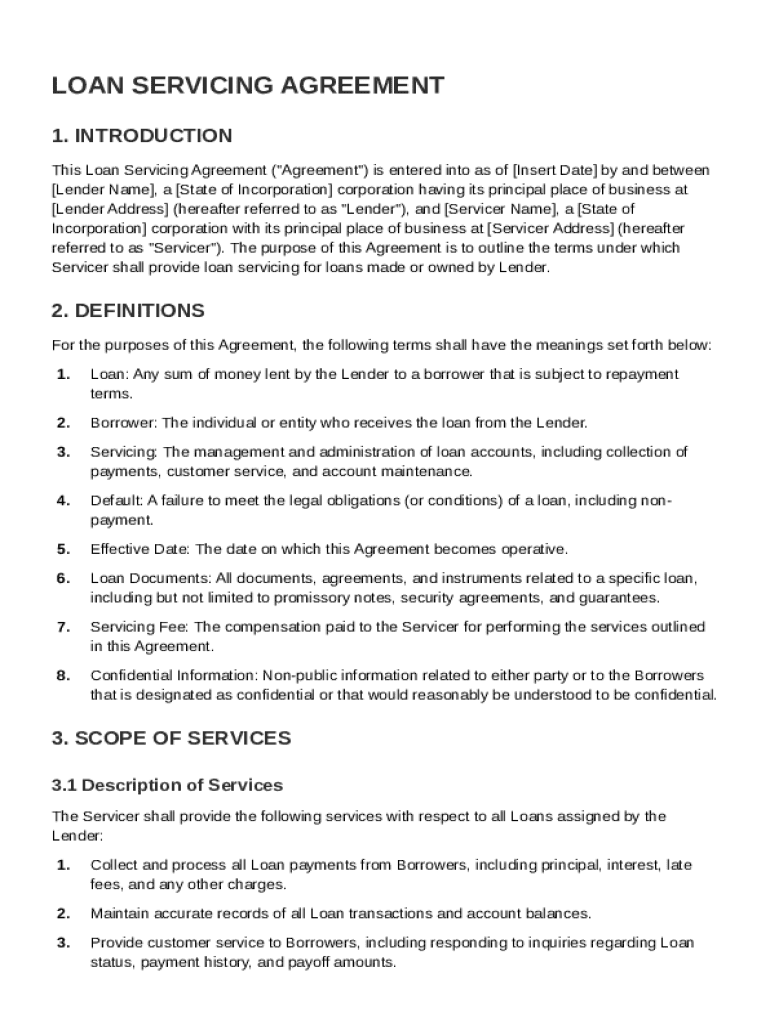
A Loan Servicing Agreement Template serves as a legal document outlining the responsibilities and expectations between a Lender and a Servicer in managing loan accounts. This template clarifies the scope of services provided by the Servicer, such as payment collection, customer service, and ensuring compliance with relevant legal obligations. It establishes a formal framework for the relationship between both parties, ensuring clarity and mutual understanding.
Detailed Understanding of Key Components
- Payment Collection: The template details the processes and methods the Servicer will use to collect payments from borrowers on behalf of the Lender, ensuring timely and accurate financial transactions.
- Customer Service: It specifies the level and type of customer service the Servicer is expected to provide, including addressing borrower inquiries and maintaining communication records.
- Compliance: The agreement incorporates guidelines to ensure the Servicer adheres to federal and state laws, protecting both the Lender’s and borrowers’ interests.
Key Elements of the Loan Servicing Agreement Template
A comprehensive Loan Servicing Agreement Template includes several critical elements necessary to delineate the responsibilities and rights of both parties involved.
Essential Clauses in the Agreement
- Compensation Structure: Outlines the fees and payment schedule the Servicer will receive for their services, which can include fixed fees, percentage-based compensation, or a combination.
- Rights and Obligations: Defines the specific rights the Lender retains over the loan and the obligations the Servicer must fulfill in managing the loan accounts.
- Confidentiality and Data Security: Details measures for protecting sensitive borrower information, such as encryption standards and access control protocols.
Steps to Complete the Loan Servicing Agreement Template
Completing the Loan Servicing Agreement Template involves several key steps to ensure all necessary information is accurately captured and agreements are legally binding.
- Gather Information: Collect all relevant details about the loan, including borrower information, loan amount, interest rate, and payment terms.
- Fill in Party Details: Input the names and addresses of the Lender and the Servicer, along with any legal entity designations.
- Detail Loan Management Procedures: Specify how payments will be collected, how customer interactions will be managed, and the compliance measures in place.
- Review and Amend: Have both parties review the completed template for accuracy, discussing any necessary amendments to fit specific needs.
Considerations and Best Practices
- Ensure all fields are filled accurately to avoid misunderstandings.
- Both parties should consult legal advisors for clarity on terms and legal implications.
Important Terms Related to Loan Servicing Agreement Template
Understanding the specific terminology used in a Loan Servicing Agreement Template is crucial for both parties. Here are some key terms often included:
- Servicer: The third-party entity responsible for managing the loan on behalf of the Lender.
- Lender: The entity that owns the loan and has provided the funds to the borrower.
- Borrower: The individual or entity that has taken a loan and is responsible for making payments.
- Escrow Account: A separate bank account used by the Servicer to hold funds collected from borrowers until they are disbursed to the Lender or other parties.
Legal Use of the Loan Servicing Agreement Template
The legal framework underpinning a Loan Servicing Agreement Template ensures that both the Lender’s and Servicer’s actions comply with applicable laws, providing clear, enforceable obligations and rights.
Compliance with Legal Standards
- Regulatory Framework: The agreement must comply with federal regulations such as the Truth in Lending Act (TILA) and state-specific lender laws.
- Dispute Resolution: Includes mechanisms such as arbitration or mediation to resolve disagreements between the Lender and Servicer.
Protecting Interests
By clearly establishing legal terms, the agreement safeguards the interests of all parties involved, minimizing potential legal disputes.
Examples of Using the Loan Servicing Agreement Template
Real-world scenarios highlight how a Loan Servicing Agreement Template is used by both Lenders and Servicers to streamline operations.
Case Study: Efficient Loan Management
- A regional bank utilizes the template to engage a third-party Servicer, outlining clear payment collection methods, which leads to improved borrower satisfaction and reduced late payments.
Collaborative Loan Servicing
- A lending institution partners with a Servicer to handle a large volume of student loans, using the template to specify data security protocols, ensuring compliance with federal data protection regulations.
State-Specific Rules for the Loan Servicing Agreement Template
State laws can impact the terms and execution of a Loan Servicing Agreement, requiring certain modifications to the template based on jurisdiction.
Variations by State
- California: Requires additional clauses for data protection and borrower privacy due to stricter state consumer protection laws.
- New York: Mandates detailed disclosures about the Servicer’s fee structure and practices in loan servicing agreements.
Understanding these variations ensures compliance and smooth execution of the agreement in different states.
Who Typically Uses the Loan Servicing Agreement Template
The Loan Servicing Agreement Template is employed by a range of users in the financial industry to formalize service relationships and ensure efficient loan management.


Primary Users
- Banks and Credit Unions: Use the template to manage extensive loan portfolios effectively.
- Independent Loan Servicers: Employ the template to offer structured loan management services to different lenders.
- Mortgage Companies: Rely on the template for coordinating payment collections and customer service operations, ensuring legal compliance.
This template is crucial for maintaining organized, legally compliant loan servicing while optimizing operational efficiency.




