






Definition and Meaning of a Lender Agreement
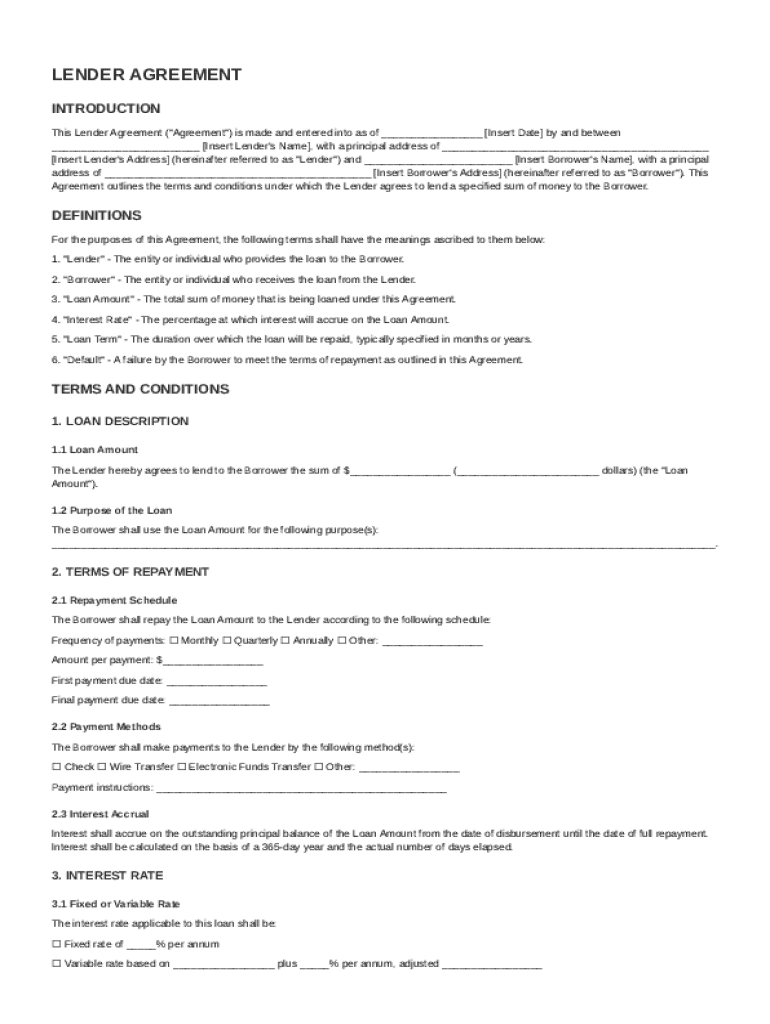
A lender agreement, often detailed in a lender agreement template, is a formal contract between a lender and a borrower. This document outlines the terms and conditions under which a lender provides a loan to a borrower. Key components include the loan amount, repayment schedule, interest rates, and collateral requirements. The agreement also covers representations and warranties from both parties, events of default, and remedies available to the lender in case of default. Legal language is used to ensure that the agreement is binding and enforceable in court. It is finalized with the signatures of both parties, confirming their commitment to the terms outlined.
How to Use the Lender Agreement Template
Using a lender agreement template simplifies the process of drafting a comprehensive loan contract. The template provides a structured format where you can input specific details related to the loan.
- Download the Template: Obtain the lender agreement template from a reliable source like DocHub.
- Customize the Content: Fill in details such as the names of the parties involved, the loan amount, interest rate, and repayment terms.
- Review Key Provisions: Ensure the template includes all necessary provisions, such as collateral requirements, events of default, and governing law.
- Seek Legal Advice: Consult with a legal professional to validate the template’s compliance with relevant laws and to customize any additional clauses required for your specific situation.
Key Elements of the Lender Agreement Template
The lender agreement template contains various critical elements, each serving a specific purpose in outlining the loan's terms and conditions.
- Loan Amount and Term: Specifies the exact amount of money being lent and the timeframe over which it must be repaid.
- Interest Rate: Details the interest applicable on the loan and whether it is fixed or variable.
- Repayment Schedule: Outlines the schedule of payments, including due dates and frequency.
- Collateral Requirements: Lists any assets or securities pledged as collateral to secure the loan.
- Representations and Warranties: Includes assertions by both lender and borrower regarding their ability and intent to fulfil the agreement.
- Events of Default: Defines what constitutes a default under the agreement and the consequences of such events.
- Governing Law: Specifies the jurisdiction whose laws will apply in interpreting the agreement.
Steps to Complete the Lender Agreement Template
Completing a lender agreement template involves several steps that require careful attention to detail.
- Fill in Basic Information: Enter details of the lender and borrower, including names, addresses, and contact information.
- Specify Loan Details: Add information about the loan amount, interest rate, and repayment period.
- Define Collateral and Security: Clearly identify any collateral offered by the borrower and the conditions tied to its use.
- Outline Terms and Conditions: Ensure all terms, including potential penalties for default, are clearly outlined.
- Add Legal Clauses: Include necessary legal language to ensure enforceability of the agreement.
- Review and Amend: Double-check for accuracy and any necessary modifications to fit the specific loan context.
- Finalize and Sign: Both parties should sign the document to make it legally binding.
Legal Use of the Lender Agreement Template
In the United States, the legal use of a lender agreement template ensures that all loan transactions are conducted within the framework of established law. The agreement serves as evidence of the loan in legal disputes and must comply with relevant statutes governing lending, such as interest rate laws and consumer protection regulations.
- Interest Rate Compliance: Verify that the interest rate complies with state usury laws.
- Consumer Protection: Ensure borrower rights are respected according to applicable federal and state laws.
- Disclosure Obligations: Meet all requirements for transparency concerning terms and credit cost.
Who Typically Uses the Lender Agreement Template
A lender agreement template is utilized by a wide range of individuals and entities requiring a formal and reliable method to bind loan terms.
- Financial Institutions: Banks and credit unions use these templates for issuing loans to customers.
- Private Lenders: Individuals offering personal loans often rely on templates to ensure clear terms.
- Businesses: Organizations that provide credit to customers or other businesses may use such agreements to formalize transactions.

Important Terms Related to Lender Agreement Template
Understanding the terminology used in a lender agreement template is crucial for accurate interpretation and implementation.
- Principal: The original sum of money borrowed, excluded of interest or additional fees.
- Maturity Date: The final date by which the loan must be repaid in full.
- Prepayment: Terms allowing the borrower to repay all or part of the loan before the due date.
- Amortization: The process of spreading loan repayments over time through scheduled, periodic installments.
State-Specific Rules for Lender Agreements
While lender agreements provide a standardized framework, individual states may impose additional requirements. Awareness of these rules is essential, particularly for loans involving real estate or large sums.
- Interest Cap Regulations: Some states limit the amount of interest that can be charged.
- Mortgage-specific Regulations: States may have specific rules applicable to loans secured against real estate.
- Licensing Requirements: Certain jurisdictions require lenders to hold a license for consumer lending activities.