Definition & Meaning
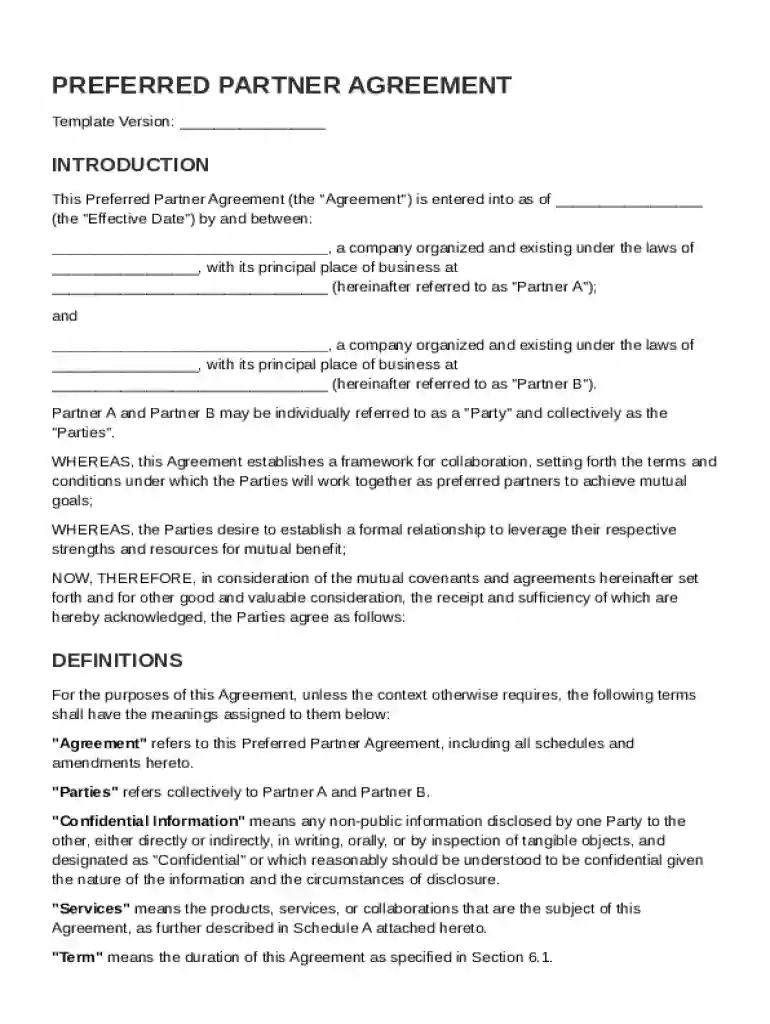
A Preferred Partner Agreement Template is a pre-structured document that outlines the terms and conditions governing a collaborative relationship between two companies, typically referred to as Partner A and Partner B. It serves as a foundational tool to establish clear expectations, responsibilities, and rights for both parties, facilitating a mutually beneficial partnership. The agreement often aims to enhance business operations, improve market strategies, and foster joint initiatives. Key components include definitions of roles, financial arrangements, confidentiality terms, intellectual property rights, and dispute resolution procedures.
Key Elements of the Preferred Partner Agreement Template
Understanding the critical components of the Preferred Partner Agreement Template is essential for creating a comprehensive and legally binding document. Some of the fundamental elements include:
- Definitions and Terms: Clearly explains terminology used throughout the agreement to avoid ambiguity.
- Responsibilities and Obligations: Details the duties of each partner, ensuring clarity and alignment of expectations.
- Financial Considerations: Outlines payment terms, revenue sharing, and other financial arrangements.
- Confidentiality Provisions: Specifies what information must remain confidential and how it is to be protected.
- Intellectual Property Rights: Defines ownership and usage rights concerning intellectual property developed during the partnership.
- Dispute Resolution Procedures: Establishes mechanisms for resolving conflicts, including mediation or arbitration processes.
Steps to Complete the Preferred Partner Agreement Template
Completing the template involves a series of detailed steps to ensure all aspects of the partnership are adequately covered:
- Collect Information: Gather all relevant information from both parties, including company names, roles, financial figures, and legal obligations.
- Customize the Template: Tailor the template to fit the specific needs and circumstances of the partnership, adding or removing sections as necessary.
- Define Roles: Clearly specify the roles and responsibilities of each partner in the agreement to avoid misunderstandings.
- Outline Financial Arrangements: Detail all terms related to payment, profit-sharing, or cost distribution within the partnership.
- Finalize Legal Terms: Ensure all legal sections are accurately filled out, including confidentiality and dispute resolution clauses.
- Review and Revise: Both parties should carefully review the completed agreement to correct any errors or omissions.
- Execute the Agreement: Sign and date the document, with each party retaining a copy for their records.
Legal Use of the Preferred Partner Agreement Template
The legal use of the Preferred Partner Agreement Template ensures that the agreement is enforceable in court and protects the interests of both parties:
- Compliance with Laws: The agreement must comply with all applicable federal, state, and local laws.
- Binding Commitment: Once signed, the document serves as a legally binding contract, compelling parties to adhere to its terms.
- Legal Protections: The agreement provides legal protection in case of disputes, ensuring that each party's rights are safeguarded.
- Modification and Termination: Specifies conditions under which the agreement can be amended or terminated, offering flexibility if circumstances change.
Examples of Using the Preferred Partner Agreement Template
Real-world scenarios can demonstrate the practical applications of this template:
- Tech Startups: Two tech companies form a partnership to co-develop a new software solution, with defined roles in development and marketing.
- Retail Collaboration: A clothing brand partners with a retailer to expand its market reach, specifying sales targets and promotional activities.
- Consulting Firms: An advisory firm and an analytics company combine resources to offer enhanced services, sharing profits and client insights.
State-Specific Rules for the Preferred Partner Agreement Template
Although the template is broadly applicable, state-specific regulations may influence its use:
- Varying Legal Requirements: Different states may have unique legal stipulations regarding partnership agreements, influencing contract terms.
- Registration and Filing: Some states require partnerships to register agreements or file specific documentation with state entities.
- Industry-Specific Obligations: Certain industries might have additional compliance requirements based on state laws.
Who Typically Uses the Preferred Partner Agreement Template
Various business entities and professionals utilize this agreement to formalize partnerships:

- Business Enterprises: Companies seeking to expand operations or enter new markets by partnering with complementary businesses.
- Entrepreneurs: Individual entrepreneurs engaging in joint ventures to share resources and expertise.
- Professional Service Providers: Lawyers, accountants, and consultants using the agreement to collaborate with firms or practitioners in related fields.
Who Issues the Form
The Preferred Partner Agreement Template is usually generated internally or obtained from professional legal resources:
- In-House Legal Teams: Larger organizations may develop templates through their legal departments to ensure customized compliance.
- External Consultants: Businesses might acquire templates from legal consultants or document services, especially if they lack internal expertise.
- Online Legal Platforms: Companies opt for formats from online platforms that specialize in legal document templates.