




Definition and Purpose of a Machinery Lease Agreement
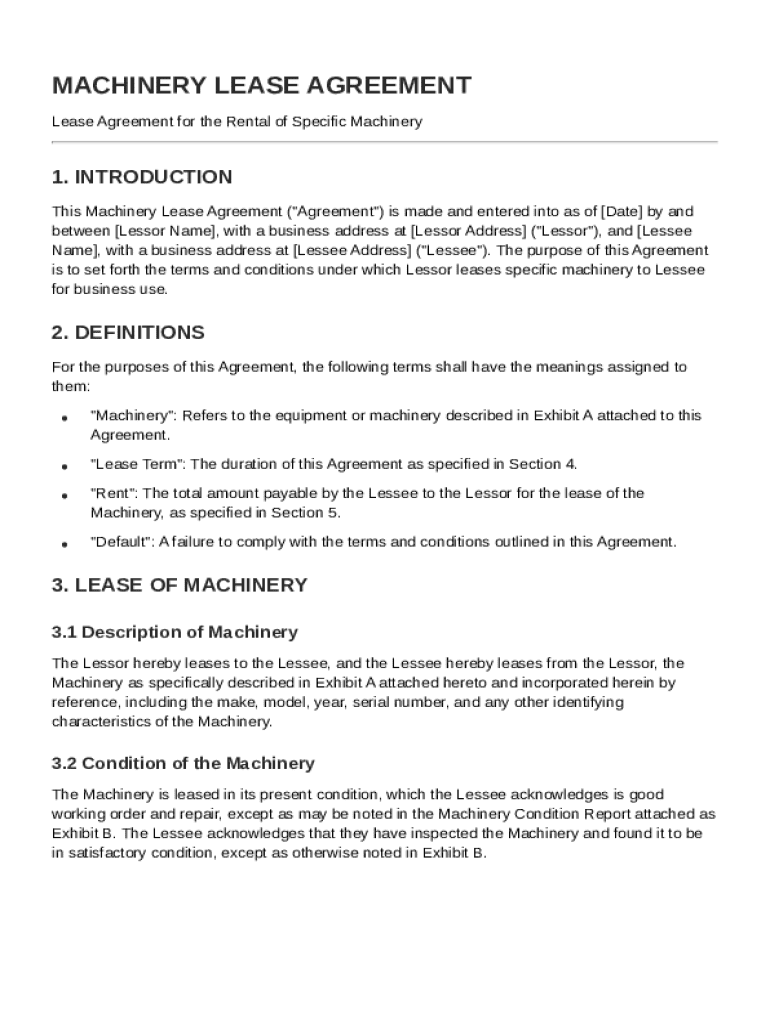
A Machinery Lease Agreement establishes the legal framework for leasing machinery from a lessor to a lessee. This agreement defines key parameters such as the duration of the lease, payment terms, usage conditions, maintenance duties, insurance requirements, default provisions, and return protocols. By outlining these elements, the agreement ensures both parties have a clear understanding of their rights and responsibilities. The primary goal of this contract is to safeguard interests and ensure the machinery is used, maintained, and returned appropriately.
Key Elements of the Machinery Lease Agreement
- Lease Duration: Specifies the time period for which the lessee is entitled to use the machinery.
- Payment Terms: Outlines the payment schedule, including due dates and amounts, often determined by the agreement's terms.
- Usage Conditions: Details how the machinery can be legally and safely used by the lessee.
- Maintenance Responsibilities: Assigns who is responsible for routine maintenance and potential repairs.
- Insurance Requirements: Establishes the necessity for insurance to protect against damage or loss.
- Default Provisions: Lists consequences for non-compliance, such as missed payments or improper usage.
- Return Conditions: Specifies how and when the machinery should be returned at the end of the lease.
Steps to Complete the Machinery Lease Agreement Template
- Identifying Parties: Clearly state the names and contact details of the lessor and lessee.
- Machinery Description: Provide a detailed description, including model, make, and serial number, to avoid any ambiguity.
- Setting Lease Terms: Define the lease duration, payment schedule, and conditions for renewal or termination.
- Establishing Use and Care Standards: Outline expected standards for machinery care, maintenance schedules, and usage protocols.
- Including Insurance Details: Specify insurance coverage requirements, including the insurer and policy limits.
- Detailing Default Remedies: Lay out actions the lessor can take in case of a breach by the lessee.
- Finalizing and Signing: Review the complete document, make necessary corrections, and ensure signatures from both parties.
Importance of Using the Machinery Lease Agreement Template
The Machinery Lease Agreement Template provides a structured approach to leasing agreements, minimizing legal risks and potential disputes. By using this template, both parties can ensure all aspects of the lease are thoroughly addressed and agreed upon. It serves as a critical tool for accountability and transparency, helping to protect investments and ensure the machinery's proper use and care, ultimately preserving its value and functionality.
Who Typically Uses the Machinery Lease Agreement Template
This template is commonly used by businesses and individuals involved in industries that rely heavily on machinery but prefer not to invest in purchasing expensive equipment. Typical users include construction companies, manufacturing firms, and agricultural enterprises. Equipment leasing companies and brokers also frequently use this agreement to streamline their operations and ensure consistent terms across multiple transactions.

Legal Use of the Machinery Lease Agreement Template
The Machinery Lease Agreement Template complies with U.S. legal standards, ensuring all terms are enforceable under relevant laws. The agreement should be used in compliance with jurisdictional regulations where the lease is executed or where the machinery is operated. Having a legal professional review the agreement can be beneficial, particularly for complex or high-value transactions, to ensure all legal requirements and potential liabilities are properly addressed.
Versions or Alternatives to the Machinery Lease Agreement Template
While the standard Machinery Lease Agreement Template covers general leasing terms, there may be variants suited for specific industries or machinery types. Customized versions might include clauses tailored for specialized equipment, such as construction cranes or medical devices. Alternatives could incorporate collaborative clauses for co-shared machinery among multiple users or adjusted terms for rent-to-own agreements.
State-Specific Rules for Machinery Lease Agreements
Machinery lease agreements must often comply with varying state laws that can affect terms such as taxation, insurance requirements, and dispute resolution procedures. Understanding and integrating state-specific rules within the agreement can prevent legal issues and enhance clarity. Lease agreements used in California, for example, might differ in certain stipulations from those used in New York due to differing statutory requirements.